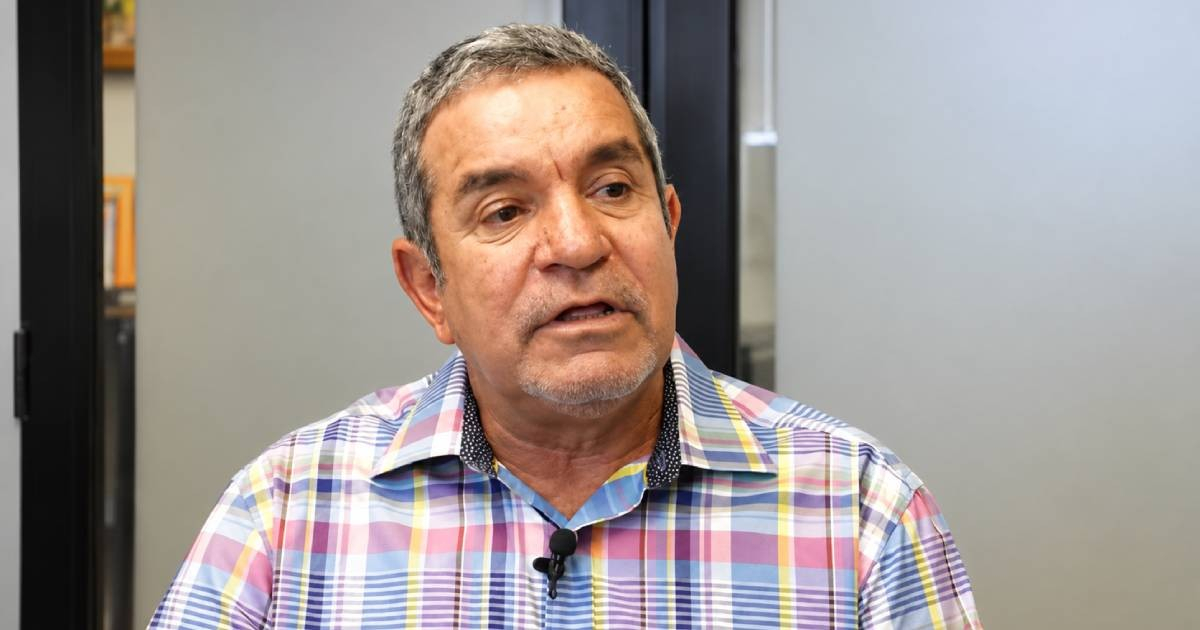
Yamir Manso Orozco, a 58-year-old Cuban man with an asylum application pending, has been released after spending over four months detained at the controversial Alligator Alcatraz facility in the Florida Everglades. His release came after his legal team filed a habeas corpus petition, prompting a federal court to mandate a bond hearing.
Manso Orozco, who owns a remodeling business in Florida, was taken into custody by Immigration and Customs Enforcement (ICE) officers during a traffic stop, allegedly for a traffic violation, as he recounted to Telemundo.
His case was registered in the U.S. District Court for the Middle District of Florida as Manso-Orozco v. Noem et al, filed on March 19, 2026, and resolved on April 15 by Judge Kyle C. Dudek. The judge ordered that Manso Orozco be granted the statutory process required under section 1226 of immigration law, including a bond hearing.
The Harsh Reality Inside Alligator Alcatraz
Manso Orozco described the harsh conditions within the facility, stating, "I went up to four days without bathing. It was incredibly tough. Truly, very tough," he declared.
He shared how demoralized he became, recalling how a simple hug from his attorney during a visit moved him to tears. "Can you imagine what that meant to me?" he expressed.
Legal Challenges and the Fight for Bond Hearings
A significant hurdle in his case was the current policy in Florida, where immigration courts have been instructed by the White House not to grant bond to detainees. According to his attorney, "One has to go through the federal system for a federal court to order the immigration court to grant bond." Lawyers further warned that without swift federal action, detainees might be relocated to states that do not recognize access to bond.
Grateful for Freedom and Looking Ahead
Following his release, Manso Orozco expressed gratitude to his religious congregation and shared his joy in returning to everyday life. "I savor my food, when you finally eat something you haven't had in a long time, everything is just wonderful," he said.
He is currently under GPS monitoring via his phone as his immigration proceedings continue. His next court date is in June, and in addition to his asylum claim, he has a family petition filed by his mother.
Manso Orozco's situation is not unique. Others have also been able to leave Alligator Alcatraz through similar legal means, including a Cuban man released after six months in detention and another who reported being assaulted within the facility. By mid-May 2026, the center housed between 1,400 and 1,500 detainees, with 700 to 800 being Cuban.
Controversial Facility Under Scrutiny
Alligator Alcatraz was constructed in just eight days under the orders of Governor Ron DeSantis using emergency powers and opened in July 2025. Amnesty International has labeled the treatment at the facility as "torture" by international standards, with its operation costing approximately one million dollars per day. In May 2026, DeSantis indicated that the facility might be closed, describing it as "temporary."
Since January 2025, habeas corpus petitions from detained immigrants in the United States have surpassed those of previous administrations, with nearly 8,000 filed in 2025 alone, compared to 222 in 2024.
Understanding the Asylum Process and Detention in Florida
What challenges do asylum seekers face in Florida's detention facilities?
Asylum seekers in Florida face significant challenges, including policies that prevent immigration courts from granting bond. This often necessitates federal intervention to secure release, and there's a risk of being moved to states that don't recognize bond access.
How was Alligator Alcatraz created and what are the criticisms against it?
Alligator Alcatraz was rapidly constructed in eight days by order of Governor Ron DeSantis using emergency powers. It has drawn severe criticism from organizations like Amnesty International, which refers to the treatment there as "torture" under international standards, and the facility incurs high operational costs.
What legal recourse do detainees have to challenge their detention?
Detainees can file habeas corpus petitions to challenge their detention and seek a bond hearing. This legal route has become increasingly common, with thousands of such petitions filed in recent years, highlighting the growing demand for judicial intervention in immigration cases.