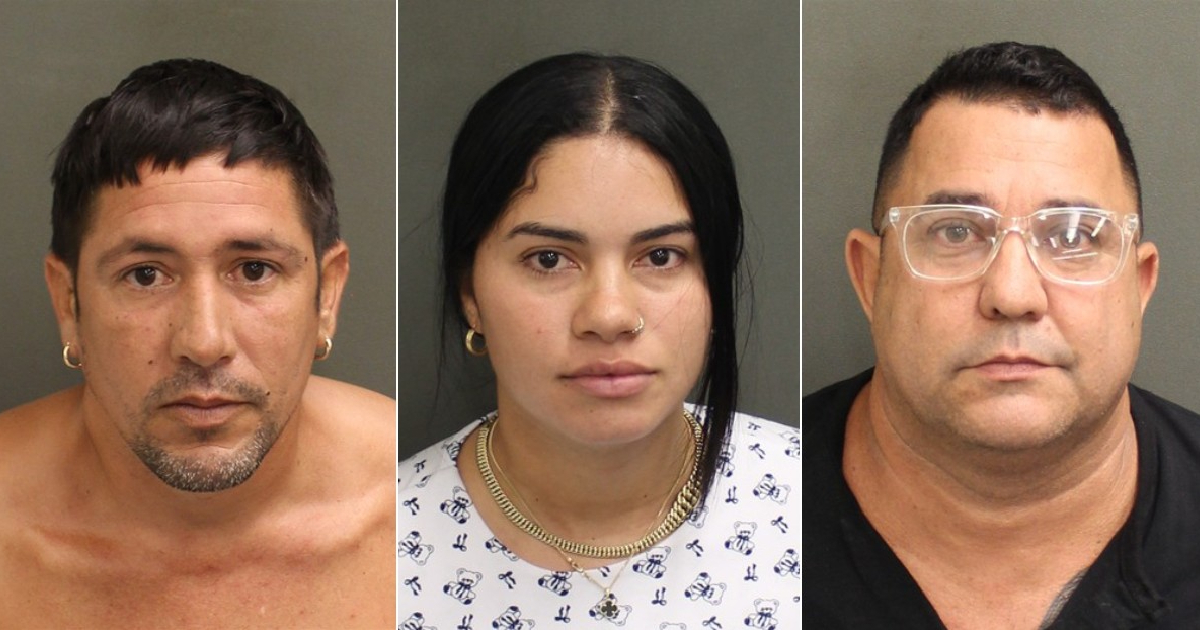
The Orlando Police Department has successfully dismantled an organized fraud operation that exploited cloned food assistance cards to drain the accounts of around 30 victims in the metropolitan area. This week, authorities apprehended three members of the group, as detailed in arrest reports.
Five individuals have been identified as part of this criminal network: Carlos Rubén Gómez Jiménez, Maite Lázara Mesa Labrada, Carlos Luis Díaz Jiménez, Enrique González, and Luis González Domínguez. The police have announced the arrest of the first three, who were taken into custody at the Orange County Jail on May 14.
As of now, officials have not disclosed the nationality of any suspects.
The individuals face serious charges, including organized crime activities or racketeering and conspiracy under the RICO (Racketeer Influenced and Corrupt Organizations) Act; illegal use of personal identification information; unlawful possession of another person’s identification information; forgery of public assistance documents; organized scheme to defraud, and trafficking in stolen property, according to police records consulted by CiberCuba.
Investigators looked into 37 incidents within Orlando city limits between October 2025 and April 2026, during which the group stole approximately $5,180 from the federal Supplemental Nutrition Assistance Program (SNAP), commonly known as food stamps. A total of 46 fraudulent actions were recorded.
Methodical Fraud Tactics Uncovered
The group’s method was systematic: they employed skimming devices to capture data from real EBT (Electronic Benefits Transfer) cards and then created counterfeit cards with this information.
Before making larger purchases, they conducted small transactions—usually buying water bottles at Wawa stores—to ensure the stolen data was valid and to check each account's balance.
Once the balance was confirmed, they purchased large quantities of energy drinks and coffee from Walmart and other retailers, completely emptying the victims’ accounts. The actions of the suspects were captured by surveillance cameras in shopping centers, as indicated in official documents.
The stolen goods were stored in storage units and later transported to a food and beverage warehouse to be sold for profit.
Key Perpetrators and Charges
Gómez Jiménez, aged 39, was identified by detectives as the group's "main offender," linked to 36 fraudulent EBT transactions during the investigation period. According to the Orange County Corrections Department records, he faces 100 charges.
Arrest reports indicate that Mesa Labrada, aged 26, participated in 17 transactions and faces 52 charges in total. Díaz Jiménez, aged 50, is charged with 17 counts for involvement in at least five fraudulent operations.
As of this publication, the three remain detained at the Orange County Jail, while the whereabouts of Enrique González and Luis González Domínguez have not been publicly confirmed by authorities.
Impact on Victims
Victims discovered the theft primarily when attempting to purchase groceries and finding their cards depleted of funds.
Gwendolyn Courtney Hunter, one of those affected, shared her experience with WESH 2 News, recounting how she found her account emptied in October 2025: "I was devastated because I had waited all month to buy the few items I needed. Why would you do that to someone? You don't even know the person, or you simply don't care at all."
This type of fraud has become increasingly common in Florida. Just last April, a woman was arrested in Pembroke Pines for allegedly stealing over $120,000 in SNAP benefits from about 200 people over eight months.
Nationally, EBT card cloning fraud has surged alarmingly. According to estimates by the organization Propel, around $607 million was stolen from public assistance beneficiaries throughout the country in 2025, with 57% of thefts occurring on the same day as the monthly benefit deposit.
Insights on EBT Card Fraud in Florida
What is the primary method used by fraudsters to clone EBT cards?
Fraudsters use skimming devices to capture data from legitimate EBT cards, which they then use to create counterfeit cards.
How do victims typically discover their benefits have been stolen?
Victims usually realize their benefits have been stolen when attempting to make purchases and finding their EBT cards have no remaining funds.
What is the estimated amount stolen through EBT card fraud nationwide?
In 2025, approximately $607 million was stolen from public assistance beneficiaries through EBT card fraud across the United States.