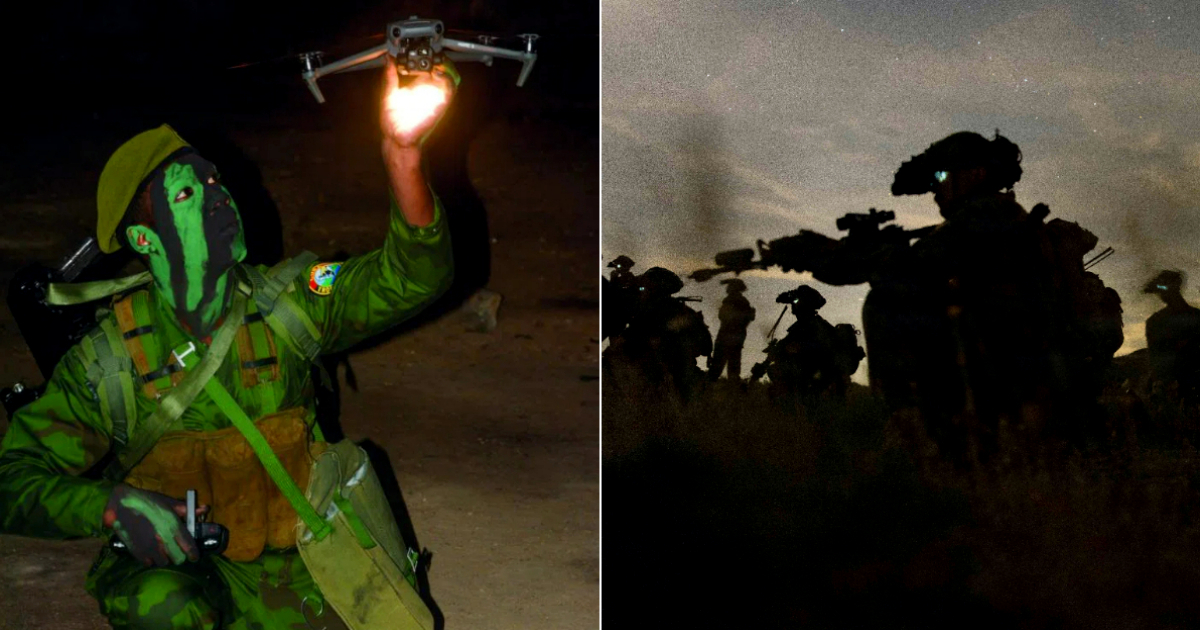
An Axios report on an alleged Cuban military drone program has reignited concerns over one of the United States' most sensitive national security issues: the presence of hostile capabilities just 90 miles from Florida.
According to the report, which references classified U.S. intelligence, Cuba has reportedly acquired over 300 military drones from Russia and Iran since 2023. Officials from the Cuban regime have allegedly discussed scenarios involving their use against the Guantanamo Bay Naval Base, U.S. military vessels, and even Key West.
Although Washington maintains there is no evidence of an imminent attack, several analysts suggest this situation could become a new flashpoint between the Trump administration and Havana.
The Axios report suggests that this intelligence "could serve as a pretext for U.S. military action," particularly in the current climate of maximum pressure on Iran and Russia’s allies in the Western Hemisphere.
Growing Concerns Over Foreign Military Ties
U.S. concerns extend beyond just Cuba. American officials are increasingly uneasy about military cooperation between Havana, Moscow, and Tehran, as well as the presence of Russian and Chinese intelligence infrastructure on the island.
The evolution of inexpensive and hard-to-detect drones has reshaped modern warfare. In regions like Ukraine and the Middle East, relatively low-cost drones have successfully targeted military bases, energy facilities, and ships without the need for traditional large-scale air capabilities.
For this reason, despite Cuba's lack of a modern air force and its severe economic decline, Washington is wary that the regime might adopt asymmetric warfare strategies inspired by Iran.
U.S. Response and Potential for Escalation
The recent visit of CIA Director John Ratcliffe to Havana underscores the level of concern within the U.S. government. According to Axios, Ratcliffe directly warned Cuban officials against any acts of hostility and emphasized that Cuba "cannot continue to serve as a platform for adversaries to pursue hostile agendas in the hemisphere."
Concurrently, the Department of Justice is preparing an indictment against Raúl Castro for the 1996 shootdown of Brothers to the Rescue planes, and new sanctions against the regime are anticipated.
Despite the tough rhetoric, experts believe a direct U.S. military intervention in Cuba is unlikely in the short term. However, they caution that any drone-related incident, even a limited or accidental one, could trigger a highly sensitive escalation.
This situation serves as a reminder that, although the Cold War ended decades ago, Cuba still holds a sensitive position in Washington's security strategy, particularly as its alliances involve governments considered adversarial to the United States.
Implications of the Cuban Drone Crisis
What prompted the U.S. concerns over Cuban drones?
Concerns arose from a report indicating that Cuba acquired over 300 drones from Russia and Iran since 2023, potentially posing a threat to U.S. interests in the region.
Could the drone situation lead to U.S. military action?
While a direct military intervention is seen as unlikely in the near term, experts warn that any drone-related incident could escalate tensions significantly.
How does Cuba's military capability compare to its adversaries?
Cuba lacks a modern air force and is economically strained, but may resort to asymmetric warfare strategies similar to those used by Iran.