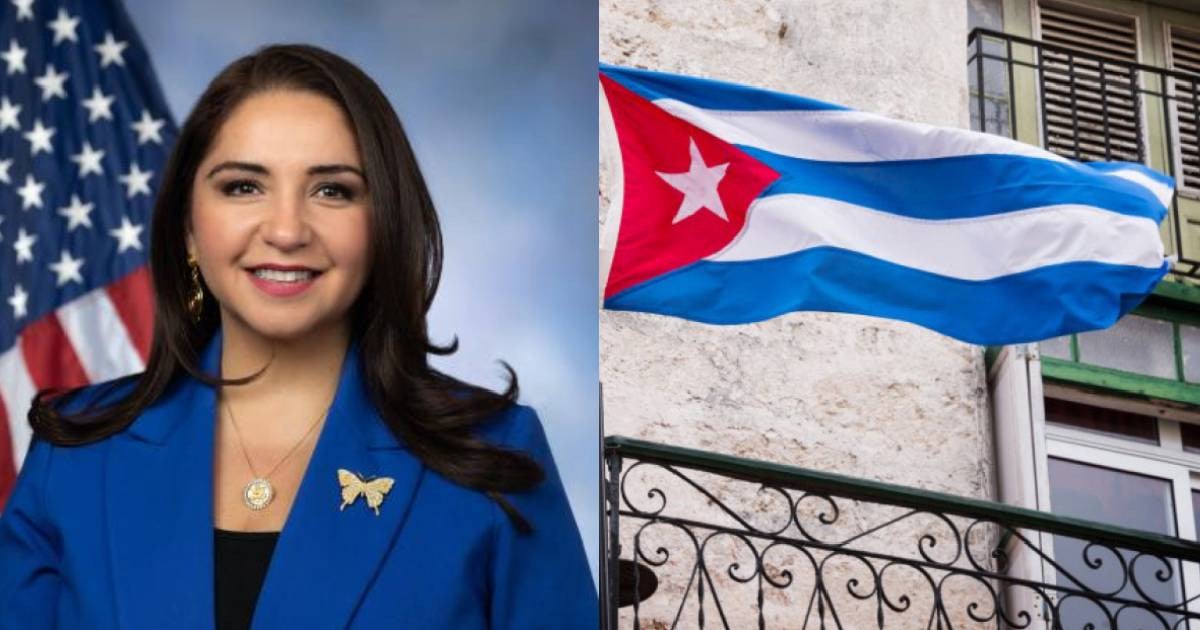
Illinois Congresswoman Delia Ramírez is spearheading an initiative alongside 32 other House Democrats, urging a change in President Donald Trump’s approach to Cuba. They highlight the potential threats of military action and the island's energy crisis as critical concerns.
This letter, made public on May 14 and shared by Ramírez on her X account this past Saturday, is addressed to Secretaries Pete Hegseth (Defense), Marco Rubio (State), and Markwayne Mullin (Homeland Security).
Ramírez expressed in her post that due to the sanctions imposed by Trump and Rubio, Cuba’s electrical grid is in disarray, leaving countless families without power and essential services. She also warned of the administration's military threats.
The correspondence describes any potential military intervention as "illegal, highly destabilizing, and catastrophic for the Cuban people," asserting that it should be "unequivocally rejected" as it would likely increase displacement and intensify widespread suffering.
The lawmakers also oppose utilizing the Guantánamo Bay Naval Base for detaining Cuban migrants, arguing it is not a solution to migration but rather an attempt to manage the fallout from policies that are inciting it.
This Democratic push follows the Senate’s recent blocking of a war powers resolution led by Senators Tim Kaine, Ruben Gallego, and Adam Schiff, which aimed to prevent military actions against Cuba without Congressional consent. The resolution was narrowly defeated with a 51-47 vote.
The legislative setback left potential unilateral actions by the president unchecked, prompting renewed pressure from the House of Representatives.
The backdrop of this appeal is a period of heightened tensions. On May 2, Trump declared at a rally his intention to take control of Cuba "almost immediately" after concluding the conflict with Iran.
On May 12, Hegseth testified before Congress, labeling the Cuban regime as an "unusual and extraordinary threat to national security" of the United States.
While the Pentagon has updated contingency plans for possible intervention, Defense Department sources maintain that no immediate action is planned.
Since January 2026, the administration has implemented over 240 sanctions against Cuba, including new measures targeting the military conglomerate Gaesa announced on May 7, which have led major international shipping companies to halt operations and bookings to the island.
Concurrently, Cuba is experiencing its most severe energy crisis in years. On May 14, the national electrical grid collapsed, cutting off power to all eastern provinces.
Energy Minister Vicente de la O Levy openly acknowledged, "We have absolutely no fuel, we have absolutely no diesel."
Despite mounting pressure, the Trump administration is reportedly frustrated by the lack of tangible progress. Frank Mora, former U.S. ambassador to the Organization of American States (OAS), told The New York Times that Trump is "frustrated because he has not yet achieved the desired results in Cuba and hence is tightening the screws."
Meanwhile, Rubio stated on Fox News, "We will give them a chance. But I don’t think it will happen. I don’t believe we can change Cuba’s trajectory while these individuals are in charge of the regime."
FAQs on U.S.-Cuba Policy Shift and Military Intervention Concerns
Why are U.S. lawmakers urging a change in policy towards Cuba?
Lawmakers are advocating for a policy shift due to the severe energy crisis in Cuba and the potential threat of U.S. military intervention, which they believe could destabilize the region and worsen humanitarian conditions.
What are the implications of a military intervention in Cuba?
A military intervention is considered illegal and could lead to significant destabilization, displacement, and increased suffering for the Cuban population.
What is the current status of the sanctions imposed on Cuba?
Since January 2026, over 240 sanctions have been imposed on Cuba, affecting its economy and contributing to the ongoing energy crisis.