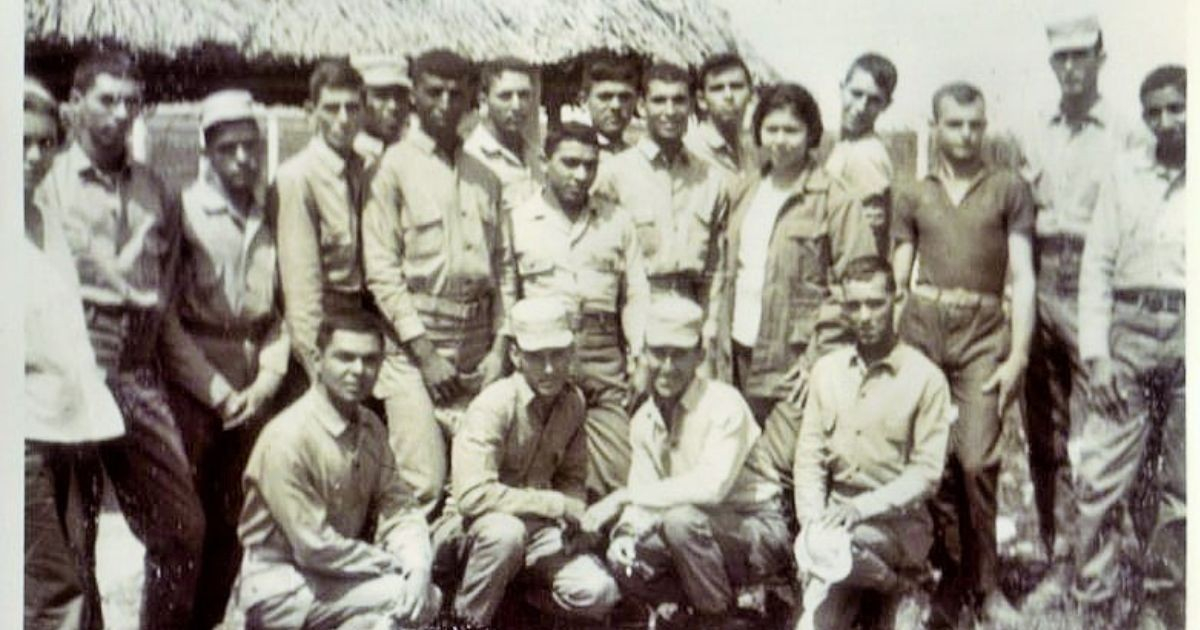
Amidst the ongoing 19th Cuban Day Against Homophobia and Transphobia, Cuban historian and researcher Julio César González Pagés took to Facebook last Thursday to reflect on the atrocities committed in the Military Units to Aid Production (UMAP), the forced labor camps established by Fidel Castro's regime from November 1965 until 1968.
The 2026 event, themed "Love is Law," taking place from May 4 to 21, serves as a platform for González Pagés to demand historical remembrance of one of the darkest chapters of the Cuban dictatorship against the LGBTIQ+ community.
González Pagés emphasizes that around 35,000 individuals were subjected to the UMAP camps, primarily located in Camagüey province, where they were coerced into agricultural forced labor.
Arbitrary Internment and Brutal Conditions
Reasons for being sent to these camps were broad and arbitrary: being homosexual, practicing a religion, being considered a "troublesome" intellectual, or simply labeled as "antisocial" or "counter-revolutionary," according to testimonies collected by González Pagés from former inmates.
Inmates endured grueling physical labor under the ideological guise of "regeneration." One account shared by the historian describes the harsh conditions: "In the afternoon, the soldiers urge us to keep pace, but our strength wanes. The warm and humid climate, good for crops, wears the men down."
Devastating Human Toll
The human toll was catastrophic: approximately 500 inmates ended up in psychiatric wards, and 180 committed suicide, with 50% being part of the LGBTIQ+ community, recalled the academic, who heads the Gender and Peace Commission of the NGO Cuban Peace Movement.
González Pagés places the UMAP within the socialist ideological project of the "new man," citing Mexican intellectual Carlos Monsiváis, who described this model as "the militant regenerating Latin America," yet one that needed to combat anything perceived as weakening, including homosexuality.
Political Discomfort and Historical Denial
The memory of the UMAP remains politically uncomfortable for the regime. Singer-songwriter Pablo Milanés, who was interned in these camps, bluntly described them: "They gathered all those they considered despicable into a concentration camp." Fidel Castro admitted his personal responsibility for creating the UMAP in 2010.
Conversely, Mariela Castro Espín, director of the National Center for Sexual Education (Cenesex) and daughter of Raúl Castro, has consistently downplayed this past. In 2020, she claimed that "the UMAP issue is greatly exaggerated," and by July 2023, she asserted that "there were no concentration camps in Cuba," denying the repressive nature of these camps.
Yesterday, the same Mariela Castro announced during the 19th Gala at the America Variety Theater in Central Havana that the Cuban Conga against Homophobia and Transphobia scheduled for May 17 would be postponed to July due to the electrical crisis, with a projected record deficit of 2,204 MW for the nighttime peak last Thursday.
In 2024, Cuban activists established a database with historical documents about UMAP to preserve the memory of repression, including materials on classifications and repressive goals against behaviors deemed "effeminate" or "antisocial."
Dr. González Pagés, author of books like Masculinities and Culture of Peace and Macho, Man, Masculine. Studies of Masculinity, concluded his post with a call to action that underscores the urgency of his reflection: "We must study history, never forget, all rights for all people."
Understanding UMAP and Its Historical Impact
What were the UMAP camps in Cuba?
The UMAP camps, or Military Units to Aid Production, were forced labor camps in Cuba established by Fidel Castro's regime from 1965 to 1968. These camps aimed to "reeducate" individuals deemed undesirable by the government, including homosexuals, religious practitioners, and intellectuals.
How did the UMAP camps affect the LGBTIQ+ community?
The UMAP camps had a devastating impact on the LGBTIQ+ community, with many forced into internment due to their sexual orientation. The harsh conditions led to severe mental health issues, with many inmates ending up in psychiatric wards or committing suicide.
Why is the history of UMAP camps politically sensitive in Cuba today?
The history of UMAP camps is politically sensitive because it highlights the oppressive actions of the Cuban regime against marginalized groups. Acknowledging these past atrocities challenges the regime's narrative and exposes systemic human rights abuses.