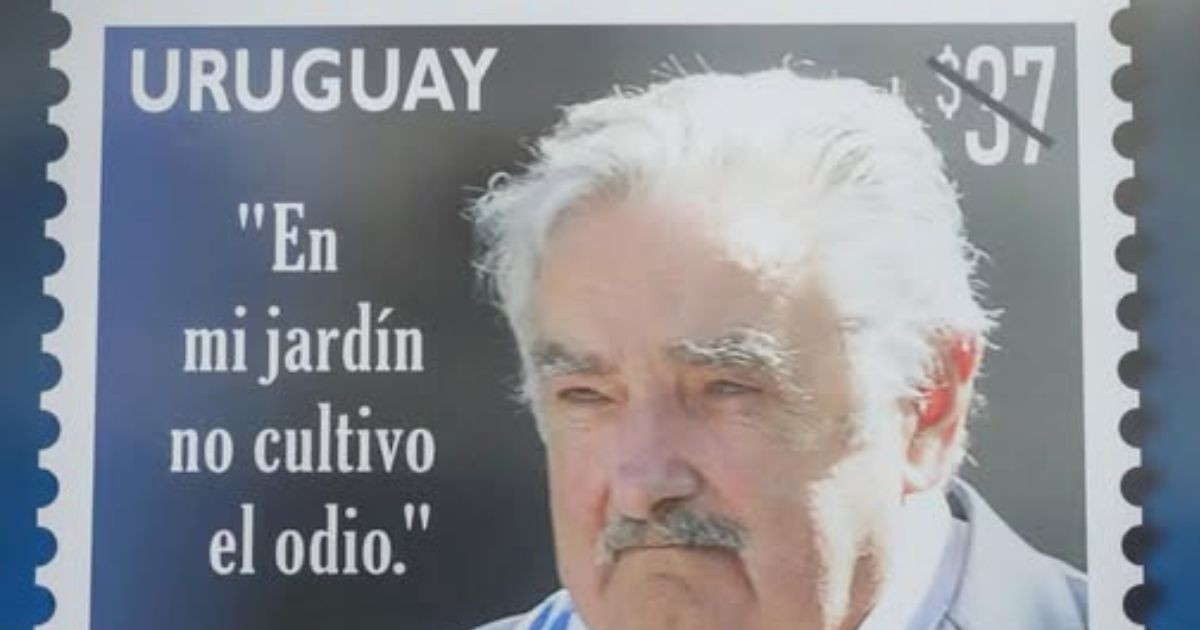
Last Tuesday, the Uruguayan Postal Service unveiled a commemorative stamp honoring former President José "Pepe" Mujica, marking one year since his passing. The stamp features a photograph from his presidential inauguration and the phrase that encapsulated his ethos: "In my garden, I cultivate no hate," as reported by the newspaper Página/12.
The event saw attendance from his widow, former Vice President Lucía Topolansky, Uruguay's President Yamandú Orsi, and other government and Frente Amplio officials.
Mujica, a historical figure in Latin America's leftist movements, was notably outspoken in his criticism of the Cuban regime during his final months.
In a candid interview with the newspaper El País, published on November 21, 2024, Mujica stated, "I set Cubans apart... they defined the dictatorship of the proletariat and a single party around 70 years ago. That doesn't work, it simply doesn't work."
During the same interview, he extended his criticism to the leadership of Venezuela and Nicaragua, accusing them of "playing democracy" and manipulating elections, concluding with a statement that resonated across the region: "They are not leftists, they are authoritarians."
A Shift in Perspective
This stance marked a significant shift in his views. Back in November 2022, Mujica refrained from labeling the Cuban regime as a dictatorship, suggesting instead that "there seems to be a shift" on the island, without committing to a direct condemnation.
The Cuban government declared an official mourning period following his death on May 16, 2025, just three days after Mujica died at 89 from esophageal cancer with liver metastasis.
The Symbolic Power of a Stamp
During the stamp's unveiling, Gabriel Bonfrisco, President of the National Postal Administration, lauded the former leader as a "contemporary philosopher, a fountain of ideas who penned letters" by hand, painting a poetic image of Mujica: "Letters have carried love, betrayals, condemnations, pardons, war notices, and peace announcements. Each envelope is a time capsule, and Pepe Mujica was that too—a man of the 20th century living apart from the fast-paced consumerism of the 21st century," according to the source.
Bonfrisco emphasized the symbolic reach of the stamp: "This stamp will travel the world, finding its way into letters destined for Spain, Mexico, Argentina, Brazil, and the most remote corners of the planet. Everyone who sees it will receive something from our small southern nation, knowing that someone here saw the world differently, for that's what great symbols do."
Reflecting on a Legacy
Fernando Pereira, President of the Frente Amplio, pondered the challenge of maintaining Mujica's legacy: "He cultivated love, and that must endure," he expressed, highlighting the difficulty of preserving not just a political legacy, as reported by the Argentine newspaper.
Industry, Energy, and Mining Minister Fernanda Cardona recalled Mujica "for the boost he gave to public companies as engines of Uruguay's development," adding, "I believe a stamp, and what philately represents, defines Pepe."
As Uruguay pays homage to a man who boldly spoke truths that many in the regional left remained silent about, Cuba is navigating its most severe crisis in decades. The Economic Commission for Latin America and the Caribbean (ECLAC) forecasts a 6.5% GDP decline for 2026, placing the island at the bottom in Latin America, with blackouts lasting up to 20-25 consecutive hours and over a million Cubans having left the country since 2021.
The single-party regime that Mujica deemed ineffective persists, yet the stamp bearing his image and words will circulate globally as a testament to the fact that even within the left, there were those unafraid to voice the truth.
Pepe Mujica's Legacy and Criticisms
What was the main criticism Pepe Mujica had towards the Cuban regime?
Mujica criticized the Cuban regime for its longstanding dictatorship of the proletariat and single-party system, which he deemed ineffective and outdated.
How did Mujica view the leadership in Venezuela and Nicaragua?
Mujica accused the leaders of Venezuela and Nicaragua of pretending to practice democracy while actually manipulating elections, labeling them as authoritarian rather than true leftists.
What symbolic significance does the commemorative stamp hold?
The stamp is a symbol of Mujica's influence and ideals, representing a figure from Uruguay who saw the world differently, and it serves as a reminder of his legacy as it travels globally.