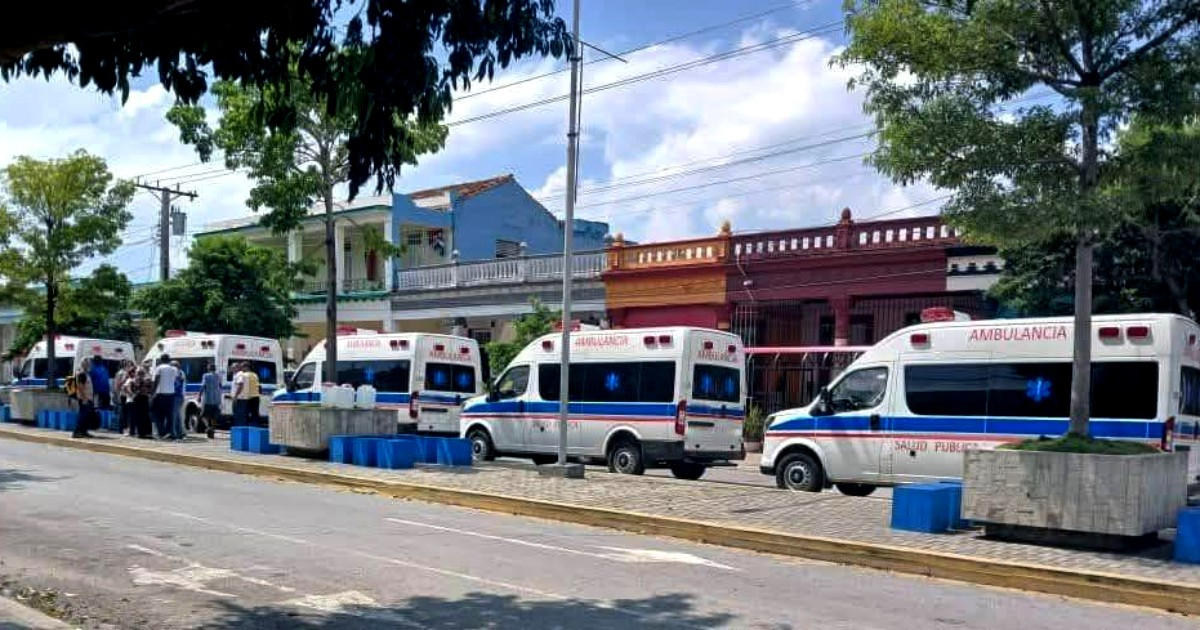
The Cuban government has declared the dispatch of five brand-new ambulances to Pinar del Río province in an effort to bolster the medical emergency response system, as stated by the Provincial Health Directorate on Facebook.
This delivery occurs against a backdrop of a crumbling healthcare infrastructure in Cuba. Complaints have become commonplace across the island, with patients and families often waiting hours for an ambulance that may never arrive.
According to the official announcement, these vehicles, manufactured by the Chinese company Dongfeng, are described as "modern ambulances." The contribution is touted as "a significant step in ensuring faster and more efficient responses to emergencies, accidents, and the transport of patients requiring specialized care."
Nevertheless, the reality faced by Cubans contradicts this official optimism. The Ministry of Public Health (MINSAP) itself has acknowledged that the nation possesses only 39.6% of the ambulances needed for emergency medical services, resulting in a shortfall exceeding 60%, as per their 2022 annual report.
In Matanzas, for instance, only 16 of the required 54 ambulances were operational, representing less than a third of the minimum fleet needed, according to data from January this year.
In February, Health Minister José Ángel Portal Miranda admitted that the Cuban healthcare system was "on the brink of collapse," attributing its decline to power outages, fuel shortages, and an aging fleet of medical vehicles.
MINSAP official Abel González Palmero conceded that ambulance wait times could exceed five hours in some cases, highlighting the severity of the situation.
The consequences of this deficit have been fatal. In April, Alexis Rosales Aldama died in Santiago de Cuba after waiting more than four hours for an ambulance that never arrived. His wife, Nelsy Betancourt Tamayo, lamented, "My husband died waiting for an ambulance." The hospital explained that the unit couldn't leave until four patients were onboard due to fuel issues.
In January, a 42-year-old former police officer, Yordanis Beltrán Beltrán, also succumbed in Santiago de Cuba following a two-hour wait for medical assistance and an ambulance.
The Ongoing Crisis in Pinar del Río
Pinar del Río is not immune to this crisis. In February, the province had already implemented severe cutbacks in healthcare services due to the energy crisis and fuel shortages: services like Medibus were reduced, elective surgeries were postponed, community consultations were limited to biweekly intervals, and hemodialysis was prioritized at nearby centers to avoid unnecessary transport.
That same month, the province received three ambulances, part of a batch of 50 units imported by MINSAP and allocated to Consolación del Sur, the provincial capital, and Sandino.
The government has attempted to patch the deficit with sporadic purchases: in December 2023, it announced the acquisition of 99 ambulances; in January, an additional 50 units were bought; and in February, 25 Chinese Foton electric ambulances were introduced, primarily for Havana.
The five new ambulances sent to Pinar del Río serve as yet another temporary solution to a structural deficit that 67 years of communist dictatorship have failed to resolve. Meanwhile, the United Nations activated a $94.1 million humanitarian plan in April to address the healthcare and food crisis in Cuba.
Understanding Cuba's Healthcare Emergency
Why is the Cuban healthcare system struggling?
The healthcare system in Cuba is struggling due to a combination of factors including power outages, fuel shortages, and an aging fleet of medical vehicles. Additionally, there is a significant shortfall in the number of ambulances needed for emergency medical services.
What steps has the Cuban government taken to address the ambulance shortage?
The Cuban government has made sporadic purchases of new ambulances, including acquiring 99 ambulances in December 2023, 50 additional units in January, and 25 electric ambulances in February. However, these measures have not fully resolved the underlying issue.
How has the United Nations responded to the crisis in Cuba?
The United Nations has activated a humanitarian plan valued at $94.1 million to address the healthcare and food crisis in Cuba, providing much-needed support in the face of ongoing challenges.