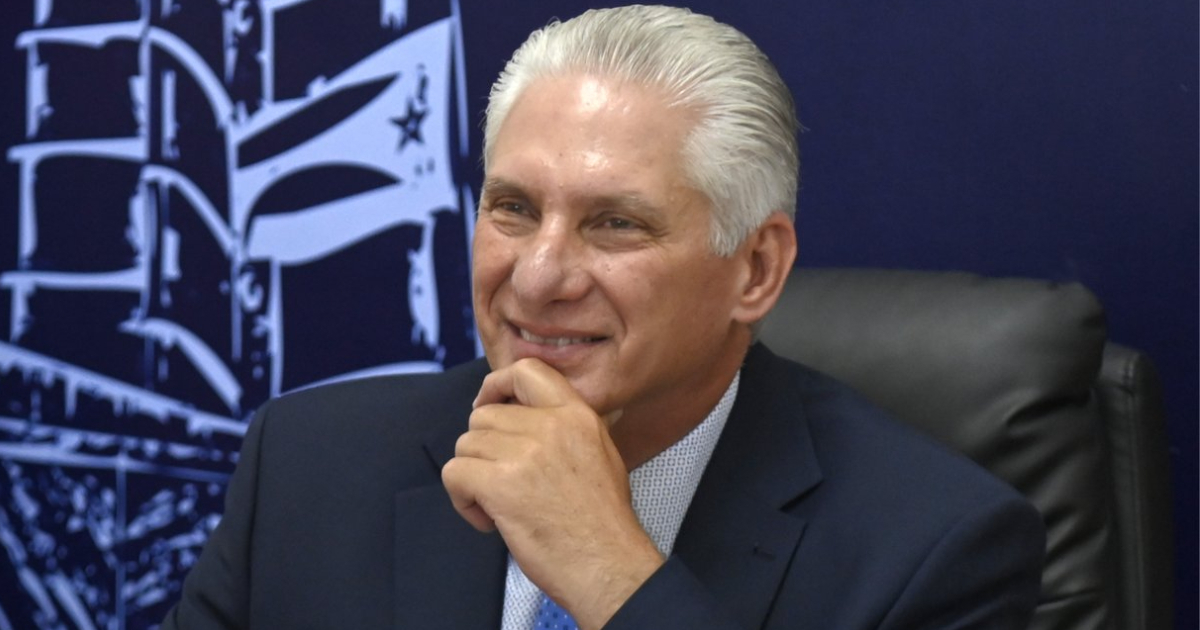
Cuban leader Miguel Díaz-Canel chose to focus on music and poetry the day after the CIA director's visit to Havana, avoiding any mention of the event.
On his X account, Díaz-Canel praised a joint performance of "Sueño con serpientes" by Silvio Rodríguez and Brazilian singer-songwriter Chico Buarque, without acknowledging the presence of John Ratcliffe, the director of the Central Intelligence Agency, who landed in Cuba on Friday, May 15th.
“What a marvel! Chico and Silvio singing together 'Sueño con serpientes,' a well-known song that nevertheless feels brand new, with Havana in these challenging times in harmonious embrace with the dazzling work of both creators. Thank you for this unique way of denouncing through music and poetry,” Díaz-Canel wrote.
The silence is striking given the historical weight of the previous day's events. The CIA arrived in Havana, and the regime itself confirmed the meeting through an official statement from the Communist Party of Cuba (PCC), noting that the encounter was requested by Washington and authorized by the "Revolutionary Direction."
Ratcliffe met with Lázaro Álvarez Casas, Minister of the Interior, sanctioned under the Global Magnitsky Act; Ramón Romero Curbelo, head of the Intelligence Directorate of the MININT; and Raúl Guillermo Rodríguez Castro, known as "Raulito" or "The Crab," grandson of Raúl Castro and lieutenant colonel of the MININT.
The CIA director carried a message from Trump to Cuba: Washington is open to discussions on economy and security, but only if Havana implements "fundamental changes."
The week’s diplomatic sequence was unusual. On Tuesday, May 12, Donald Trump posted on Truth Social: "Cuba is asking for help, and we will talk!" On Wednesday, May 13, Díaz-Canel responded that they were “always willing to dialogue.” On Thursday, May 14, Cuba agreed to discuss a U.S. aid offer of $100 million, yet remained silent on the proposal for free satellite internet access via Starlink.
The regime had labeled that service a threat just days earlier. The official media outlet Razones de Cuba published an article on May 4 titled "Starlink's Hybrid War Against Cuba," describing the service as "inherently resistant to physical attacks or governmental interdiction."
Unlike the secret contact in 2016 when then-CIA director John Brennan met with Cuban officials during the Obama-Castro thaw, the CIA this time released official photos of the trip, an unusual move for such diplomatic engagements.
The video shared by Díaz-Canel was recorded at the Ojalá Studios in the Playa municipality of Havana on April 8 and 9, during Chico Buarque’s visit to Cuba after a three-decade absence. The recording’s proceeds were to be donated to the Pediatric Unit of the National Institute of Oncology in Cuba.
While the Cuban leader extolled the music, the question that circulated on social media highlighted the contrast between official silence and the CIA visit: Where was Díaz-Canel while CIA officials were touring Havana?
Key Questions About Díaz-Canel's Silence on CIA Visit
Why did Díaz-Canel avoid mentioning the CIA director's visit?
Díaz-Canel likely chose to avoid the topic to maintain a focus on cultural diplomacy, possibly sidestepping politically sensitive issues that could arise from acknowledging the CIA's presence.
What was the significance of the CIA director's visit to Cuba?
The visit was significant as it indicated potential diplomatic engagements between the U.S. and Cuba, with discussions likely focused on economic and security issues contingent on Cuba's willingness to implement fundamental changes.