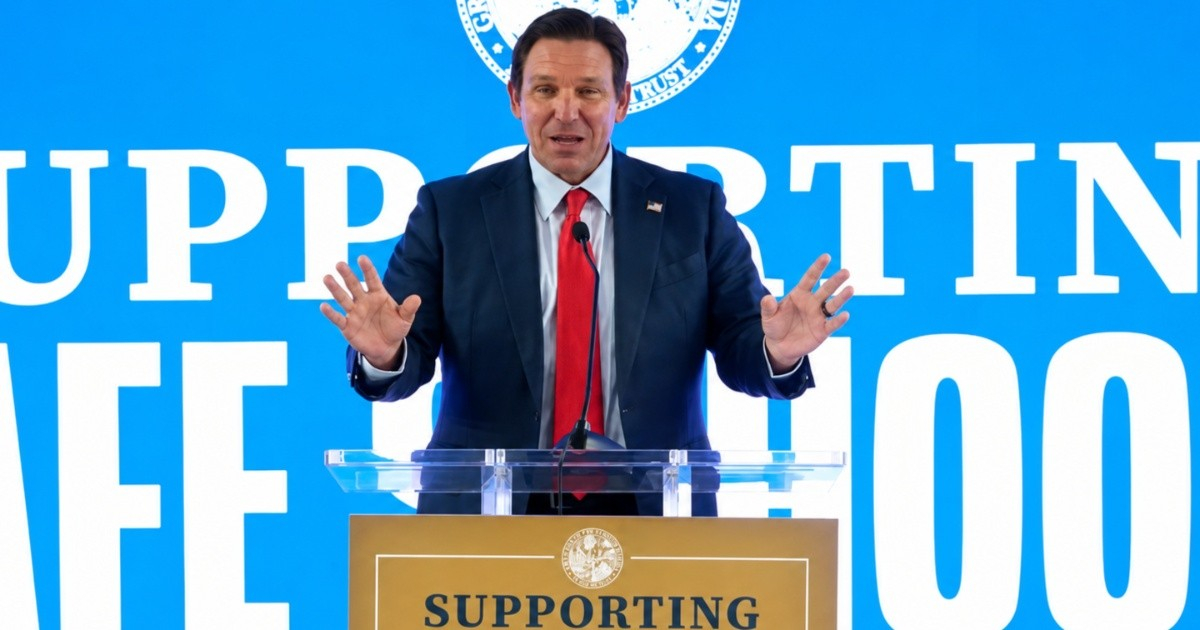
Florida Governor Ron DeSantis expressed on Friday his belief that a liberated Cuba could emerge as the leading destination in the Caribbean, driven by a flourishing economy. However, he emphasized that this potential hinges on the island establishing a legitimate constitutional government, upholding the rule of law, and fostering a free society.
These comments, shared in a video by Florida's Voice, coincide with the governor's vigorous political actions against the Cuban regime in early May.
DeSantis drew on his personal experiences as a U.S. Navy officer stationed at the Naval Base in Guantánamo from March 2006 to January 2007 to support his vision.
"I was at Gitmo during my time in the Navy, not as a detainee but as an officer. I saw everything. While you can't leave the base, I witnessed that stunning coastline," DeSantis remarked.
Potential for Economic Transformation
The governor highlighted Cuba's untapped potential for fishing, sailing, and tourism development, suggesting that it could foster "a truly robust economy" and significantly elevate the standard of living.
However, he underscored that such progress is contingent on profound political changes: "You can only achieve this with a free society, adherence to the rule of law, and a legitimate constitutional government. Achieving this is no small feat."
Challenges Under Current Regime
DeSantis was unequivocal about the current regime's shortcomings: "I hope we see that day. Each passing day is a day too long for this government to remain."
His remarks came shortly after signing the HB 905, known as the FIRE Act, at the Bay of Pigs Museum in Little Havana, surrounded by veterans of Brigade 2506 and Cuban-American leaders.
This legislation tightens Florida's restrictions on dealings with countries like Cuba, China, Russia, Iran, North Korea, Venezuela, and Syria, effective July 1, 2026.
The law also includes a provision allowing the governor to temporarily suspend these restrictions if the federal government alters Cuba's diplomatic status, potentially paving the way for trade with a future post-regime Cuba.
Historical Perspective and Future Prospects
This isn't the first time DeSantis has shared this perspective. In March 2026, he stated at Palm Beach Atlantic University that Cuba could thrive under a "moderately legitimate" government that respects rights and the rule of law. He added that it wouldn't take much for the island to "explode" in development with a political shift.
The disparity between Cuba's potential and its current state is stark. In 2024, Cuba attracted just 2.2 million international visitors, a significant drop from the 4.2 million in 2019, placing last in Caribbean tourism recovery post-pandemic according to ForwardKeys, with a 45% decline in arrivals compared to that year.
Conversely, the Dominican Republic welcomed 10.3 million visitors in 2024, more than four times Cuba's numbers, highlighting the extent of the island's lag due to decades of dictatorship.
Understanding Cuba's Economic and Political Future
What conditions does DeSantis believe are necessary for Cuba to become a top Caribbean destination?
DeSantis believes that for Cuba to realize its potential as a leading Caribbean destination, the island must adopt a legitimate constitutional government, uphold the rule of law, and foster a free society.
What legislation has DeSantis signed related to Cuba and other countries?
DeSantis signed the HB 905, or the FIRE Act, which tightens Florida's restrictions on transactions with Cuba and other nations such as China, Russia, and Iran, effective July 1, 2026. It includes a clause allowing potential suspension of these restrictions if diplomatic status changes occur.