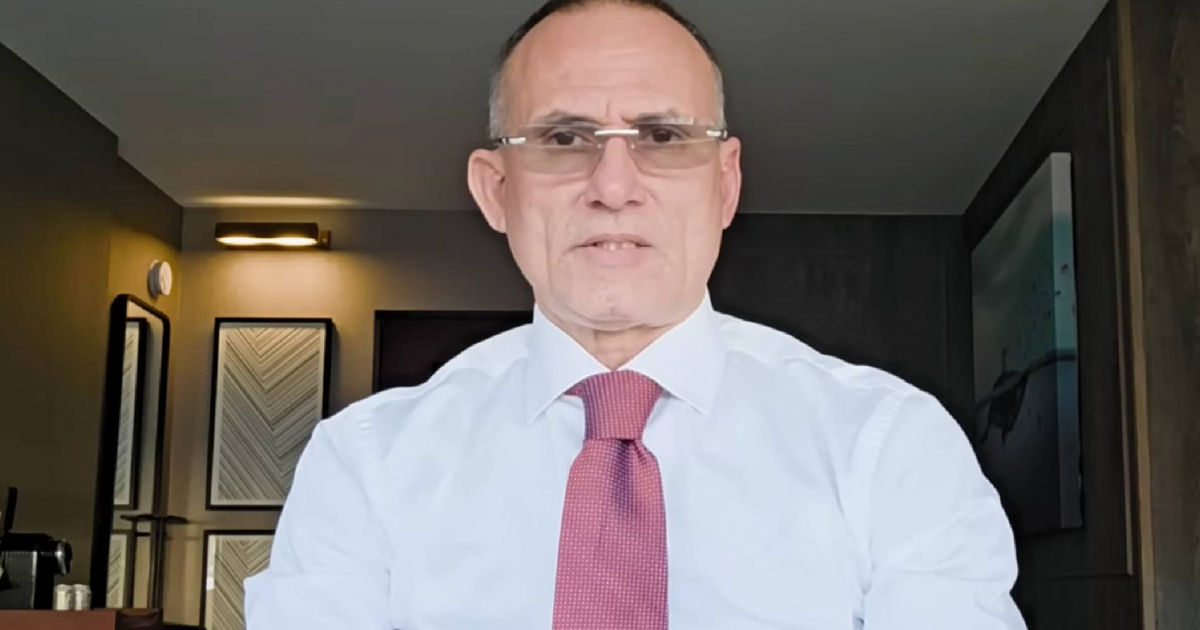
José Daniel Ferrer García, the prominent leader of the Patriotic Union of Cuba (UNPACU), recently took to social media to declare that the United States possesses "all the moral, legal, military, economic, and political strength needed to terminate the Castro-communist regime." Ferrer emphasized that this effort is supported by "the majority of Cubans both on the island and in exile."
This statement comes on the heels of news that the U.S. Department of Justice is pursuing criminal charges against Raúl Castro for the downing of two Brothers to the Rescue planes on February 24, 1996. This incident resulted in the deaths of four American citizens or permanent residents over international waters.
Ferrer’s mention of U.S. "legal strength" gains immediate relevance with the potential indictment of the 94-year-old former dictator. The Organization of American States determined that the attack occurred nine to ten nautical miles beyond Cuban territorial airspace, violating international law.
In his post, the dissident called for an end to decades of oppression with a series of direct demands: "It is time to end the oppression and extreme poverty, the repression, and political imprisonments. It is time to stop exiling dissidents and for those of us who wish to return to our homeland to be able to do so. It is time for Cubans to have freedom of expression, press, association, assembly, and peaceful protest in our country. It is time for free multi-party elections."
This post is part of an intense international campaign Ferrer has been conducting since early May. On May 5, he appeared before the European Parliament in Brussels, where he denounced "the worst crisis in modern Cuban history" and called for Magnitsky sanctions against the regime.
The following day, he urged European lawmakers to prompt the U.S. to act in Cuba "as soon as possible," referencing the January 3rd operation in Venezuela that resulted in the capture of Nicolás Maduro and the deaths of 32 Cuban intelligence agents.
On May 11, during an interview with the Spanish newspaper El Independiente from Warsaw, Ferrer confidently stated that the regime "will not survive this year" and warned Europe: "If Europe continues to turn its back on us, Cuba will end up venerating Donald Trump. Spain will bear responsibility."
Ferrer’s argument regarding popular support is backed by recent surveys. An independent poll with 42,263 valid responses showed that 60.9% of Cubans favor direct U.S. military intervention, and 64.9% support overthrowing the regime "by any means necessary, including armed intervention."
On Thursday, CIA Director John Ratcliffe traveled to Havana to meet with officials from the Cuban Ministry of the Interior, including Raúl Castro's grandson, to convey that the U.S. is open to dialogue "only if Cuba makes fundamental changes."
Ferrer was exiled from Cuba in October 2025 along with his family after a hunger strike in Mar Verde prison to protest torture. Amnesty International has recognized him as a prisoner of conscience.
"Without a doubt, we are very close to the end of the Castro-communist regime," Ferrer declared recently, capturing the essence of his international campaign over the past weeks.
Key Questions About U.S. Intervention and Cuban Regime Change
What is the basis of Ferrer's claim about U.S. strength against the Cuban regime?
Ferrer claims the U.S. has moral, legal, military, economic, and political power to end the Castro-communist regime, supported by most Cubans on the island and in exile.
Why is the U.S. Department of Justice considering charges against Raúl Castro?
The U.S. Department of Justice is contemplating charges against Raúl Castro for the 1996 downing of two Brothers to the Rescue planes, resulting in the deaths of four Americans over international waters.
How does Ferrer view the potential for regime change in Cuba?
Ferrer believes that the Cuban regime will not survive the year and stresses the importance of international support, especially from Europe, to avoid further crisis.