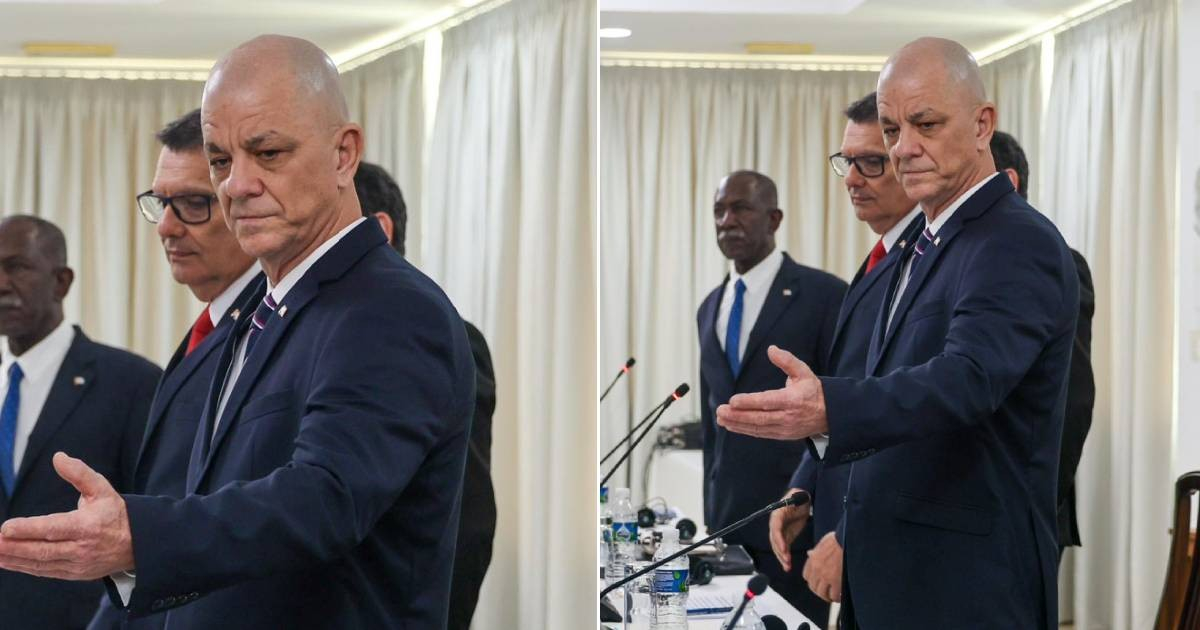
The head of the Central Intelligence Agency (CIA), John Ratcliffe, held a meeting on Thursday in Havana with Brigadier General Ramón Romero Curbelo, who leads the Intelligence Directorate of Cuba's Ministry of the Interior (MININT). Until this meeting, Romero Curbelo had operated largely in the shadows of the regime's repressive apparatus.
The public disclosure of Romero Curbelo's identity came from Miguel Cossío of the American Museum of the Cuban Diaspora. This revelation was based on photos published by the CIA on X, where the faces of Cuban officials were obscured, documenting Ratcliffe's visit to Havana.
"This is General Ramón Romero Curbelo, head of the Cuban regime's Intelligence Directorate. He is the 10 of Spades in our Cuban Deck," Cossío announced on X. "The Cuban American exile community is well aware of who he is."
Romero Curbelo features as the "10 of Spades" in The Cuban Deck, a project initiated in February 2026 by the American Museum of the Cuban Diaspora and the Foundation for Human Rights in Cuba. This initiative identifies 56 key figures in Cuba's power structure, inspired by the U.S. military's "most wanted" playing cards used in Iraq.
Key Roles and Responsibilities
Reports indicate that the general holds a pivotal position within the Cuban state security framework, being instrumental in the island's intelligence, counterintelligence, and social control mechanisms.
His leadership directly oversees forces responsible for suppressing citizen protests and monitoring dissident groups.
Broader Meetings and Context
In addition to engaging with Romero Curbelo, Ratcliffe also met with Interior Minister Lázaro Álvarez Casas—who is sanctioned by the U.S. under the Global Magnitsky Act for his involvement in repression—and Raúl Guillermo Rodríguez Castro, known as "El Cangrejo" or "Raulito," who is a lieutenant colonel in MININT and the grandson of Raúl Castro.
The visit comes at a time of severe crisis for the regime: 65% of Cuba's territory experienced simultaneous blackouts last Tuesday, and Energy Minister Vicente de la O Levy confirmed on state television that oil reserves are depleted.
"The impact of the blockade is causing us significant harm... because we are still not receiving fuel," stated De la O Levy.
The hardships have sparked protests with residents banging pots and pans in Havana neighborhoods, where people in Playa shouted, "Turn on the lights!"
Political Implications and Reactions
The Cuban regime was the first to disclose the meeting through an official statement, framing it as an effort for "political dialogue" and using the occasion to argue that Cuba "does not pose a threat to U.S. national security, nor are there legitimate reasons to include it on the list of countries allegedly sponsoring terrorism."
According to CIA sources, Ratcliffe conveyed President Donald Trump's message that the U.S. is open to negotiating economic and security matters, but only if Cuba implements "fundamental changes."
Secretary of State Marco Rubio was blunt in his assessment on Fox News: "It's a broken, non-functional economy, impossible to change. I don't believe we can alter Cuba's trajectory while these people are in charge."
Frequently Asked Questions about the CIA's Meeting in Cuba
Who is Ramón Romero Curbelo?
Ramón Romero Curbelo is the head of the Intelligence Directorate of Cuba's Ministry of the Interior, a key figure in the regime's intelligence and security operations.
What is The Cuban Deck?
The Cuban Deck is a project by the American Museum of the Cuban Diaspora and the Foundation for Human Rights in Cuba, identifying 56 influential figures in Cuba's power structure, modeled after the U.S. military's "most wanted" playing cards from Iraq.
What challenges is Cuba facing currently?
Cuba is experiencing a severe energy crisis, with widespread blackouts and depleted oil reserves, leading to public protests and discontent.