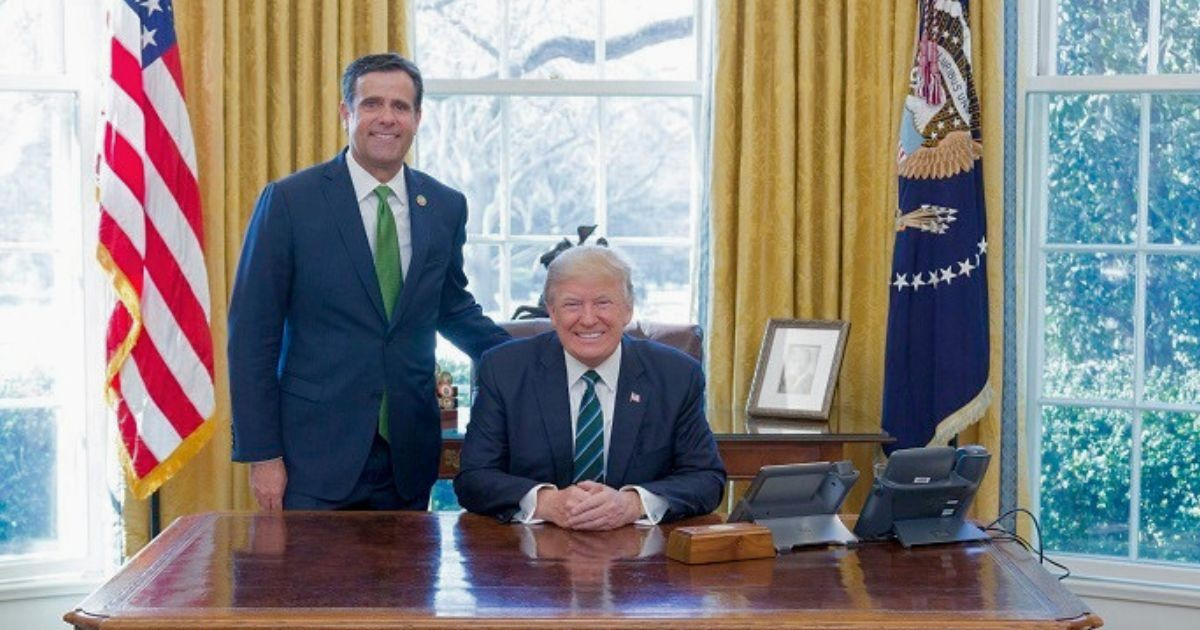
On Thursday, CIA Director John Ratcliffe made a significant journey to Havana, meeting with high-ranking officials of the Cuban regime to convey a direct message from President Donald Trump. According to Fox News, the United States is open to dialogue but only if Cuba implements substantial changes.
Reports indicate that Ratcliffe held discussions with Raúl Guillermo Rodríguez Castro, the grandson of Raúl Castro, known as "El Cangrejo," and Interior Minister Lázaro Álvarez Casas. The central message from Washington was a willingness to engage seriously on economic and security issues, contingent on Cuba making fundamental changes.
Key topics covered during the meeting included intelligence cooperation, economic stability, and security. It was emphasized that Cuba cannot continue to be a safe haven for U.S. adversaries in the Western Hemisphere.
CIA sources highlighted Ratcliffe's reference to Venezuela as an example underscoring the seriousness of Trump's stance: "As demonstrated with Venezuela, President Donald Trump must be taken seriously."
The Cuban government confirmed the visit through an official statement published on the Communist Party's website, noting that Washington requested the meeting and that "the Directorate of the Revolution approved this visit."
In the same statement, the Cuban delegation claimed to present evidence "categorically demonstrating that Cuba does not pose a threat to U.S. national security" and argued against its inclusion on the list of State Sponsors of Terrorism, where Trump reinstated it on January 20, 2025, shortly after beginning his second term.
A VIP U.S. Air Force plane from Joint Base Andrews landed in Havana for the mission, marking the second known official U.S. flight to Cuban soil since 2016.
This visit comes amid a week of mixed signals from the Cuban regime. Last Tuesday, Miguel Díaz-Canel expressed a willingness "always to dialogue." In contrast, Foreign Minister Bruno Rodríguez Parrilla, who had previously dismissed the $100 million humanitarian aid offer revealed by Secretary of State Marco Rubio as a "fantasy," announced readiness to "listen to the characteristics" of the proposal.
The economic backdrop intensifies the pressure. The Economic Commission for Latin America and the Caribbean (ECLAC) projects a 6.5% contraction in Cuba's GDP for 2026, the worst in Latin America. Economist Pedro Monreal warns the decline could reach 15%, equaling the worst year of the Special Period in 1993. The loss of 25,000 to 30,000 barrels of Venezuelan oil daily, following Nicolás Maduro's capture, has led to power outages lasting 20-25 hours daily across the island.
Ratcliffe previously utilized this model of direct intelligence diplomacy in January 2026, traveling to Caracas to meet with interim Venezuelan President Delcy Rodríguez on a mission directly ordered by Trump.
CIA sources were clear about the limits of this outreach: "The dialogue offers Cuba a rare chance to stabilize its failing economy and address the needs of its people, but this window of opportunity will not remain open indefinitely." They further stated, "The Cuban government must decide whether to seize the moment or persist on an unsustainable path that only leads to further isolation and instability."
Key Questions About U.S.-Cuba Relations
What changes does the U.S. expect from Cuba for dialogue?
The U.S. expects Cuba to make significant changes in its economic and security policies, moving away from being a safe haven for U.S. adversaries.
How did the Cuban government respond to the CIA Director’s visit?
The Cuban government confirmed the visit, highlighting that it was requested by Washington and approved by the Directorate of the Revolution. They also argued against Cuba's inclusion on the State Sponsors of Terrorism list.
What is the economic situation in Cuba currently?
Cuba is facing severe economic challenges, with a projected GDP contraction of 6.5% for 2026 and significant power outages due to reduced oil supplies from Venezuela.