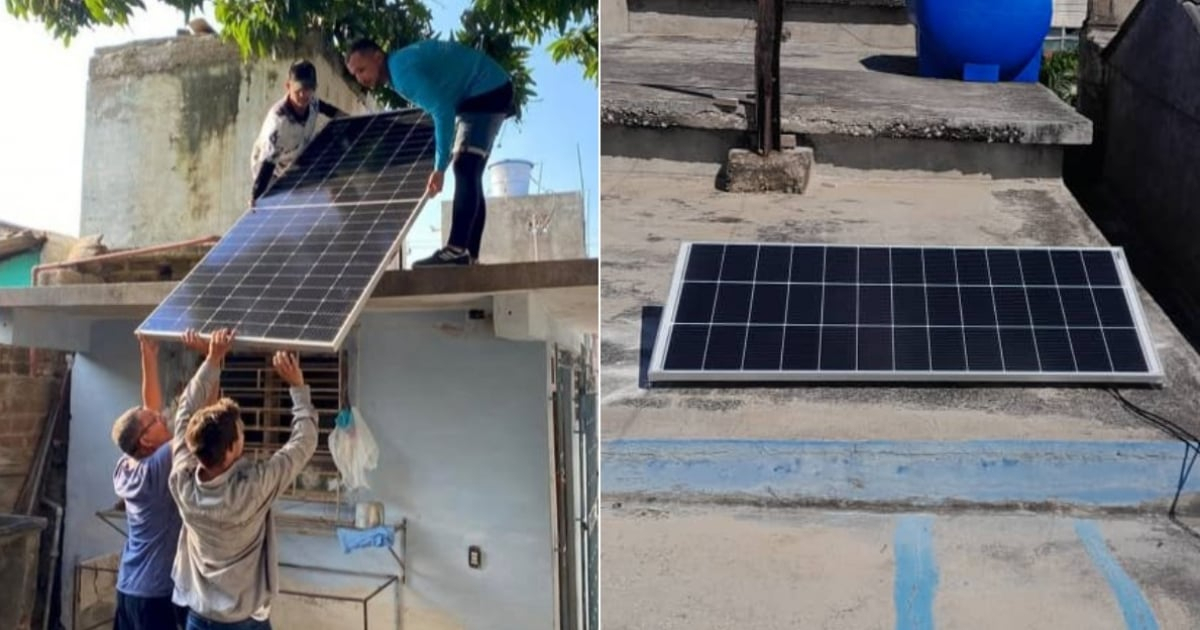
The Food Monitor Program (FMP) has raised alarms about the emergence of a "market of scarcity" in Cuba, highlighting how online stores are selling portable generators for as much as $800 and small gas canisters for $30, both with home delivery. This occurs while millions of Cuban households endure up to 22 hours of daily blackouts and have gone over a year without regular liquefied gas supplies.
The most striking aspect of the report is the price of an Ecoflow portable battery, which can reach up to $829. This is equivalent to 205 times the minimum Cuban salary, using the informal exchange rate, considering that the island's minimum wage is 2,100 pesos per month, which translates to just four or five dollars.
In their infographic titled "The Market of Scarcity: Energy Only for Those with Dollars," the organization warns that "while millions of Cubans face blackouts lasting up to 20 hours, access to energy has become a commercial privilege priced in foreign currencies that are unattainable for most."
Online platforms advertise Ecoflow batteries starting at $829.64, offering immediate delivery, a six-month warranty, and compatibility with solar panels. Meanwhile, small liquefied gas canisters are sold for $30 each, a cost equivalent to six minimum wages.
Unsafe Alternatives for Most Cubans
For the vast majority who cannot afford these solutions, the alternatives pose significant risks. According to the FMP's Food Survey, conducted with 2,513 valid responses across 16 provinces between May and July 2025, the two most common strategies employed by Cubans to cope with the lack of electricity are using toxic fuels and cooking at irregular hours, taking advantage of the brief windows when the power is on.
Staggering Statistics from the Survey
The survey data paints a grim picture: 80% of respondents reported that blackouts prevented them from cooking, 47.59% lost food due to power outages, and one in three households had at least one member go to bed hungry in the past month.
Deep-Rooted Energy Crisis
The energy crisis stems from structural issues that the regime has been unable—or unwilling—to address. The national electric system has a generation deficit exceeding 2,000 MW and has experienced four total collapses since October 2024.
The shortage of liquefied gas worsened in the same month, and by January 2026, the tanker Emilia returned to Cuba empty due to the State's inability to pay. In February 2026, the government launched an energy contingency plan that slashed diesel allocation for agriculture by 60%, while the crisis slowed the unloading of bulk ships by 50% due to a lack of power for silos and conveyor belts. Cuba relies on imports for over 80% of its food.
In 2025, the average Cuban salary was 6,930 pesos per month, approximately $13 at the informal exchange rate, according to the National Office of Statistics and Information.
FMP concluded its report by sharply characterizing the issue: "The food crisis is fundamentally unequal, rooted in state neglect, clientelist contracts with the ruling class, and a systematic violation of basic rights."
Understanding Cuba's Economic and Energy Challenges
What is the main concern highlighted by the Food Monitor Program?
The Food Monitor Program has raised concerns about the emergence of a "market of scarcity" in Cuba, where essential items like portable generators and gas canisters are sold at exorbitant prices, making them inaccessible to the majority of the population.
How does the energy crisis affect Cuban households?
Cuban households are severely affected by the energy crisis, facing blackouts of up to 22 hours daily. This has led to significant challenges such as inability to cook, food spoilage, and even hunger.
What are the structural issues contributing to the energy crisis in Cuba?
The energy crisis in Cuba is exacerbated by a generation deficit of over 2,000 MW, recurring total system collapses, and a lack of financial resources to secure essential imports like liquefied gas.