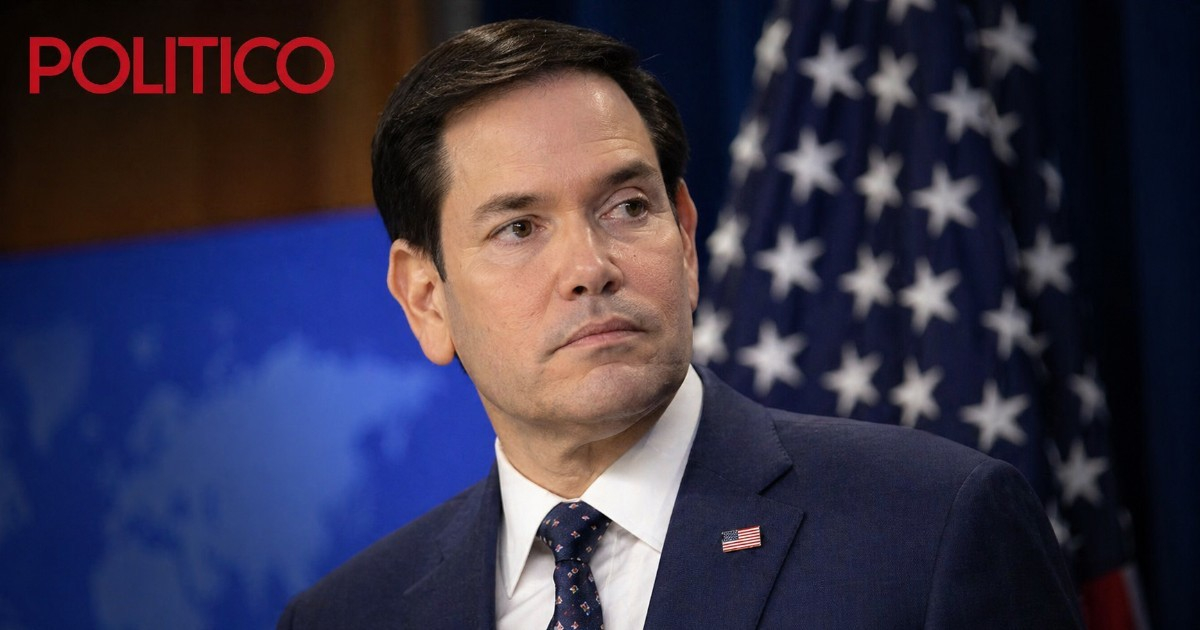
In a surprising move, China officially altered the transliteration of U.S. Secretary of State Marco Rubio's name into Chinese characters, enabling him to enter the country despite existing sanctions that bar his entry, according to a report from AFP on Thursday.
The strategy involved changing the Chinese ideogram used for the first syllable of his last name—from "鲁" (Lǔ) to a character with a similar sound, yet technically different—resulting in a "new name," Marco Lubiao, which does not appear on China's sanctioned lists.
This alteration has been in effect since January 2025, when then-Senator Rubio was appointed Secretary of State by President Donald Trump. Chinese state media adopted the new transliteration at that time.
During the Trump-Xi summit held at the Great Hall of the People in Beijing on Thursday, the official sign listing the U.S. delegation confirmed the new spelling, effectively allowing Rubio to bypass border controls.
This marked Rubio's first-ever visit to Chinese soil.
Background on the Sanctions
China imposed sanctions on Rubio on July 19, 2020, during his tenure as a Republican senator from Florida. The sanctions were in retaliation for his involvement in the Hong Kong Autonomy Act and his support for U.S. sanctions against Chinese officials over human rights abuses against the Uighur minority in Xinjiang.
The measures included a ban on entry to mainland China, Hong Kong, and Macau, as well as freezing of assets and prohibitions on transactions with Chinese entities.
At the time, Rubio described the sanctions as an "honor" and used them to criticize the Chinese Communist Party.
China's Subtle Diplomacy
On Tuesday, Liu Pengyu, the spokesperson for the Chinese embassy in the United States, offered a statement that left room for a technical reinterpretation: "The sanctions target the words and actions of Mr. Rubio when he served as a U.S. senator in relation to China."
The new Chinese character used for "lú" in Rubio's name carries connotations such as "tough," "rough," or "coarse," which some analysts see as a possible diplomatic nuance from Beijing.
Rubio, who is of Cuban descent, attended the summit as part of a large U.S. delegation that included Secretary of Defense Pete Hegseth, Secretary of the Treasury Scott Bessent, and business figures like Elon Musk, Tim Cook, and Jensen Huang.
President Trump hailed the meeting as "probably the greatest summit in history" and asserted that "the relationship between China and the U.S. is going to be better than ever."
The irony was not lost: the same official who described China as an "unprecedented adversary" during his confirmation hearing as Secretary of State, and who in April 2026 claimed that Cuba hosts at least 12 Chinese-operated signals intelligence facilities, traveled to Beijing under a name technically different from the one on China's sanction lists.
As of 2026, the sanctions against Rubio remain formally in place and have not been lifted, making the change in transliteration an unprecedented maneuver in modern diplomacy.
Marco Rubio and U.S.-China Relations: Key Questions
Why was Marco Rubio sanctioned by China?
Marco Rubio was sanctioned by China in 2020 due to his involvement in the Hong Kong Autonomy Act and his support for U.S. sanctions against Chinese officials for human rights abuses in Xinjiang.
What does the name change to "Marco Lubiao" signify?
The name change to "Marco Lubiao" was a strategic move to bypass the sanctions list, as the new transliteration does not appear on China's sanctioned lists.
Is this name change a common diplomatic practice?
No, this change in transliteration is an unprecedented diplomatic maneuver, highlighting the complexity of international relations and sanctions.
What implications does this have for U.S.-China relations?
This maneuver indicates a potential shift in diplomatic strategies and could signify a warming of relations between the U.S. and China, despite existing tensions.