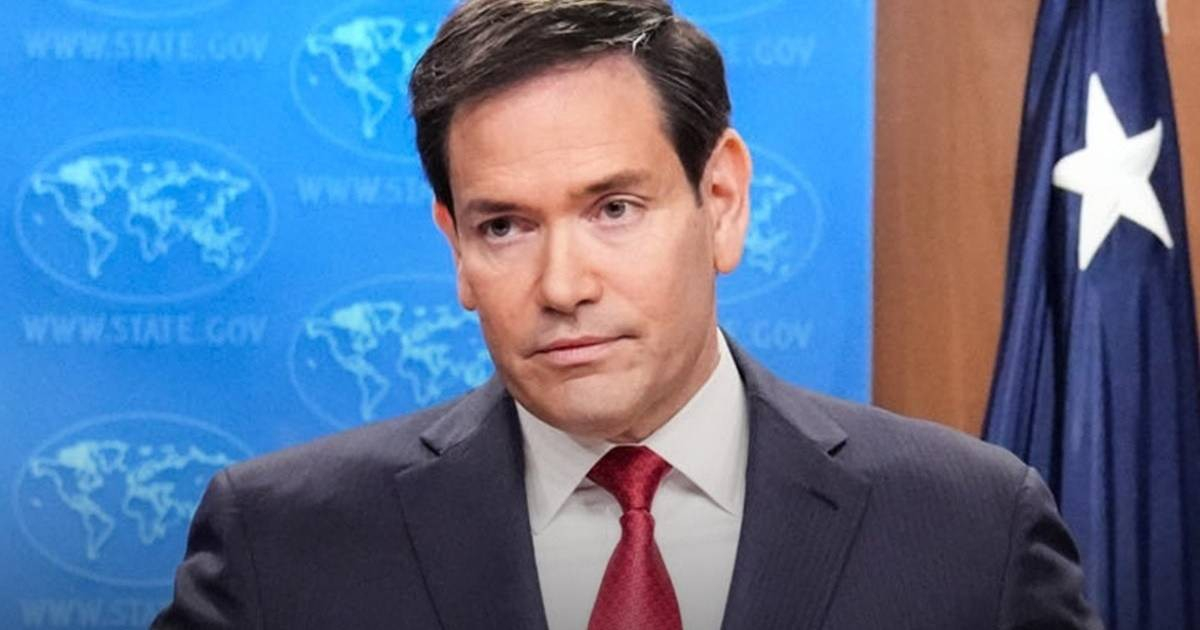
U.S. Secretary of State Marco Rubio expressed his grave concerns about the current state of affairs in Cuba during an exclusive interview with NBC's Tom Yamas on Thursday. Rubio labeled the situation as "unacceptable" and a direct threat to the United States, while criticizing the Cuban regime for rejecting a $100 million humanitarian aid offer intended for the Cuban people.
The remarks were reported by Noticias Telemundo, with Rubio speaking in Spanish aboard the Air Force One en route to China. His statements add to a growing chorus of criticisms from the Secretary of State regarding the Cuban crisis.
Humanitarian Aid Rejected
"The ongoing crisis in Cuba is intolerable. It's a threat to the U.S. to have a failed state just 90 miles from our shores. The regime not only stifles political freedom but is also economically devastating the lives of Cubans," Rubio stated emphatically.
Emphasizing the availability of aid, Rubio noted, "We are offering the Cuban people $100 million in humanitarian assistance, yet the regime refuses it."
Message to the Cuban People
Rubio also conveyed a direct message to Cubans: "It's crucial for the Cuban people to know that there is over $100 million in food, medicine, and humanitarian aid ready from the U.S. The regime is blocking its distribution within the island."
Telemundo further reported that Rubio predicted political change in Cuba within a year, although specifics of his forecast were not detailed in the broadcast.
Economic Outlook of Cuba
In a separate interview with Fox News on the same day, Rubio was even more explicit about Cuba's economic future. He stated, "Cuba's economic path cannot change while current leaders remain in power," and highlighted that the military conglomerate GAESA amasses $16 billion while "people literally scavenge for food from the streets."
The State Department formalized the $100 million aid offer on Wednesday, announcing that it would be channeled through the Catholic Church and independent NGOs to bypass the Cuban government.
Cuban Foreign Minister Bruno Rodríguez Parrilla had dismissed the offer as a "fabrication" and "lie" earlier in the week, denying any formal proposal.
However, on the same Thursday, amidst announcements of total depletion of diesel and fuel oil reserves and a record electrical deficit of 2,113 MW, Rodríguez Parrilla's stance showed a shift on social media platform X: "We are open to understanding the proposal's specifics and implementation," he stated, provided the offer is "free from political maneuvers."
Energy Crisis Deepens
The Department of State's statement made it clear that the decision rests with the Cuban regime: "The choice is theirs to accept our life-saving aid or refuse it, ultimately holding themselves accountable to the Cuban people for blocking this critical assistance."
Cuba is enduring its most severe energy crisis in decades, with blackouts lasting up to 22 hours a day in Havana, seven total collapses of the National Electric System within 18 months, and projected GDP contraction between 6.5% and 15% by 2026, amid over 240 sanctions imposed by the Trump administration since January of that year.
Understanding the U.S.-Cuba Aid Conflict
Why is the U.S. offering $100 million in aid to Cuba?
The U.S. aims to provide humanitarian assistance to alleviate the economic and humanitarian crisis affecting the Cuban people.
How has the Cuban government responded to the aid offer?
Initially, the Cuban government dismissed the offer as a lie, but later expressed willingness to discuss the proposal's specifics, provided it lacked political motives.
What is the current energy situation in Cuba?
Cuba is experiencing its worst energy crisis in decades, with severe blackouts and a significant deficit in electricity production.