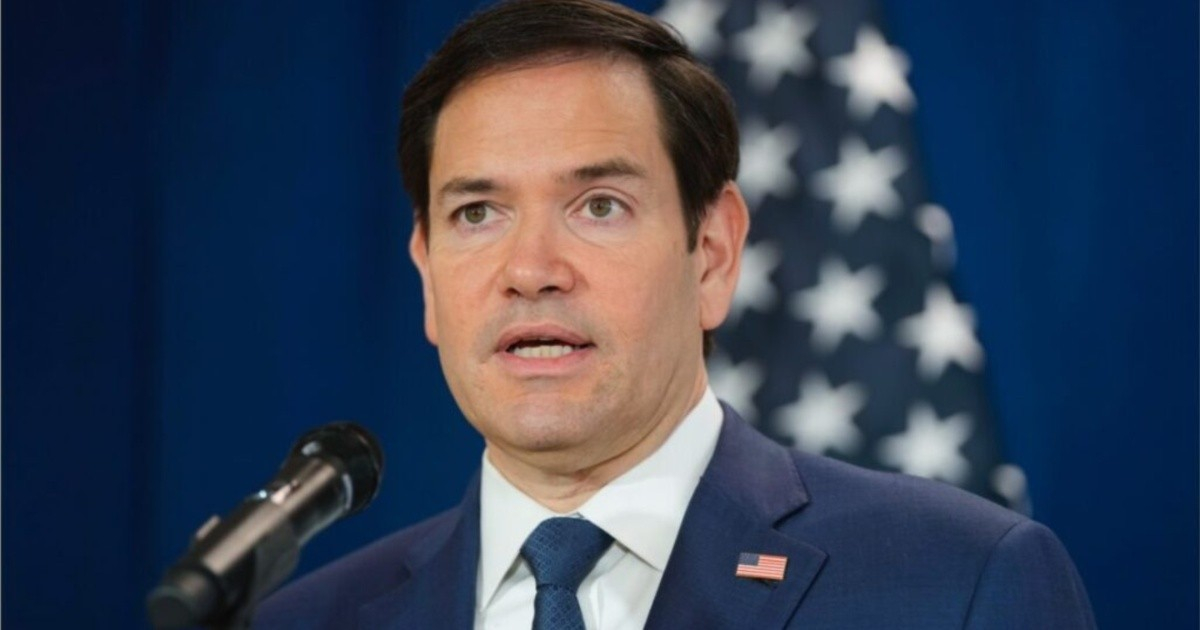
U.S. Secretary of State Marco Rubio expressed that Cuba has no reason to be impoverished, especially given its substantial economic potential. This statement was made during an exclusive interview with Sean Hannity from Fox News, conducted aboard Air Force One en route to China.
Rubio emphasized three key areas of potential for the island: its significant deposits of minerals, including some of the world's highest-quality rare earth minerals; an exceptional opportunity for tourism; and highly fertile agricultural land.
"Cuba shouldn't be a poor country. Its people shouldn't be starving. They should be thriving," the Secretary of State asserted.
He further elaborated that the island's economic struggles are due entirely to political mismanagement, not a lack of human or geographical resources. "Cubans leave Cuba, move to other countries, and find success. The only place where Cubans seem unable to flourish is in Cuba itself," Rubio noted.
The Role of Expatriates and Investors
He highlighted that with genuine political reform, Cuba would attract a "huge community of Cuban-American expatriates willing to return and invest," alongside global interest from foreign investors.
However, Rubio was unequivocal about the primary barrier: "Cuba's economic path cannot change while those currently in power remain. That's what must change, as these leaders have proven their incompetence."
GAESA: The Economic Stronghold
Rubio pointed directly at GAESA, the military-controlled business conglomerate that oversees between 40% and 70% of Cuba's formal economy, as the regime's tool for plundering resources.
"Wealth in Cuba is controlled by a company owned by military generals who pocket all the money. People are literally eating scraps from the streets, while this company hoards $16 billion," he detailed.
These remarks come a week after Rubio announced direct sanctions against GAESA and its CEO, Brigadier General Ania Guillermina Lastres Morera, labeling the conglomerate as "the core of Cuba's kleptocratic communist system."
Foreign companies with ties to GAESA have until June 5 to sever connections, facing secondary sanctions under Executive Order 14404, signed by Trump on May 1.
Cuba's Economic Outlook
The economic context in Cuba paints a stark picture. The Economic Commission for Latin America and the Caribbean (CEPAL) forecasts a 6.5% contraction of Cuba's GDP by 2026, the worst in Latin America, while economist Pedro Monreal warns the decline could reach 15%, matching the worst year of the Special Period.
Since 2019, the Cuban economy has shrunk by approximately 23%.
Tourism, a major potential asset highlighted by the Republican politician, has plummeted from 4.7 million visitors in 2018 to 1.81 million in 2025, with an additional 52% drop in the first quarter of 2026.
"You can't fix their economy without changing their government system," Rubio concluded. On April 27, he had already warned that Cuba faces two possible futures: "total collapse" or "substantial and serious economic reforms," insisting that neither is feasible under the current regime.
Key Issues Regarding Cuba's Economic Potential
What are the main resources that suggest Cuba should not be a poor country?
Cuba is rich in mineral deposits, has exceptional potential for tourism, and possesses fertile agricultural land, all of which suggest that the country should not be impoverished.
Why does Marco Rubio believe Cuba's economic failure is political?
Rubio argues that Cuba's economic failure is due to political mismanagement, as evidenced by the success of Cubans abroad compared to their struggles within Cuba.
How does GAESA impact Cuba's economy?
GAESA, a military-controlled conglomerate, dominates a significant portion of Cuba's economy, effectively siphoning wealth and preventing economic growth for the general population.