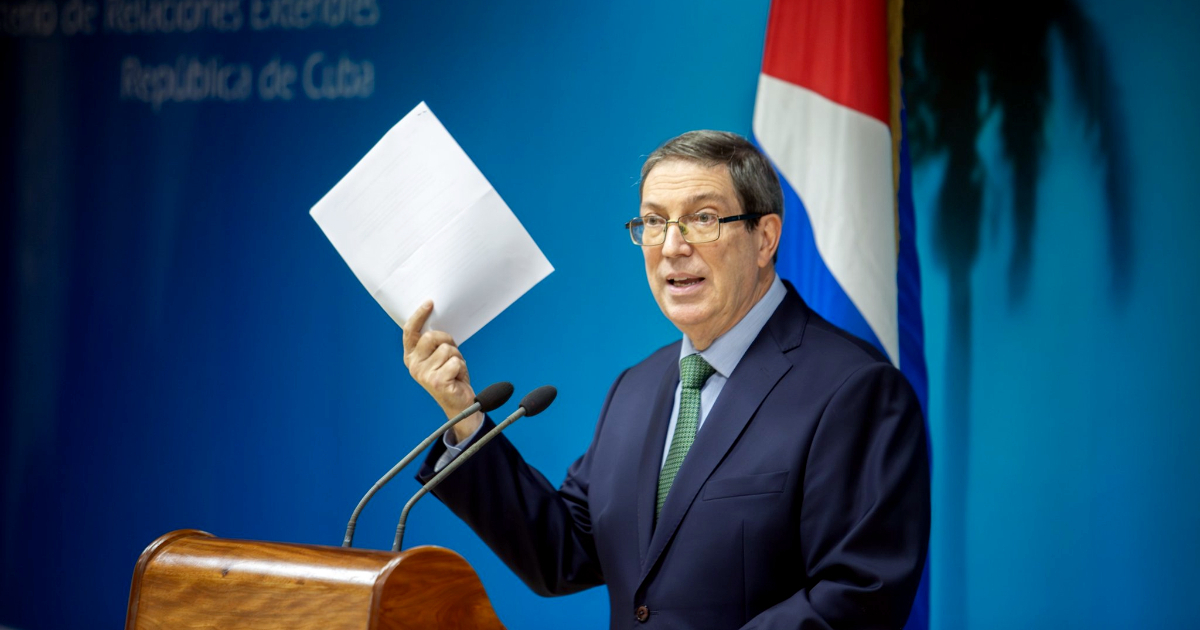
This Thursday, Foreign Minister Bruno Rodríguez Parrilla announced that the Cuban government is open to discussing the details of a $100 million humanitarian aid offer from the Trump Administration. This marks a significant shift from their outright rejection just two days prior.
In a statement shared on X, Rodríguez highlighted that it's "the first time" Washington has publicly formalized the proposal through a State Department release. However, he noted the uncertainty surrounding whether the aid would be in cash or goods, and if it would address Cuba's most urgent needs: fuels, food, and medicine.
"We are willing to discuss the specifics of this offer and how it would be implemented," the minister stated, emphasizing that their openness depends on the proposal being "free from political maneuvers and attempts to exploit the hardships and suffering of a people under siege."
This shift in tone is noteworthy. On Tuesday, Rodríguez had dismissed the offer as a "fable" and "lie," denying that any Cuban institution had received a formal proposal and questioning rhetorically: "Is it a donation, a deceit, or a dirty deal to undermine our independence?"
The change coincides with Wednesday's announcement by Energy Minister Vicente de la O Levy about the complete depletion of diesel and fuel oil reserves in Cuba. The island recorded a record electricity deficit of 2,113 MW that day, surpassing the previous high of 2,075 MW from March, leading to power outages lasting up to 22 hours daily in Havana.
Background and Reactions
The aid proposal originated from a 45-minute meeting between Secretary of State Marco Rubio and Pope Leo XIV at the Vatican on May 7, with Cuba being a key topic. The following day, Rubio announced from Rome that Washington had offered the $100 million, but that the regime had refused to distribute it to the people.
The State Department issued an official statement on Wednesday, clarifying that the aid would be channeled through the Catholic Church — Caritas — and independent non-governmental organizations, deliberately bypassing the Cuban state. Additionally, free access to Starlink satellite internet was offered.
Rubio pointed out that the regime had only allowed $2.5 million of that aid to be distributed through Caritas and the Catholic Church.
Cuban-American Congressman Carlos Giménez warned that the Cuban government might attempt to "steal the aid and profit by reselling it to the people."
Cuba's Stance on Foreign Aid
Rodríguez stated in his message that Cuba "does not typically reject foreign aid offered in good faith and with genuine cooperation intentions" and has "no issues working with the Catholic Church, with whom it has a long and positive history of joint cooperation efforts."
However, the foreign minister insisted that "the best assistance the US government could provide to the noble Cuban people at this and any time would be to ease the measures of the energy, economic, commercial, and financial blockade, which has intensified like never before in recent months."
Frequently Asked Questions About US Aid to Cuba
Why is the Cuban government reconsidering the US aid offer?
The Cuban government is reconsidering the US aid offer due to the recent depletion of fuel reserves and record electricity deficits, which have intensified the country's urgent needs.
How is the US planning to distribute the aid to Cuba?
The US plans to distribute the aid through the Catholic Church's Caritas organization and independent NGOs, avoiding the Cuban government's direct involvement.
What are Cuba's main conditions for accepting the aid?
Cuba's main conditions for accepting the aid include ensuring that the offer is free from political manipulation and that it genuinely addresses the urgent needs of the Cuban people.