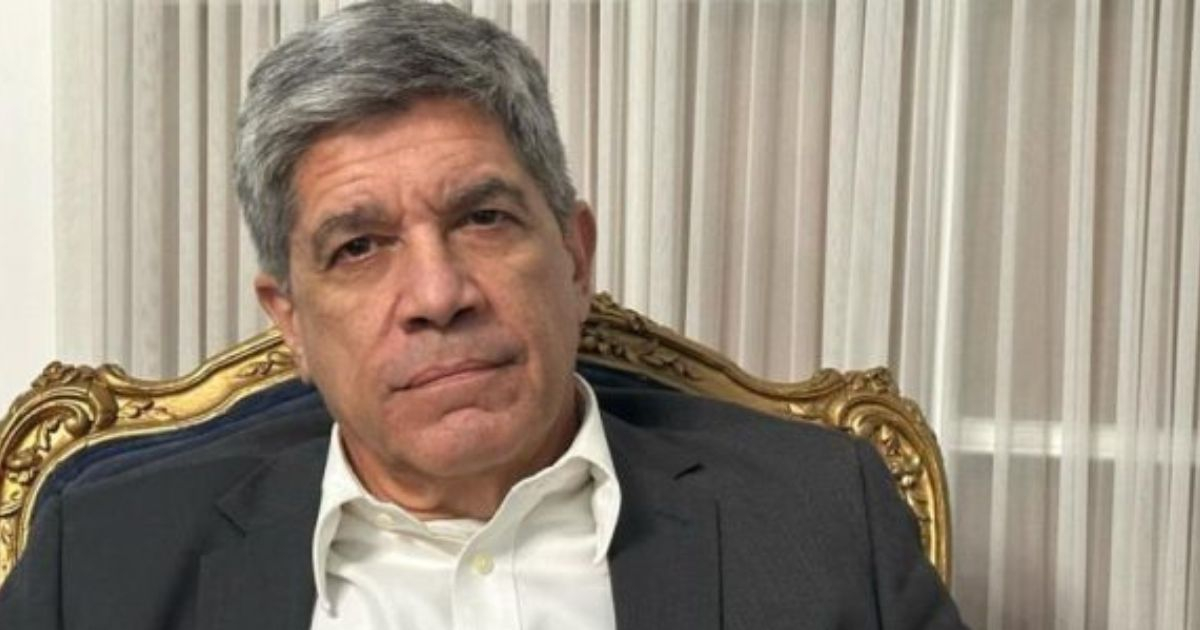
On Wednesday, Cuban Deputy Foreign Minister Carlos Fernández de Cossío took to Facebook to publish a detailed piece titled "Cuba, the U.S., and Threats." In this post, he vehemently denied any claims that the Cuban regime has posed a threat to the United States, directly responding to a congressional hearing held in the U.S. federal government the day before.
During the hearing, Secretary of Defense Pete Hegseth affirmed to Congress that Cuba is a potential threat to U.S. national security amidst an unprecedented escalation of tensions between Washington and Havana.
"No Cuban government official or anyone in an official capacity has ever made a statement threatening the United States. No one in Cuba has made any threats about deploying an aircraft carrier, a frigate, or any combat ship near U.S. shores," Fernández de Cossío stated.
He further insisted that "the only foreign military base in Cuba is the U.S. installation, which occupies a portion of Guantánamo province," disregarding substantial evidence regarding Chinese intelligence facilities on the island.
Contradicting Evidence of Chinese Presence
The deputy foreign minister's claims are directly contradicted by findings from the Center for Strategic and International Studies (CSIS), which identified at least 12 Chinese sites in Cuba with significant signals intelligence (SIGINT) capabilities. Four of these are deemed critical: Bejucal, Wajay, Calabazar, and El Salao.
The El Salao facility, located in Santiago de Cuba, has been under construction since 2021 and is only about 70 miles from the U.S. Naval Base at Guantánamo Bay, according to CSIS reports.
Recent satellite images released in May 2025 confirmed the steady expansion of these facilities. Republican Congressman Carlos Giménez commented sharply, "China is upgrading numerous existing spy facilities in Cuba to monitor the U.S. They are intercepting our communications and scrutinizing our military tactics."
Official Denials Amid Mounting Evidence
The Biden administration itself acknowledged in June 2023 that these Chinese sites have been operational since at least 2019. Despite this, the Cuban regime, led by Fernández de Cossío, has consistently denied their presence over the past three years.
This pattern of denial is steadfast: Fernández de Cossío, Foreign Minister Bruno Rodríguez, and Deputy Director of the Ministry of Foreign Affairs Johana Tablada de la Torre have repeatedly dismissed claims of Chinese bases. "Find another lie!" Tablada exclaimed in December 2024.
In his Wednesday post, the deputy foreign minister also accused the U.S. government of engaging in "ruthless economic warfare" against Cuba, alleging acts of "biological warfare and terrorism," and criticized those speaking of a Cuban threat as having "aggressive intentions and vindictive motives" to "fabricate excuses for aggression."
Heightened Tensions and International Dynamics
Fernández de Cossío's remarks followed a message from President Miguel Díaz-Canel, titled "Cuba Does Not Threaten, Cuba Is Constantly Threatened," asserting that "in over six decades of socialist revolution just ninety miles from the U.S., not a single offensive action has originated from Cuba against the national security of that country."
These declarations come amidst heightened pressure: on May 1, Trump reportedly stated at a private dinner that the U.S. would "seize Cuba almost immediately" after concluding operations in Iran; on May 6, Marco Rubio announced new sanctions against GAESA and 12 Cuban officials; and on May 11, Axios reported the Pentagon updated its operational plans against Cuba, including military surveillance flights over the island.
China, meanwhile, dismissed Rubio's accusations on April 29, describing its cooperation with Cuba as "entirely legitimate, transparent, and in accordance with international law." In response to U.S. pressure, Xi Jinping approved $80 million in financial aid and 60,000 tons of rice for Havana.
On April 29, the U.S. Senate narrowly defeated a Democratic resolution by a vote of 51 to 47, which would have required congressional approval for Trump to order military action against Cuba, thereby leaving him with significant leeway in dealing with the island.
Understanding U.S.-Cuba Relations Amid Chinese Involvement
Why does Cuba deny the existence of Chinese bases?
Cuba denies the existence of Chinese bases to maintain its narrative that it poses no threat to the United States and to counter accusations of foreign military presence on its soil, likely to avoid international diplomatic conflicts.
What has the U.S. government said about Chinese activities in Cuba?
The U.S. government, through various agencies and officials, has confirmed the presence of Chinese intelligence facilities in Cuba, which have been operational since at least 2019, posing potential security concerns for the United States.