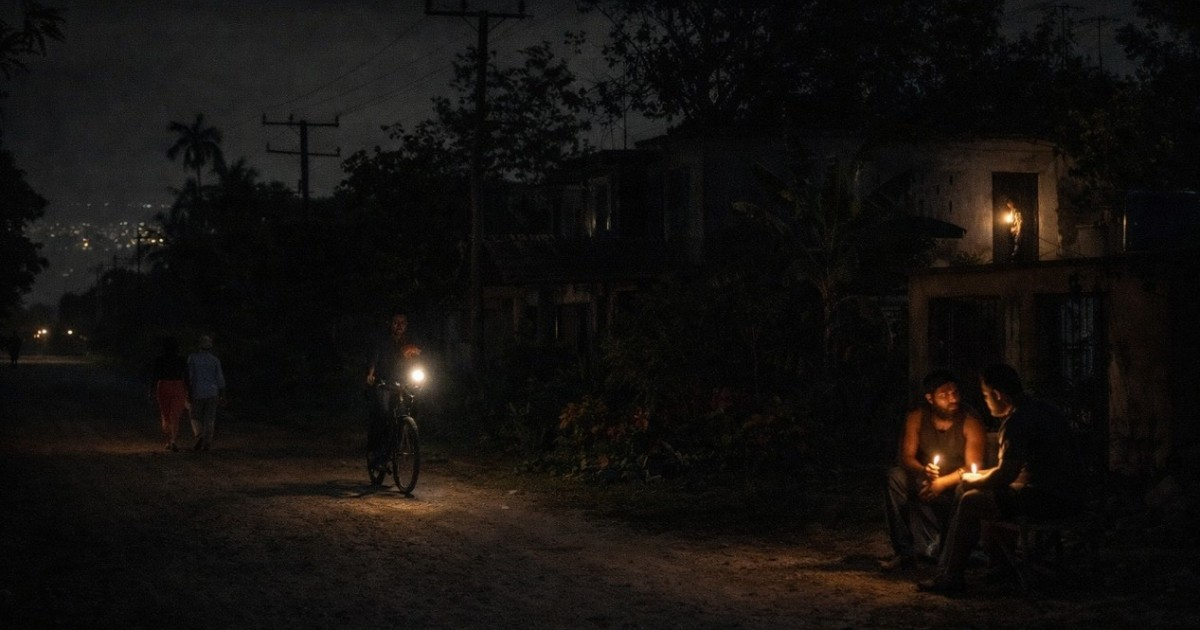
Residents from Block 3 in Jesús María, located in Old Havana, have publicly accused the director of the Tallapiedra thermoelectric plant of mocking their electricity issues. He allegedly laughed in their faces and left without addressing their concerns, highlighting a broader pattern of institutional neglect amid Cuba's ongoing energy crisis.
Ady Adina took to Facebook to voice her complaint: "I am making this public denouncement to reach whoever needs to hear it.
In Jesús María, Old Havana, Block 3, right across from the Tallapiedra thermoelectric plant at Águila/Puerta Cerrada and Avenida del Puerto, we have been standing since 10 a.m. seeking a peaceful resolution to a breaker that keeps tripping and leaves us without power."
According to Adina, the power outage started at 4 p.m. the previous day. When residents called the electric company for help, they were told they would have to pay for the repairs themselves: "Since 4 p.m. yesterday, we've had no electricity, and when we called, they told us we need to purchase the breaker ourselves if we want electricity."
What outraged the residents most was the demeanor of the installation's top official: "The director of the Tallapiedra thermoelectric plant drove off laughing, saying it's not his problem," Adina recounted in her public statement on Facebook.
Determined to get results, the residents vowed to continue their protest in front of the plant until their issue is resolved: "We won't leave until our problem is addressed."
Mounting Energy Crisis in Cuba
This incident comes amid one of the worst electrical crises Cuba has seen in decades. On Wednesday, the Electric Union reported a generation shortfall that reached 2,113 MW at 8:40 p.m., a record for the year, with only 1,230 MW available against a demand of 3,250 MW.
The root cause is a severe fuel shortage: the government admitted that in April 2026, only one ship out of the eight needed monthly arrived, leading to power outages exceeding 20 hours a day in several provinces.
Old Havana is among the hardest hit areas. In April, the outages left over 200,000 Havana residents without regular access to drinking water, according to the director of Havana's Water Aqueduct.
Desperation has sparked a wave of protests across the capital. On Wednesday, residents of San Miguel del Padrón demonstrated in front of the municipal government with the slogan "Power and food!", while people in Nuevo Vedado banged pots near the Communist Party of Cuba's Central Committee.
Historical Context and International Response
The Tallapiedra thermoelectric plant, operational for over 60 years, was officially decommissioned according to Energy and Mines Minister Vicente de la O Levy in September 2024, though it remains a key player in Havana's power distribution network.
In April, the UN warned that Cuba's energy crisis is having a "systemic and increasingly severe" impact on health, water, food, education, and transportation after more than three months of inadequate fuel supply. They initiated a humanitarian plan to aid around two million people across 63 municipalities in eight provinces.
FAQs about Cuba's Energy Crisis
What caused the recent energy crisis in Cuba?
The crisis is primarily due to a shortage of fuel, with the government reporting only one out of the eight required shipments arriving in April 2026, resulting in extensive power outages.
How are residents affected by the power outages?
Residents face prolonged outages, some exceeding 20 hours, leading to challenges in accessing water, food, and essential services, sparking widespread protests.
What has been the international response to the crisis?
The United Nations has highlighted the severe impacts of the crisis and launched a humanitarian aid plan to support about two million people in affected areas.