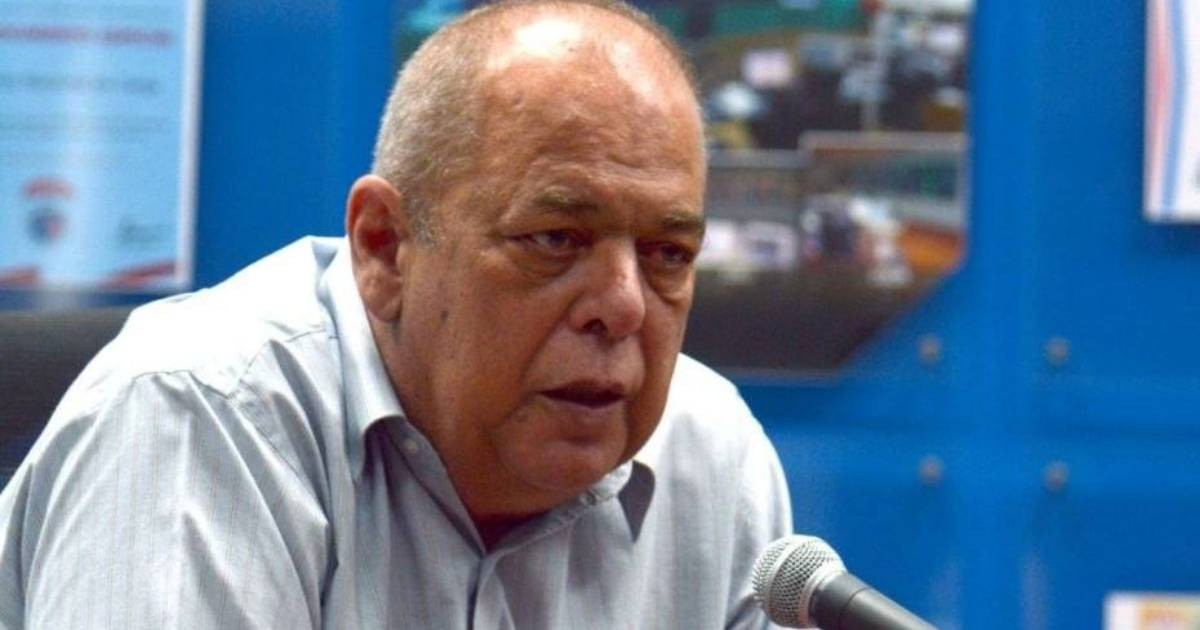
On Wednesday, Cuba's Minister of Energy and Mines, Vicente de La O Levy, openly acknowledged the severe fuel shortage crippling the island. During a special address concerning the dire status of the National Electric System, he admitted that Cuba currently lacks any reserves of fuel oil or diesel essential for power generation.
"We have absolutely no fuel or diesel, only accompanying gas," De La O Levy stated, marking one of the most candid admissions from a regime official about the energy crisis plaguing the Cuban populace.
The minister reiterated the bleak situation by emphasizing, "I am being repetitive: we do not have any fuel, we do not have any diesel."
Currently, the only available resources are the accompanying gas from domestic wells and locally produced crude oil. Despite an increase in extraction, these resources remain insufficient to sustain the electrical system.
Cuba generates approximately 40,000 barrels of oil daily but consumes between 90,000 and 110,000, leaving it heavily reliant on imports that have nearly vanished.
The minister dismissed the possibility of private businesses' imported isotainers of fuel compensating for the deficit: "The volumes brought by an isotainer, measured in liters, are insufficient even for a single generator site for half a day."
He highlighted the vast scale of fuel consumption needed for electricity generation, which is measured in millions of tons. The impact on the electrical grid is catastrophic, with a peak shortfall of 2,113 MW occurring at 8:40 PM on Tuesday, while only 1,230 MW was available against a demand of 3,250 MW.
Even Miguel Díaz-Canel, the nation's leader, admitted the situation is "particularly tense," attributing a 1,100 MW drop directly to the fuel shortage.
The situation worsened after Venezuela halted its deliveries in November 2025, and Mexico nearly ceased its supplies by January 2026. The Russian tanker Anatoly Kolodkin's shipment of 730,000 barrels, which arrived on March 31, was depleted by early May.
The only vessel en route, the Russian tanker Universal carrying 270,000 barrels of diesel, has been adrift in the Atlantic, roughly 1,600 km from Cuba, with its estimated arrival delayed until May 15.
In April, the minister acknowledged Cuba's need for at least eight fuel ships monthly, yet only one arrived in April 2026. Faced with this scenario, De La O Levy urged municipalities to seek their own power generation solutions, emphasizing biomass, windmills, and hydro resources as alternatives. He blamed Donald Trump and the U.S. conflict with Iran for exacerbating the shortages.
Cuba has experienced seven total collapses of the National Electric System in 18 months, including a nationwide blackout on March 16, 2026, which plunged the country into darkness for 29 hours and 29 minutes.
"The condition of the units is critical. Neglecting maintenance leads to total sacrifice and loss. We remain blockaded, but we will continue to endure," concluded the minister, encapsulating the stagnation of a regime without real solutions for the suffering of millions of Cubans.
Understanding Cuba's Fuel Shortage
What is causing Cuba's fuel shortage?
Cuba's fuel shortage results from a combination of reduced oil imports, increased domestic consumption, and insufficient local oil production. Geopolitical factors, such as the U.S. conflict with Iran and former President Donald Trump's policies, have also contributed to the crisis.
How is the fuel shortage affecting Cuba's power generation?
The lack of fuel has severely impacted Cuba's ability to generate electricity, leading to significant power shortages. This has resulted in frequent blackouts, with the electric grid unable to meet the demand for power, causing widespread disruptions.
What alternatives is Cuba considering to address the energy crisis?
Cuba is exploring alternative energy sources such as biomass, wind energy, and hydroelectric power to address the energy crisis. These solutions aim to reduce dependency on imported fuel and enhance local power generation capabilities.