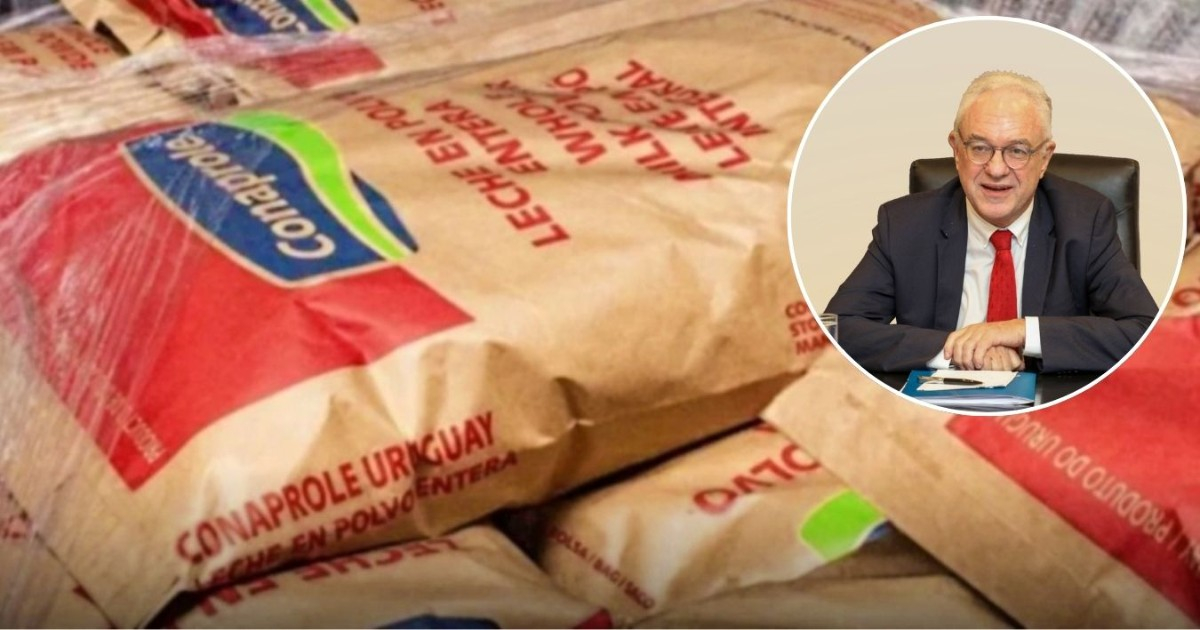
A ship carrying 17 tons of powdered milk donated by Uruguay set sail from Mexico on Wednesday, destined for Cuba. Uruguay's Foreign Minister, Mario Lubetkin, announced that the government will closely monitor the shipment and demand accountability from the Cuban regime about the final destination of the goods, as reported by Montevideo Portal.
This demand arises following a journalistic investigation in Mexico that revealed how goods donated by Claudia Sheinbaum's government ended up on the shelves of state-run stores that sell in dollars, known as stores in Moneda Libremente Convertible (MLC).
Concerns Over Accountability
During a session with the International Affairs Committee of the Chamber of Deputies, National Party member Juan Martín Rodríguez expressed his concerns to the foreign minister, referencing the Mexican report. Although he appreciated the demand for accountability, he expressed significant skepticism about its actual effectiveness.
"I remain doubtful about how reliable, secure, and accurate these accounts from a regime that has oppressed its people for so many years will be. Unfortunately, I find any reports likely to come from the Cuban regime untrustworthy," stated the legislator.
Historical Misuse of Aid
Evidence of diverted humanitarian aid in Cuba has been documented by numerous sources. TV Azteca showed footage of beans donated by Mexico being sold in Cuban state stores for $43 per 30-kilogram pack in wholesale markets.
In April, the Food Monitor Program NGO reported that some Mexican donations ended up in MLC stores. Residents of Matanzas and Las Tunas noted that once-empty stores were suddenly stocked following the arrival of shipments.
Uruguay’s Involvement
A notable case in Uruguay was highlighted by Cuban-born deputy Leydis Aguilera, who revealed that 25-kilogram bags of Conaprole powdered milk—a Uruguayan brand—were being sold in GAESA-controlled stores for $243, a price unaffordable for most Cubans who earn in pesos.
This is Uruguay’s second shipment of powdered milk to the island in 2026. In late March, Uruguay had already sent another 20 tons using the same logistical coordination through Mexico.
However, Uruguay's Deputy Foreign Minister Valeria Csukasi confirmed in April that the first shipment had not yet reached Cuba, raising doubts about the actual effectiveness of these deliveries.
International Concerns and Political Tensions
The distribution issues of humanitarian aid in Cuba have even been highlighted by international organizations. The United Nations reported that around 170 containers with humanitarian goods worth over $6.3 million had arrived on the island but failed to reach beneficiaries, partly due to fuel shortages.
Uruguay’s political climate has intensified the issue. President Yamandú Orsi’s government, from the Frente Amplio party, has maintained a stance of solidarity with Cuba, while the opposition consistently questions these shipments. The debate over Cuba led to significant controversy in the Uruguayan Senate in March when the Frente Amplio unilaterally approved a motion rejecting U.S. fuel sanctions on Cuba.
In February 2026, Lubetkin described the initiative to send powdered milk to the island as "symbolic," a characterization that now contrasts with growing doubts about whether this aid genuinely reaches the Cuban people.
FAQs About Uruguayan Aid to Cuba
Why is Uruguay sending powdered milk to Cuba?
Uruguay is sending powdered milk to Cuba as part of a humanitarian aid initiative aimed at supporting the Cuban population amidst ongoing economic difficulties.
What concerns have been raised about the aid shipments?
Concerns have been raised about the final destination of the aid, with reports suggesting that previous shipments have ended up in Cuban stores that sell in dollars, rather than reaching those in need.
What are MLC stores in Cuba?
MLC stores in Cuba are state-run outlets where goods are sold in Moneda Libremente Convertible, essentially foreign currency, typically dollars.