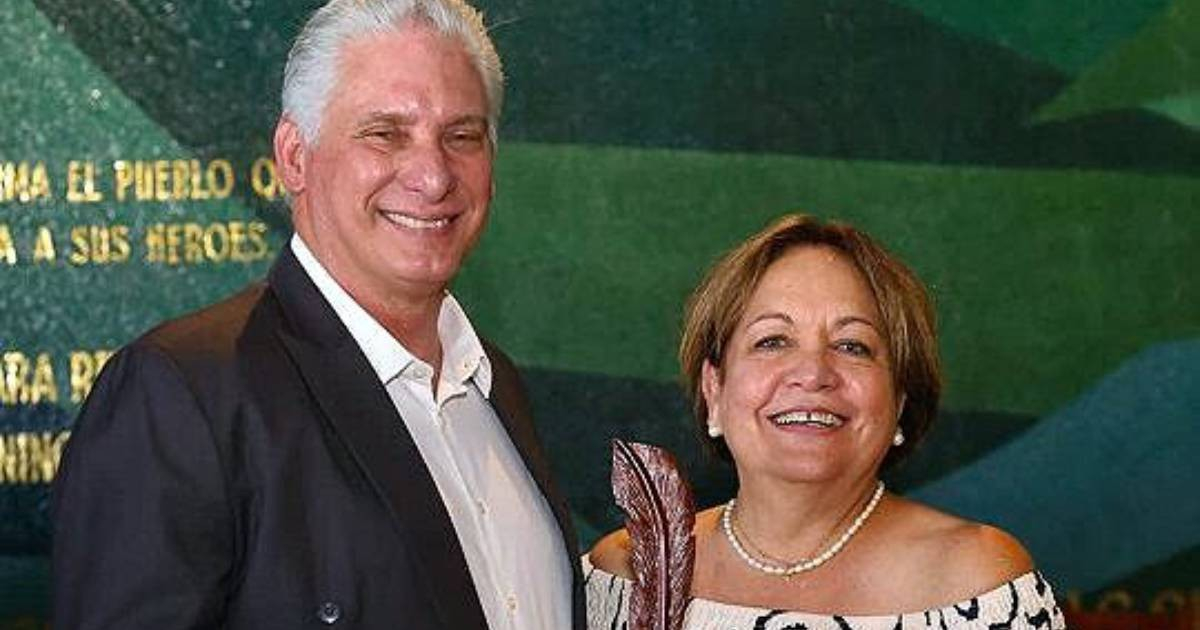
Arleen Rodríguez Derivet, a journalist and prominent figure within Cuba's state-run media, released a new episode of her podcast "Chapeando" on Cubadebate on Wednesday. In this episode, she strongly refutes the assertion, often repeated by Marco Rubio, that Venezuela gifted oil to Cuba, which the regime allegedly resold for its own gain.
The episode, entitled "Viral Lies," also features Bárbara Betancourt and Reinier Duardo. It is part of the regime's communication strategy aimed at countering what they describe as "psychological warfare" and misinformation on social media, particularly amid the heightened pressure from the Trump administration on Havana.
The podcast argues that the supply of Venezuelan crude was not a gift but rather a component of a Comprehensive Agreement between two sovereign nations, signed in 2000. Under this agreement, Cuba compensated for the oil with the work of its professionals in Venezuela.
Duardo questioned, "Why is there no mention of the contribution of over 20,000 Cuban doctors who have spent two and a half decades delivering high-quality services across Venezuela?"
Addressing the sale of a portion of the received oil, the podcast provides a technical explanation: "Selling part of that fuel was not intended to enrich anyone. It was related to the kind of crude they could offer us and the type Cuba needed to acquire with the proceeds from its sale."
Rodríguez Derivet and her colleagues assert that "none of this is hidden or illegal" and emphasize that it is all part of an agreement between sovereign governments.
However, available data contradicts this narrative. A U.S. government analysis released in January disclosed that Cuba resold approximately 60% of the Venezuelan oil received between the end of 2024 and the end of 2025 — about 40,000 of the 70,000 barrels per day — shipping it to Asia using sanctioned tankers, while millions of Cubans endured blackouts lasting up to 25 hours daily.
This pattern is not new. For decades, Cuba has converted Soviet and Venezuelan oil into its major source of foreign currency. Between 1977 and 1989, it generated between $3 billion and $5 billion by re-exporting subsidized crude from the USSR.
A U.S. State Department official described this practice as "further evidence that the illegitimate Cuban regime prioritizes its own enrichment."
The podcast also addresses three recent fake news videos circulating on social media: one featuring video game footage purportedly showing helicopters over Havana, another claiming a supposed annexation of Cuba and Guatemala by Mexico, and a third using artificial intelligence to depict a "hungry city dweller."
Duardo also warned against "explosive and alarmist" content, which he described as a "softening technique" intended to "create such a state of uncertainty that it contributes to fear, aimed at demobilizing and subduing the population."
Cuba's energy crisis worsened following the capture of Nicolás Maduro on January 3, 2026, which cut off between 25,000 and 30,000 barrels per day that represented two-thirds of Cuba's oil imports in a nation requiring approximately 110,000 barrels daily but producing only 40,000.
Key Questions on Cuban Oil Trade Practices
What is the Comprehensive Agreement mentioned in the podcast?
The Comprehensive Agreement is a pact signed in 2000 between Cuba and Venezuela, where Cuba compensated for Venezuelan oil with professional services, such as healthcare, provided in Venezuela.
How much Venezuelan oil did Cuba reportedly resell?
According to U.S. government analysis, Cuba resold approximately 60% of the Venezuelan oil it received between late 2024 and late 2025, amounting to about 40,000 barrels per day.
Why did the Cuban energy crisis worsen in 2026?
The crisis intensified with the capture of Nicolás Maduro, which halted a significant portion of the oil imports from Venezuela, a crucial supply source for Cuba's energy needs.