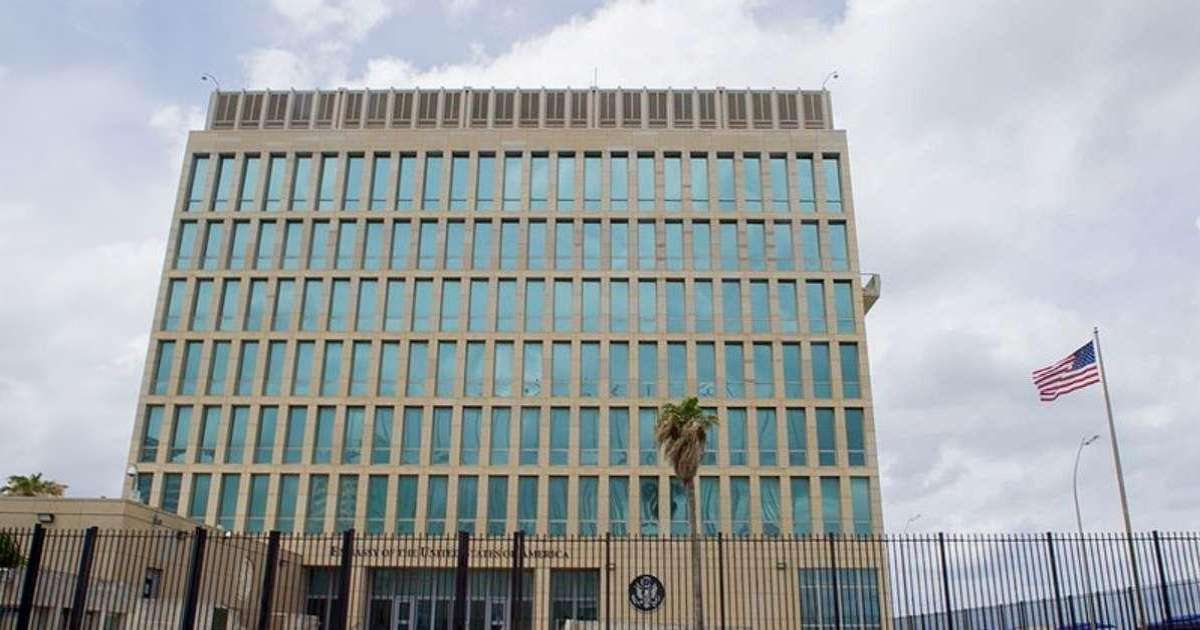
The U.S. State Department announced on Wednesday its renewed offer of $100 million in direct humanitarian assistance to the Cuban people, contingent upon the regime in Havana allowing it.
The statement, coming from the Office of the Spokesperson, highlights that Washington has made "numerous private offers" to the Cuban regime—including support for free satellite internet and the $100 million in humanitarian aid—which have all been declined by Havana.
The State Department clarified that this aid would be distributed in collaboration with the Catholic Church and other trusted independent humanitarian organizations, specifically to bypass the Cuban government's involvement.
The statement directly challenged the regime: "It is up to the Cuban regime to accept our offer of assistance or to deny life-saving help, ultimately making them accountable to the Cuban people for obstructing this critical aid."
The State Department also criticized the Cuban communist system for "enriching the elites while condemning the Cuban people to poverty."
This offer was initially disclosed last Thursday by Secretary of State Marco Rubio from Rome, following a meeting with Pope Leo XIV at the Vatican, where the discussion centered on Cuba and the expansion of humanitarian aid.
At that time, Rubio was straightforward: "We've offered the regime $100 million in humanitarian aid, which, unfortunately, they have not yet agreed to distribute to help the people of Cuba."
The Secretary of State also mentioned that $6 million had already been distributed through Caritas and the Catholic Church as part of the response to Hurricane Melissa, which struck eastern Cuba on October 29, 2025, as a category three storm, affecting more than 2.2 million people and causing over 16,000 buildings to be partially or completely destroyed.
In total, the U.S. had committed $9 million in post-Melissa aid up to that point, benefiting approximately 24,000 individuals in Santiago de Cuba, Holguín, Las Tunas, Granma, and Guantánamo.
The Cuban regime responded with denial and confrontation. On Tuesday, Foreign Minister Bruno Rodríguez Parrilla dismissed the offer of $100 million as a "fable" and a "lie," denying any formal offer was made.
Rodríguez Parrilla demanded clarity on who would provide the funds, whether it would be in cash or goods, which company would supply the products, and when the offer was officially made, concluding with a rhetorical question: "Wouldn't it be easier to lift the fuel blockade?"
Deputy Foreign Minister Carlos Fernández de Cossío labeled the aid as a "dirty political maneuver," while the Cuban ambassador to Belgium referred to it as "charity."
On the same day as the State Department's announcement, Rodríguez warned of a potential "bloodbath" in case of U.S. military action against Cuba, in what analysts see as an attempt to distract from the humanitarian offer.
The announcement comes amid a continued escalation of U.S. pressure: since January 2026, the Trump administration has imposed over 240 sanctions against the regime, intercepted at least seven tankers, and reduced the island's energy imports by 80% to 90%.
Last Thursday, Rubio also announced direct sanctions against GAESA—the military conglomerate controlling between 40% and 70% of Cuba's formal economy—its CEO Ania Guillermina Lastres Morera, the mining company Moa Nickel S.A., 12 additional officials, seven military entities, and three ships.
The $100 million offer places the regime in a politically challenging position: accepting it would mean acknowledging the legitimacy of the Catholic Church's independent channel; rejecting it would publicly assume the responsibility for denying aid to its own people amid Cuba's worst humanitarian crisis in decades.
FAQs on U.S. Humanitarian Aid to Cuba
What is the amount of aid the U.S. is offering to Cuba?
The United States is offering $100 million in humanitarian aid to Cuba.
How will the aid be distributed?
The aid would be distributed in coordination with the Catholic Church and other independent humanitarian organizations to avoid involvement from the Cuban government.
Has the Cuban regime responded to the offer?
Yes, the Cuban regime has rejected the offer, with officials calling it a "fable" and "dirty political maneuver."