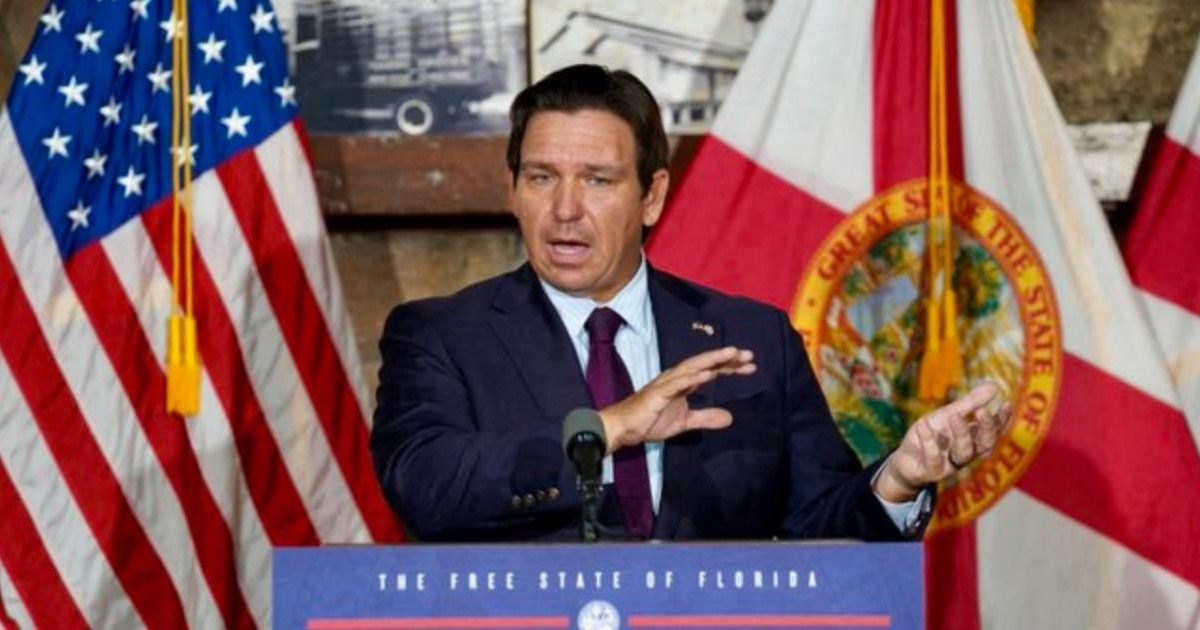
Florida Governor Ron DeSantis emphasized that the Alligator Alcatraz migrant detention center was always intended as a temporary facility and celebrated its role in the deportation of 22,000 individuals since its inception, as reported by Infobae.
His remarks follow a report from The New York Times, which disclosed that the Department of Homeland Security (DHS) plans to shut down the center in June, citing excessive costs. The transfer of detainees is expected that month, with dismantling of the structures in the subsequent weeks.
DeSantis Defends Center Amid Closure Reports
DeSantis addressed the media following a speech in Titusville, where he acknowledged the report but clarified that he has not received any official notification from the federal government regarding the closure.
"The DHS lacked the capacity to detain these illegal aliens we were capturing. So, because we did that with their support and reimbursement, we were able to process and deport 22,000 who would have otherwise re-entered Florida communities," he stated.
"We didn’t build anything permanent there because we knew it was going to be temporary. Now, I haven’t received any official word that they won’t be sending illegal aliens there," he added.
Future Plans for Migrant Processing
DeSantis suggested that the federal plan is to process migrants elsewhere, now that immigration agencies have the funding they lacked when the center was opened. He confirmed that the second state-run center, known as "Deportation Depot" and located west of Jacksonville with a capacity for 2,000 detainees, will continue operations.
Responding to reports about the center's closure due to high operating costs, the Republican leader defended the expenditure on deportations as a public safety issue, though he did not specify the total cost to the state.
Financial and Environmental Concerns
According to the dossier, Florida plans to close Alligator Alcatraz while the state spends over a million dollars a day on its operations and has requested a federal reimbursement of 608 million dollars that remains unpaid, with some private contractors waiting over 200 days for payment.
The center was inaugurated on July 1, 2025, by President Donald Trump and DeSantis at the Dade-Collier Training and Transition Airport within the Big Cypress National Preserve in the Everglades, constructed in just eight days using state emergency powers.
Designed to hold between 3,000 and 5,000 detainees, it never reached near full capacity, currently housing around 1,400 migrants, with 700 to 800 being Cuban nationals, 70% of whom lack final deportation orders.
Criticism and Controversy
Since its opening, the facility has faced allegations of inhumane conditions, including overcrowding, insufficient food, inadequate medical care, extreme temperatures, unsafe drinking water, and lack of legal access.
On April 2, guards reportedly assaulted and used pepper spray on detainees during a protest over lack of phone access, according to a lawyer's affidavit in court, an incident reported by Cuban detainees at Alligator Alcatraz.
Environmentalists and migrant activists have vowed to continue their opposition to the site, accusing it of harming the Everglades ecosystem. On May 8, DeSantis had already hinted at its possible closure in Lakeland with a phrase summarizing his stance: "If we turn off the lights tomorrow, we can say it served its purpose."
FAQs about Alligator Alcatraz Detention Center
Why is the Alligator Alcatraz center closing?
The Department of Homeland Security plans to close the center due to its high operational costs. The transfer and dismantling process is expected to occur in June.
What was the purpose of Alligator Alcatraz?
The center was established as a temporary facility to detain and process illegal migrants, facilitating the deportation of 22,000 individuals since its opening.
What are the criticisms against the center?
Critics have highlighted issues such as overcrowding, lack of adequate food and medical care, extreme temperatures, unsafe drinking water, and insufficient legal access.