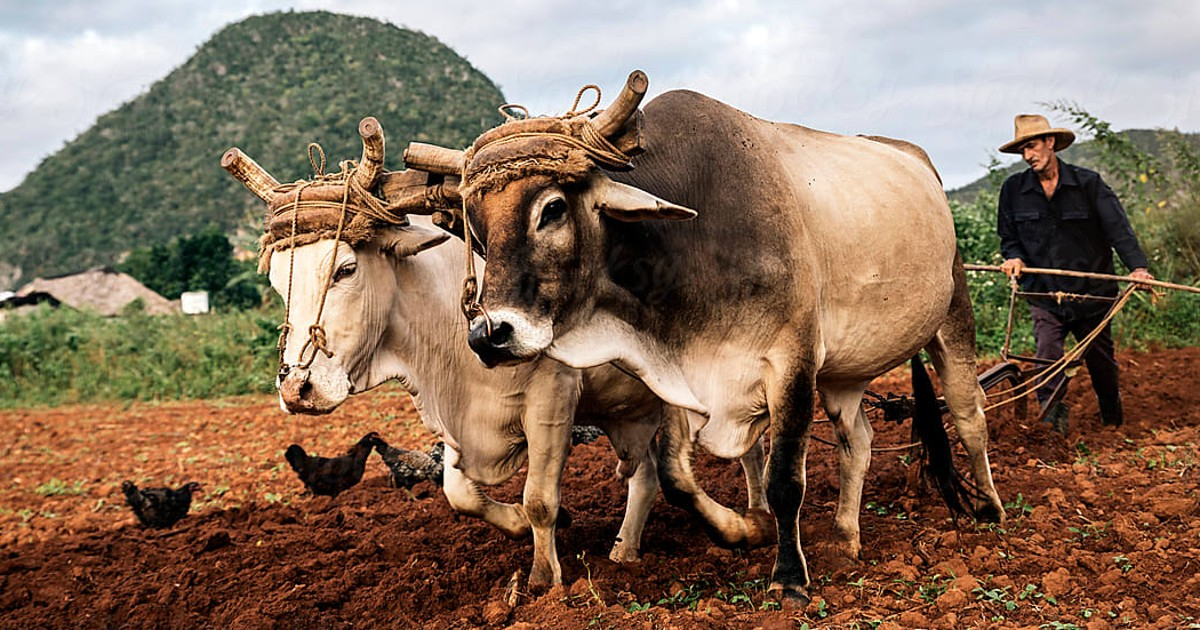
The head of Cuba's Agricultural Business Group, Orlando Lorenzo Linares Morell, has admitted that the island's agriculture sector is resorting to 19th-century methods in response to the ongoing energy crisis. The scarcity of fuel and resources has led to the revival of animal traction, windmills, and solar pumps as essential alternatives.
Old Methods Resurface Amid Energy Crisis
During the 65th anniversary of the National Association of Small Farmers (ANAP), Linares Morell outlined the strategies being adopted in Cuban agriculture to combat the severe fuel shortage that has brought machinery, transport, and irrigation to a standstill across the island.
He emphasized the push for the restoration of windmills and the use of alternative energy sources, such as solar pumps, to tackle the challenges faced by farmers. One of his key points was the resurgence of animal traction, which now includes not only oxen but also buffalo and horses.
Impact on Rice Production
In rice-growing regions like the Fernando Chenick enterprise in Matanzas, the shift is evident. "Many producers have integrated oxen teams, and today, you can see the significant role of animal traction in these areas," Linares Morell remarked, albeit with a nostalgic tone.
He acknowledged a stark contradiction: "There is equipment available, but there is not enough fuel." This harsh reality is particularly visible in the production of rice, a staple in the Cuban diet.
Back in 2018, Cuba produced 304,000 tons of rice; by 2025, the output had plummeted to just 111,000 tons, a mere 36% of the previous figure, according to official data shared by Linares Morell. He admitted that such production levels are "insignificant on the Cuban table" and have no impact on the basic food basket.
Overcoming Agricultural Challenges
The planting campaign concluded in April 2026 only reached 70% of its target, and agricultural aviation is entirely halted, necessitating the formation of manual planting and fertilization brigades. Linares Morell pointed out that the blockade has severely impacted agricultural aviation, with companies in Pinar del Río, Camagüey, Sancti Spíritus, and Granma replacing 100% of aviation with manual labor.
This situation is not new. As far back as 2019, José Ramón Machado Ventura urged the use of oxen even when tractors were available, leading to the incorporation of around 4,000 ox teams for sugarcane.
In response to the collapse, the Agricultural Business Group has announced a series of mitigation measures, including the acquisition of 256 pieces of equipment—174 of which are harvesters—through direct importation authorization for producers, the leasing of 666 idle pieces of equipment, and the installation of over a thousand solar-powered submersible pumps in Aguada de Pasajeros (Cienfuegos) and Matanzas.
On the energy front, the goals are ambitious: currently, only 7% of rice is dried using fuel, but the aim is for 80% to be dried with rice husk biomass by the end of the first semester. Additionally, 15 cooperative production contracts have been signed with small and medium private enterprises (MIPYMES), along with 61 contracts with advanced producers covering approximately 10,000 hectares.
Economist Pedro Monreal has noted that Cuba's agricultural crisis is more severe than the Special Period of the 1990s. Meanwhile, the FAO warned last March about the impact of diesel shortages on crop collection and food insecurity on the island, where farmers have resorted to bartering food for fuel out of desperation.
Linares Morell concluded his speech by highlighting the extent of the regression: "We must include new areas, new producers, families, and all food production entities."
Key Questions About Cuba's Agricultural Challenges
What alternative methods is Cuba using in agriculture due to the energy crisis?
Cuba has resorted to using animal traction, windmills, and solar pumps due to a severe shortage of fuel and resources.
How has the agricultural crisis in Cuba affected rice production?
Rice production has drastically decreased from 304,000 tons in 2018 to only 111,000 tons in 2025, showing a 36% drop.
What measures are being taken to address the agricultural challenges in Cuba?
The Cuban government is implementing measures such as acquiring harvesters, using solar-powered pumps, and forming manual brigades for planting and fertilization.