For decades, the relationship between the United States and Cuba was shaped by stable categories: embargoes, diplomatic isolation, broad economic sanctions, and ideological clashes.
However, recent developments have introduced a new narrative reminiscent of the language used by Washington against international corruption networks, hybrid state structures, and opaque financial systems.
Within social media and analytical platforms associated with the Cuban exile community, a once-marginal idea has gained traction: shifting the pressure on the Cuban system from general sanctions to a legal-financial "enforcement" framework targeting the economic structures that uphold the state.
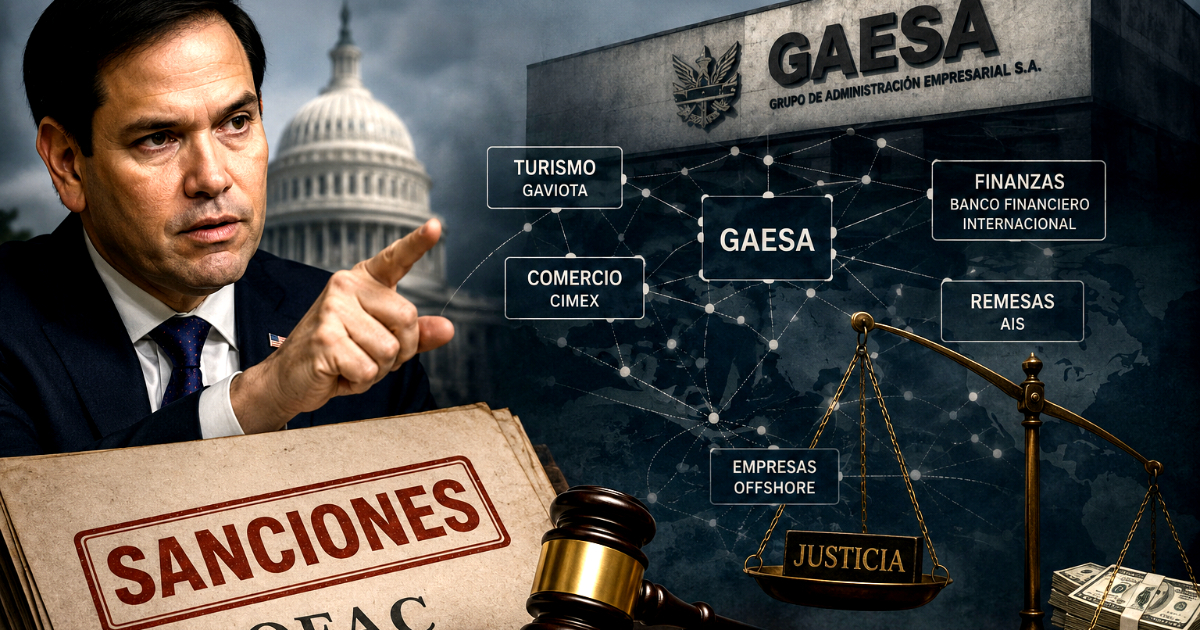
Central to this discussion is the entity known as GAESA.
The business conglomerate controlled by the Cuban military has increasingly become a focal point of U.S. sanctions.
GAESA: The Economic Powerhouse Under Scrutiny
GAESA has long been viewed as a significant state-run conglomerate involved in tourism, trade, remittances, logistics, and finance.
Today, the discourse is evolving to view GAESA not merely as a public enterprise, but as an integral part of Cuba's political and military framework.
This shift carries significant consequences.
The rationale behind this new approach is straightforward: if a substantial portion of Cuba's foreign exchange earnings and strategic economic sectors are concentrated within military-controlled structures, then financially targeting these entities might be more effective than imposing blanket economic sanctions on the entire country.
Legal Precedents and Financial Pressure
This strategy aligns with recent global trends in U.S. foreign policy, which increasingly focuses on:
- selective sanctions;
- control of financial flows;
- tracking real beneficiaries;
- extraterritorial enforcement;
- and pressure on international intermediaries.
The distinction from the traditional embargo is crucial. The goal is no longer solely to restrict trade or investment but to heighten the legal, reputational, and financial risks of engaging with structures tied to the Cuban state.
The Role of the Bancec Precedent
A pivotal legal reference frequently cited in this context is the Supreme Court's decision in First National City Bank v. Banco Para el Comercio Exterior de Cuba (Bancec, 1983).
This precedent established that foreign state-owned enterprises might lose their legal protection if they effectively operate as an "alter ego" of the state.
In essence, if a corporation lacks real autonomy and functions as a direct tool of political power, courts might partially disregard the formal separation between the company and the state.
While this doctrine doesn't automatically implicate state responsibility or permit indiscriminate actions, its application requires concrete evidence and specific legal proceedings. Nevertheless, it provides a relevant legal framework for future disputes concerning assets, financial litigation, or sanctions.
Global Financial Regulations and Compliance
The recent tightening of U.S. sanctions against GAESA-linked entities coincides with a broader phenomenon: the global expansion of regulatory frameworks related to anti-money laundering, financial traceability, and human rights.
Laws like the Global Magnitsky Act and international regulations on real beneficiaries and money laundering prevention have broadened the tools available to sanction individuals, companies, and financial networks linked to corruption or severe abuses.
Following the July 2021 protests, Washington utilized part of this legal arsenal to sanction Cuban officials and organizations involved in repressing demonstrations.
Yet, some analysts propose a broader scenario: future efforts might focus not only on specific individuals but on the economic structures that financially support the political system.
This could explain the increasing presence of terms like compliance, reputational risk, corporate traceability, or ultimate beneficiary in public discussions about Cuba.
A New Era of Economic Strategy?
While there's no immediate international judicial process against Cuban leadership or a public transition plan from Washington, the current context differs from a decade ago.
Cuba's prolonged economic crisis, institutional decay, growing reliance on extraordinary foreign exchange mechanisms, and the progressive tightening of U.S. policy have shifted the debate towards questions previously confined to specialized circles:
- How would certain economic structures be audited in a future opening?
- What legal status would a conglomerate like GAESA hold in a potential transition?
- How far could future asset claims or international litigation reach?
- What risks might foreign actors linked to these structures face?
The most significant change might not be the increase in sanctions but rather the potential legal and financial redefinition of the economic structures sustaining the Cuban state.
And this conversation seems to have already started.
Exploring Cuba's Economic Dynamics Amid Sanctions
What is GAESA's role in the Cuban economy?
GAESA is a major state-controlled conglomerate in Cuba, involved in sectors like tourism, trade, remittances, logistics, and finance. It is considered a key component of the Cuban economy and is increasingly targeted by U.S. sanctions.
How does the Bancec precedent affect Cuban state-owned enterprises?
The Bancec precedent allows U.S. courts to potentially disregard the legal separation between a state-owned enterprise and the state if the enterprise acts as an "alter ego" of the state, lacking real autonomy and functioning as a tool of political power.
What are the implications of the Global Magnitsky Act for Cuba?
The Global Magnitsky Act provides a framework for the U.S. to impose sanctions on individuals and entities involved in corruption or human rights abuses, broadening the tools available to target those supporting the Cuban regime financially.