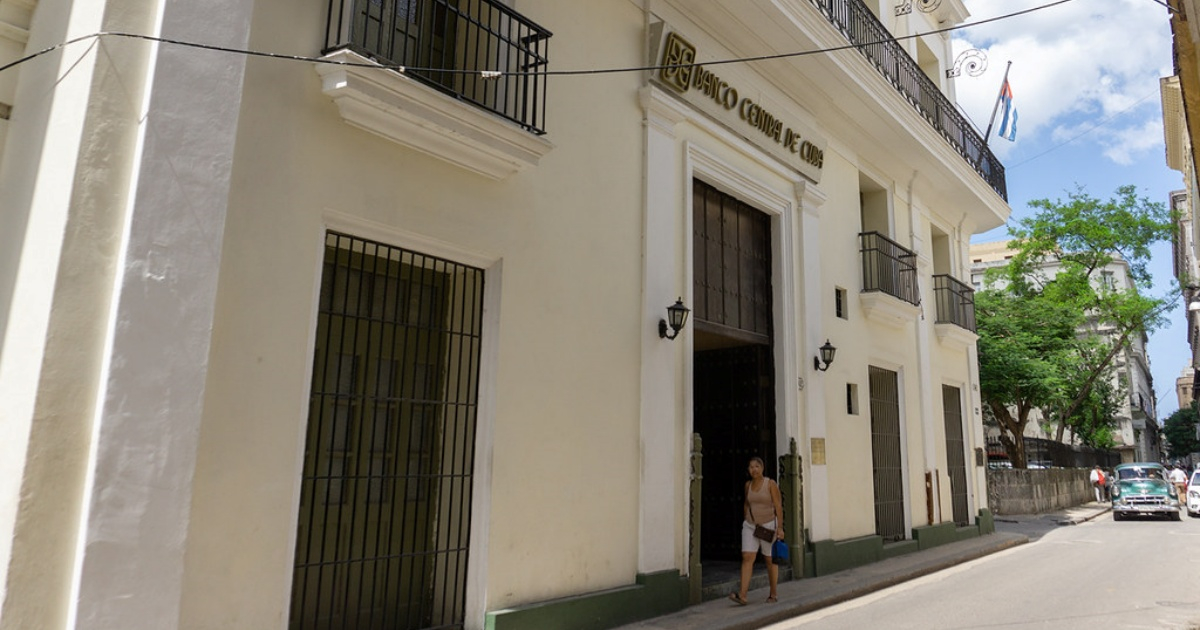
The Central Bank of Cuba has released Resolution 45/2026, a new regulation aimed at curbing the financing of terrorism. This mandate requires both individuals and entities on the island to freeze assets and report any suspicious activities, with potential administrative, criminal, and civil penalties for non-compliance.
Published on April 22 in the Extraordinary Official Gazette No. 63, the resolution covers a wide range of financial operations potentially linked to terrorism financing. These include financial transactions, donations, fund transfers, currency exchanges, and dealings involving virtual assets.
Per Article 3 of the regulation, if any individual or entity becomes aware that funds are sourced from organizations designated by the United Nations Security Council, they must refrain from proceeding with the transaction and immediately inform the Directorate General of Financial Operations Investigation of the Central Bank of Cuba. This is to ensure a prompt freeze of the said funds or assets without prior notification.
The requirement to freeze assets extends beyond those directly associated with specific terrorist acts. It also includes all funds under the control of designated individuals or entities, as well as those acting on their behalf.
International Standards and Compliance
The regulation explicitly references several UN Security Council resolutions, including 1267 (1999), 1373 (2001), 1989 (2011), 2253 (2015), and 2617 (2021), alongside the Financial Action Task Force (FATF) Recommendations, as the basis for its update.
Resolution 45/2026 is part of a broader regulatory framework that the regime has rolled out in recent months. In April, the Ministry of Finance and Prices issued Resolution 86/2026, making self-employed workers, small and medium-sized enterprises (SMEs), and bookkeepers responsible for monitoring suspicious transactions and retaining information for at least five years.
U.S. Pressure and Geopolitical Context
These measures come amid intense U.S. pressure on Havana. On January 20, 2025, Donald Trump added Cuba back to the list of State Sponsors of Terrorism, reversing Biden's January 14 decision of the same year. In May 2025, the State Department also restored Cuba to the list of countries not fully cooperating with anti-terrorism efforts, under Secretary of State Marco Rubio's certification that "the Cuban regime did not fully cooperate with the United States on anti-terrorism matters."
In January 2026, Trump signed Executive Order 14380, declaring a national emergency over the threat posed by the Cuban regime. On May 1, he expanded sanctions on regime officials and collaborators, barring them from entering the United States.
Cuba's Position and Claims
The Cuban government claims to be among the top 15 jurisdictions within the FATF global network for anti-money laundering and terrorism financing prevention. According to available updates, Cuba is not listed on the FATF's gray or black lists.
The Central Bank's resolution acknowledges that "the evolution of global, regional, and national risks related to terrorism financing, economic and financial process transformations, the use of new technologies, and changes in international standards [...] require updating and strengthening existing legal provisions." This suggests that the regime aims to demonstrate compliance with international standards amidst increasing financial isolation.
Understanding Cuba's Anti-Terrorism Financing Measures
What is the purpose of Cuba's Resolution 45/2026?
Resolution 45/2026 aims to prevent the financing of terrorism by requiring individuals and entities in Cuba to freeze assets and report suspicious activities.
How does the U.S. view Cuba's efforts against terrorism financing?
The U.S. has reinstated Cuba on its list of State Sponsors of Terrorism, indicating that it does not fully cooperate with U.S. anti-terrorism efforts, despite Cuba's claims of compliance with international standards.
What international standards does Cuba's regulation reference?
The regulation references several UN Security Council resolutions and the recommendations of the Financial Action Task Force (FATF).