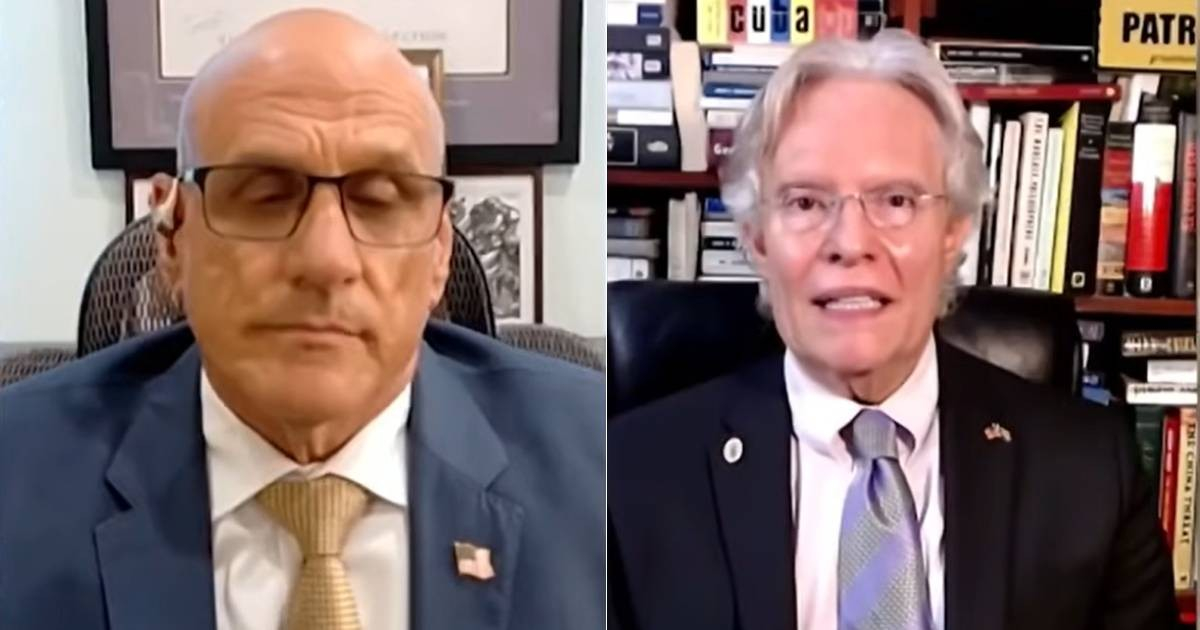
During a recent broadcast of "La Noche" on NTN24, political analyst Julio Shiling and former Cuban intelligence officer José Cohen discussed the increasing pressure from the Trump administration against the Cuban regime. They agreed that the Cuban people's demands have shifted from material needs to a call for systemic change.
This conversation occurred amid a day filled with significant developments. Donald Trump referred to Cuba as a "failed nation" on both Truth Social and during a press briefing at the White House. "Cuba is asking for help, and we'll talk," he stated. Later, he was more explicit: "Things are not going well for Cuba. It's a failed nation, and we will address Cuba at the right time."
Simultaneously, Defense Secretary Pete Hegseth, in a congressional hearing led by Congressman Mario Díaz-Balart, confirmed that the Cuban regime poses a direct threat to U.S. national security. Hegseth noted the presence of Russian warships, including the Kazan submarine, in Cuban ports and suggested that "the Chinese are likely there as well."
The Situation on the Ground in Cuba
Reporting from Havana, independent journalist Yoani Sánchez described the desperation among residents. "Blackouts in Havana are lasting 12, 14, 16 hours or more. Our lives are spent between brief hours of electricity and the rest in darkness," she reported. A protest erupted in the Luyanó neighborhood on Monday night as residents banged pots to express their frustration over the power cuts. Sánchez interpreted these protests as indicative of a deeper issue: "People feel trapped in a dysfunctional system, utterly exhausted and beyond reform."
Shiling was unequivocal: "The focus is no longer on seeking improvements through international humanitarian aid or material goods. It's openly about a systemic change—removing the regime along with its system." He further suggested that Trump is realizing that a negotiated exit with the regime is unlikely, and recent military activity patterns suggest a potential operation.
Flight data from Flightradar24 indicates that the U.S. Navy and Air Force have conducted at least 25 reconnaissance flights near Cuba since February 4, using both drones and manned aircraft, echoing previous operational patterns seen in Venezuela and Iran.
Foreign Influence and Intelligence Concerns
Cohen identified four signal intelligence bases allegedly operated by China in Cuba: Bejucal, El Salado in Santiago de Cuba, Calabazar, and El Oajay. "China is the option Cuba has found to continue its hostile activities against the United States," he asserted. A former Cuban agent, now in exile, confirmed that the island has not received military equipment since 1982, lacks anti-aircraft defenses, and noted that Russia has reduced its monthly fuel shipments from eight to three ships as of 2026.
In the political arena, Congresswoman María Elvira Salazar responded to Trump's remarks on social media platform X: "Cubans on the island are waiting. Cubans in Miami are waiting. We expect you to give the order, and it will happen with Marco Rubio paving the way." Senator Rick Scott also expressed his support for Trump's decisions, demanding the release of political prisoners and free elections.
On May 7, the State Department sanctioned GAESA and Moa Nickel S.A., accusing the military conglomerate of controlling approximately $20 billion in illicit assets. Foreign companies have until June 5 to sever ties or face secondary sanctions.
U.S. and Cuba Relations: Key Questions Answered
What is the current stance of the Trump administration towards Cuba?
The Trump administration has increased pressure on the Cuban regime, labeling it as a "failed nation" and indicating a readiness to discuss the situation when appropriate.
Why is the Cuban regime considered a threat to U.S. national security?
Defense Secretary Pete Hegseth highlighted the presence of Russian and possibly Chinese military forces in Cuba as a direct threat to U.S. national security.
What are the implications of the U.S. sanctions against GAESA and Moa Nickel S.A.?
The sanctions target the military conglomerate for controlling $20 billion in illicit assets, with foreign companies given a deadline to cut ties or face secondary sanctions.