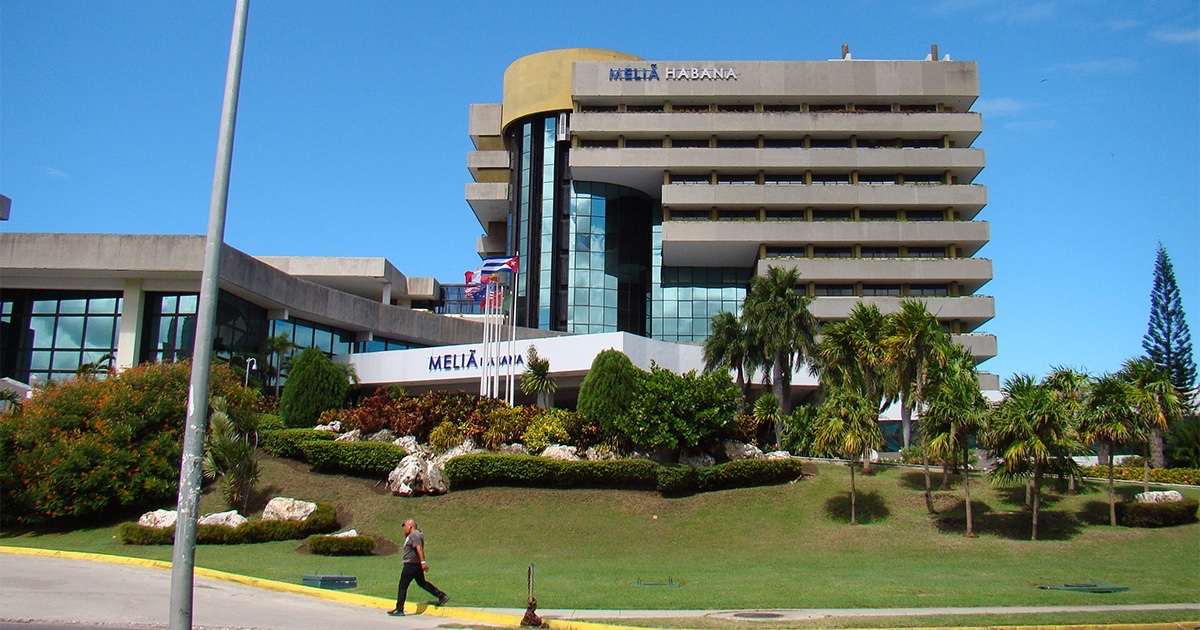
Cuban economist Pedro Monreal raised serious concerns on Tuesday via a series of tweets about the Cuban regime's "irrational" focus on tourism investments. Monreal, using official data from the National Office of Statistics and Information (ONEI), highlighted a disturbing paradox: while tourism investment surged by 51.4% from 2014 to 2024, the number of international visitors dwindled to just 73.1% of the base year's figures.
Monreal illustrated this structural "asynchrony" between investment and outcomes with two graphs derived from official statistics. The data shows a peak in tourism investment in 2020, right in the midst of the pandemic collapse, reaching an index of 192.7 on a base of 100. Meanwhile, visitor numbers plummeted to 36% of 2014 levels and hit a low in 2021 with an index of just 11.8.
Disproportionate Investment Priorities Criticized
Monreal criticized the Cuban government's prioritization of tourism investment, stating it is economically "irrational" given the prolonged decline in international visitors. He pointed out the disregard for market signals, low return on investment, and extreme opportunity costs as major issues.
The second graph presented by Monreal exposes another side of the problem: agricultural investment has dwindled to a third of its 2014 level, dropping to an index of just 33.3 by 2024, while tourism investment remains high at 151.4.
The economist was blunt in his assessment: "One of the most detrimental effects of excessive tourism investment in Cuba is the coexistence of a hotel surplus with a national food deficit. The ongoing neglect of agricultural investment is one of the most misguided economic policies in recent history."
Investment Disparities Highlighted
ONEI data underscores the scale of the imbalance. In 2024, Cuba allocated 36,843.8 million Cuban pesos—approximately 1.535 billion dollars—to tourism activities, accounting for 37.4% of all state investment. In stark contrast, agricultural investment amounted to a mere 2,645.5 million pesos, with public health receiving 1,977.4 million. This means tourism investment exceeded agricultural investment by 14 times and outpaced the combined investment in education and health by 11 times.
All of this occurs as Cuban tourism continues its downward spiral. In the first quarter of 2026, Cuba welcomed only 298,057 visitors, merely 52% of the number in the same period of 2025, with a hotel occupancy rate of 21.5%. Eleven airlines, including Air Canada, Iberia, Air France, and Turkish Airlines, have suspended flights to the island.
Severe Food Crisis Tied to Investment Negligence
The food crisis, which Monreal links to investment negligence in agriculture, is equally dire. Pork production fell by 93.2% in 2023 compared to 2022, rice covers less than 11% of national demand, and 97% of the population lacks adequate access to food, according to independent surveys from 2026. Even Díaz-Canel admitted in June 2025, "We have not made the necessary investments in agriculture."
Just four days before Monreal's tweets, Prime Minister Manuel Marrero promised at FITCuba 2026 a "very strong winter" for tourism in Cuba and expressed "optimism" despite more than 240 sanctions imposed by the Trump administration since January 2026.
Monreal concluded his analysis by suggesting three possible reasons for what he termed "the blunder": "technical incompetence, bureaucratic folly, or rent capture by certain actors."
Understanding Cuba's Economic Challenges
Why is tourism investment in Cuba considered irrational?
Tourism investment in Cuba is deemed irrational because it persists despite a significant decline in international visitors, ignoring market signals and yielding low returns on investment while incurring high opportunity costs.
What impact does the focus on tourism investment have on agriculture in Cuba?
The heavy emphasis on tourism investment has led to a significant reduction in agricultural investment, resulting in a national food deficit and contributing to the severe food crisis in Cuba.
How has the pandemic affected Cuba's tourism sector?
The pandemic caused a dramatic drop in international visitors to Cuba, with tourism numbers plummeting to just 36% of 2014 levels and reaching an unprecedented low by 2021.