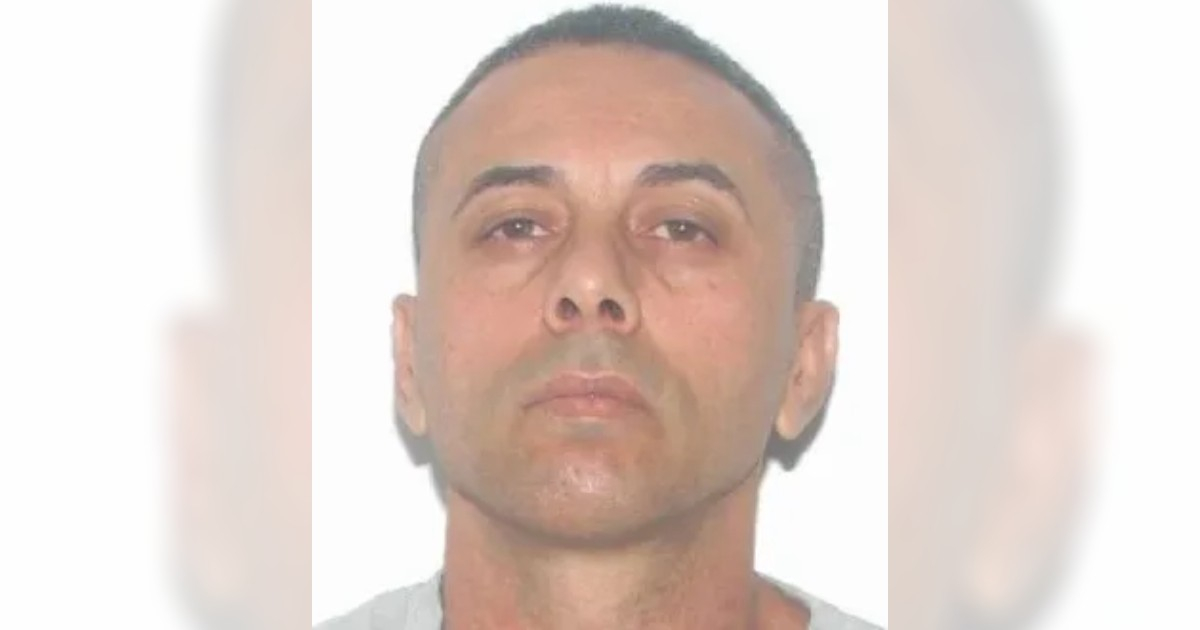
The U.S. Department of Homeland Security (DHS) has reported the apprehension of an undocumented Cuban immigrant in Virginia, who has a significant criminal background marked by four convictions for drug trafficking and two for cocaine possession, all classified as felonies, according to an official statement released by the federal agency on Monday.
This individual, identified as Cuban national Eduardo Pérez Legrá, was taken into custody on May 4 by Immigration and Customs Enforcement (ICE) agents in Newport News, Virginia. At the time of his arrest, he was found with several illicit substances, including fentanyl, cocaine, and oxycodone.
Following his arrest, authorities conducted a search and confiscated 19.5 grams of cocaine, 101 oxycodone pills, five fentanyl pills, and 27 individually packaged suboxone sublingual films, as detailed in the statement.
Pérez Legrá had previously obtained permanent residency in the U.S. in 2004, but lost it due to a felony conviction in 2011, which also rendered him eligible for deportation.
On May 15, 2012, an immigration judge from the Department of Justice issued a final deportation order against Pérez Legrá. However, according to the DHS, the Obama administration released him that same year without carrying out the expulsion.
Political Criticism and Sanctuary Policies
In light of the Cuban's arrest, along with mentions of other immigrants from various countries in the statement, Acting Deputy Secretary of Homeland Security, Lauren Bis, criticized Virginia Governor Abigail Spanberger.
"Another day, another illegal immigrant with a criminal record arrested in Virginia, the sanctuary state of Governor Abigail Spanberger," she said, referencing Pérez Legrá's prior drug trafficking convictions and the substances found during his arrest.
Bis warned that "Virginia has become a hub for crime committed by illegal immigrants," noting that "these offenders flock" to the sanctuary state because "they know Governor Spanberger and her political allies who support this cause will protect them."
Bis further stated that Spanberger, a Democrat who took office on January 17, 2026, signed executive orders early in her tenure prohibiting state cooperation with ICE, as well as the termination of state and local 287(g) agreements.
The statement outlined a series of arrests made by ICE since February, involving immigrants with serious criminal records from various countries. The DHS asserted these individuals benefited from Virginia's sanctuary policies.
Ongoing Efforts to Deport Criminal Immigrants
Deputy Secretary Bis reiterated that under President Donald Trump and DHS Secretary Markwayne Mullin, "ICE will continue to arrest and deport undocumented criminal immigrants who should never have been in our country."
The recent DHS statement did not address whether the final deportation order for Cuban Pérez Legrá, issued in 2012, was potentially unenforced due to the reluctance of the Havana regime to accept nationals with criminal histories who served prison sentences in the U.S., especially those who arrived before 2017.
This Cuban regime practice has begun to change under the Trump administration. Earlier this year, it was announced that the island's government agreed to accept deportees with criminal records, facilitating the execution of long-standing removal orders.
Spike in Cuban Arrests Related to Drug Trafficking
The case of Eduardo Pérez Legrá adds to a string of recent arrests involving Cubans with criminal histories related to drug trafficking in the United States.
On May 7, ICE arrested another undocumented Cuban in Hialeah with a prior cocaine trafficking conviction.
In April, six Cubans faced federal charges for distributing fentanyl in the Tampa area, with sentences ranging from 10 years to life imprisonment.
That same month, a Cuban resident in Hialeah pleaded guilty to possessing with intent to distribute over 135 kilograms of marijuana and five firearms, facing a minimum sentence of 40 years.
The chain of cases extends beyond U.S. borders: in April, a Cuban was detained in Cancun under an active warrant issued in Tampa for conspiracy to distribute controlled substances, and in March, another Cuban was arrested in Ecuador, wanted by the U.S. for drug trafficking as a member of the criminal organization Los Choneros.
Arrests of Cubans by ICE surged by 463% between October 2024 and January 2026, according to a report from the Cato Institute based on official federal government data.
Key Questions About Cuban Drug Trafficking and Deportation
Why was Eduardo Pérez Legrá released in 2012 despite a deportation order?
The Obama administration reportedly released Pérez Legrá without executing the deportation order issued in 2012, as per DHS allegations.
How have Virginia's policies affected criminal immigrant arrests?
Virginia's sanctuary policies have been criticized for protecting immigrants with criminal backgrounds, which some argue encourages criminal activity and affects arrest rates.
What changes have occurred regarding deportations to Cuba?
Under the Trump administration, Cuba agreed to accept deportees with criminal records, allowing for the execution of pending removal orders.