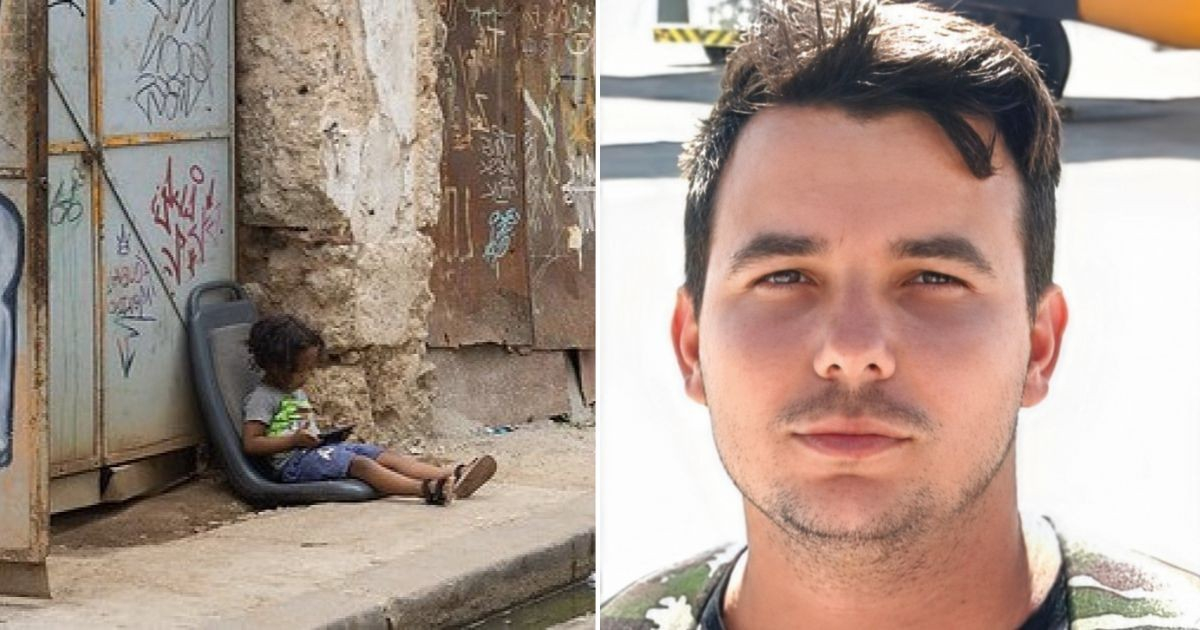
A Cuban named Osiel Morales Díaz has sparked significant discussion on Facebook with a post challenging the official narrative of the Cuban regime. His poignant question strikes a chord with those enduring the island's ongoing crisis: "What is the point of spending a lifetime enduring blackouts, shortages, hardships, and hopelessness?"
His message doesn't directly attack the government but rather poses a profound existential dilemma: "Suppose I live to be 60 years old... why would I want to spend all those years merely enduring? Is it to survive or truly to live?"
Surviving vs. Truly Living
Morales eloquently distinguishes between two concepts that the official discourse has deliberately conflated: resisting and living.
"To resist without a visible horizon can become a silent prison. Time passes, youth fades, dreams become old, and one starts to question if they were born to build a life or merely adapt to the darkness," he writes.
Challenging the Notion of "Creative Resistance"
The weight of his words is amplified as they directly challenge the concept of "creative resistance," which Miguel Díaz-Canel has adopted as the regime's ideological banner.
On January 2, 2026, Díaz-Canel praised "67 years of creative resistance" to mark the anniversary of the Revolution, repeating this phrase in multiple events and interviews throughout the year.
On March 30, during National Defense Day, the regime urged Cubans to cook with charcoal and wood amid 15-hour power outages, presenting this hardship as a form of "resistance."
The True Cost of Enduring
In response to this narrative, Morales Díaz firmly states, "Resistance only holds value when it protects something greater: dignity, family, hope, the possibility of a different future. But when resistance becomes a permanent state, it ceases to be strength and starts resembling resignation."
He emphasizes that the issue extends beyond power cuts: "It's not just about the lack of electricity. It's something much deeper—the feeling that life could be consumed waiting. Waiting for things to improve, waiting for change, waiting for something that never arrives."
The Broader Crisis
Morales's message emerges during what is considered one of the worst crises in Cuba in decades: power outages lasting up to 20 hours daily with an electricity deficit exceeding 1,900 MW, 89% of the population living in extreme poverty, 80% facing severe food insecurity, an average salary of just $16 per month, and only 30% of essential medicines available.
This grim situation is compounded by a historic exodus: Cuba lost over 1.4 million residents between 2020 and 2024, nearly 20% of its total population.
Morales Díaz's post joins a growing chorus of voices rejecting resignation disguised as revolutionary virtue.
On Monday, Cuban creator @arguellespositivo released a video acknowledging: "I know there's no life, no opportunities, nothing at all—no food, no jobs, no water, no electricity."
"No one should settle for merely existing in survival mode. Human life isn't meant solely for enduring; it is also meant for dreaming, creating, progressing, loving, and choosing," Morales Díaz concludes, encapsulating the exhaustion of a generation with his final words: "Because surviving a whole life without truly living it cannot be the natural fate of any human being. I'm sorry... but I can't take it anymore."
Understanding the Cuban Crisis
What is the significance of "creative resistance" in Cuba?
"Creative resistance" is a term used by the Cuban regime, particularly by Miguel Díaz-Canel, to describe the resilience of the Cuban people in the face of ongoing hardships. It is often used to frame survival amidst adversity as a form of ideological endurance.
How has the crisis in Cuba affected its population?
The crisis has led to extreme poverty for 89% of the population, severe food insecurity for 80%, a sharp decline in available essential medicines, and prompted a significant exodus, with over 1.4 million people leaving the island between 2020 and 2024.
Why are Cuban voices increasingly rejecting "creative resistance"?
Many Cubans are rejecting "creative resistance" because it often masks the harsh realities of daily life under the guise of resilience. They argue that true living involves more than mere survival, encompassing opportunities to dream, create, and improve one's life.