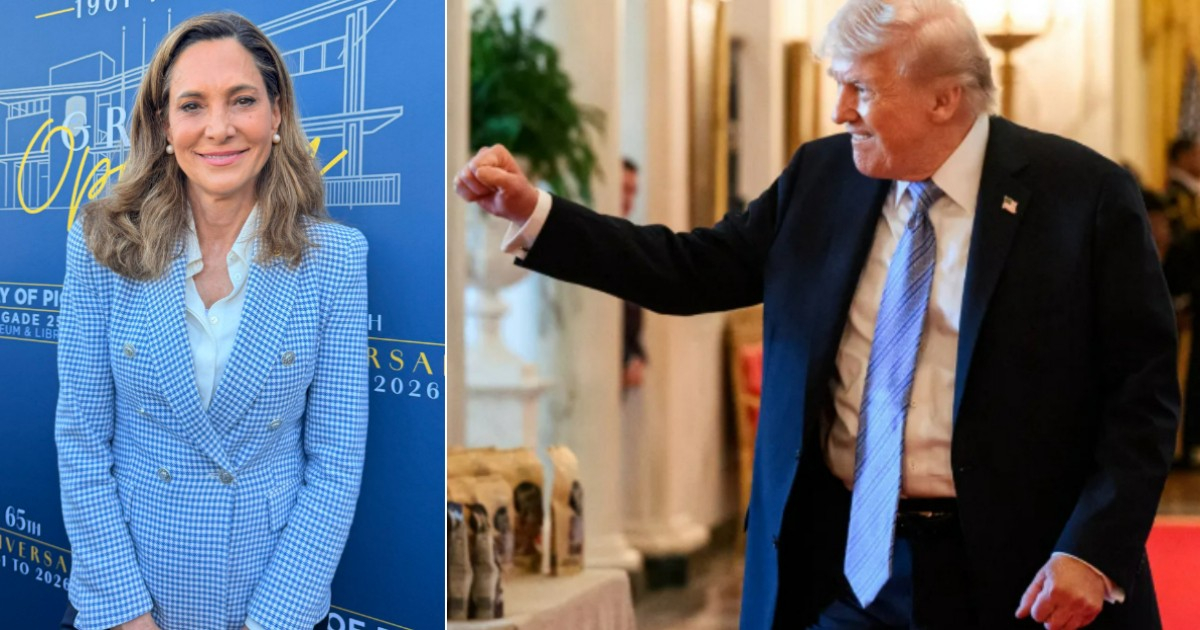
Republican Congresswoman María Elvira Salazar has issued a direct response to President Donald Trump following his unexpected claim that no Republican has ever discussed Cuba with him. Salazar encouraged the President to take definitive action to liberate the island from 67 years of oppressive rule.
Trump made his remarks today on Truth Social, just before embarking on a state visit to China: "No Republican has ever talked to me about Cuba, which is a failed state and only heading in one direction: down! Cuba is asking for help, and we are going to talk!" he declared.
The statement quickly prompted reactions from Cuban-American legislators in South Florida, who have long been coordinating with the administration to push for stronger measures against the regime.
Salazar's Call for Decisive Action
Salazar chose to respond on X, not contradicting the President, but rather reframing his message as an urgent call to action: "Republicans know you are the only person who can free Cuba after 67 years of oppression," she stated. "We Republicans in South Florida are supporting you and awaiting your necessary action. There is nothing more to say or discuss."
"Cubans on the island are waiting. Cubans in Miami are waiting. We are waiting for your command. And it will happen, with Marco Rubio leading the way," Salazar added, specifically naming the Secretary of State as the designated executor.
Impact of Pressure on Cuba
The urgent, almost martial tone of Salazar's message reflects the mounting tension within the Cuban-American community over the lack of decisive action, despite months of unprecedented declarations, announcements, and sanctions.
Since January 2026, the Trump administration has implemented over 240 new sanctions against Cuba and intercepted at least seven tankers headed for the island, slashing Cuban energy imports by 80% to 90%.
On May 7, Rubio announced further sanctions against GAESA, the military conglomerate controlling the Cuban economy. These measures targeted 12 officials, seven military entities, and three vessels, describing the structure as one that "siphons off all money-generating activities in Cuba and illegally deposits it into the pockets of a few regime insiders."
Stalemate in Negotiations
The maximum pressure strategy has left Havana reeling: power outages now affect over 55% of the territory, with blackouts lasting up to 25 hours a day, and an anticipated economic contraction of 7.2% by 2026.
However, negotiations have hit a standstill. An American delegation visited Havana on April 10, marking the first official U.S. aircraft on Cuban soil since 2016, but talks collapsed due to the regime's refusal to meet Washington's demands.
The Cuban ambassador to the UN expressed their stance candidly on May 4 on Fox News: "Surrender is not in our dictionary."
Geopolitical Dynamics of Trump's China Visit
Trump's trip to China, scheduled from May 13 to 15, adds a geopolitical layer to his message: Beijing urged Washington on May 5 to lift sanctions against Cuba, just ahead of the visit, turning the island into a contentious point in the bilateral agenda of the two powers.
Meanwhile, Rubio remains firm: "Sanctions will continue until the regime adopts all necessary political and economic reforms."
Questions About U.S. Policies Toward Cuba
What actions has the Trump administration taken against Cuba?
Since 2026, the Trump administration has imposed over 240 new sanctions on Cuba, significantly reducing its energy imports by intercepting tankers and targeting the military conglomerate GAESA.
How has the Cuban-American community reacted to the situation in Cuba?
The Cuban-American community, particularly in South Florida, has been vocal in urging the U.S. government to take stronger actions against the Cuban regime, expressing frustration over the lack of decisive measures.
What are the economic impacts of U.S. sanctions on Cuba?
The U.S. sanctions have led to widespread power outages, affecting over 55% of Cuba's territory, and have caused a projected economic contraction of 7.2% by 2026.