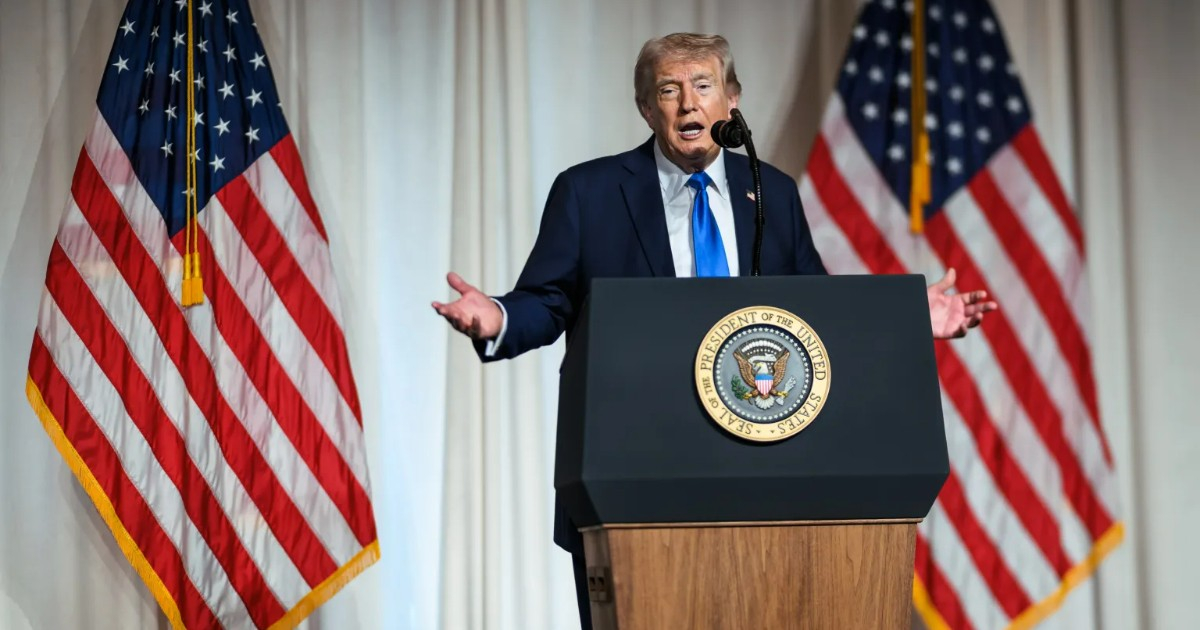
On Monday, Donald Trump convened a meeting with his top national security advisers in the White House Situation Room to determine the next moves concerning Iran. This meeting followed the breakdown of peace negotiations, as Iran refused to compromise on its nuclear program.
As reported by The Times of Israel, a U.S. official disclosed that Trump is contemplating a return to military action to intensify pressure on Tehran. A senior official openly stated, "Trump plans to hit them a little harder."
Attending the meeting were Vice President JD Vance, Secretary of State Marco Rubio, Secretary of Defense Pete Hegseth, CIA Director John Ratcliffe, Joint Chiefs of Staff Chairman General Dan Caine, and Special Envoy Steve Witkoff.
The immediate trigger for this gathering was Iran's response to a U.S. proposal, which Trump deemed "completely unacceptable" and dismissed as "garbage," not even finishing the letter.
Trump was clear about his strategy: "The plan is simple—they cannot possess a nuclear weapon, and that wasn’t addressed in their letter," he stated from the Oval Office on Monday.
The most contentious issue remains Iran's stockpile of enriched uranium. The U.S. believes Iran has accumulated around 1,000 pounds of uranium enriched to 60%, stored underground, and demands its removal from the country—something Iran excluded from its latest proposal, according to ABC News.
Trump remarked, "They changed their mind because it wasn’t put down on paper."
The conflict began on February 28, 2026, with massive joint airstrikes by the U.S. and Israel that destroyed over 12,300 Iranian military and nuclear sites. After weeks of fighting, Trump declared a two-week ceasefire on April 8, which was then extended indefinitely along with a naval blockade.
Peace talks held in Islamabad, Pakistan, in April ended without agreement. Iran then submitted a revised 14-point plan on May 1, which Washington also rejected.
Trump noted the ceasefire is at its "weakest point" and expressed no urgency to finalize a deal: "There is no pressure. None at all. We will achieve total victory."
Speaking to Fox News, Trump mentioned the potential revival of Operation Freedom Project—initiated on May 4 and abruptly paused the next day—to escort merchant ships through the Strait of Hormuz, asserting that Iranian leaders "will yield."
From Tehran, Iranian Parliament Speaker Mohammad Bagher Ghalibaf insisted that the 14-point plan is the only viable option: "Any other approach will be completely inconclusive; nothing but failure after failure."
The Iranian threat escalated further on Tuesday when Ebrahim Rezaei, spokesperson for the parliament’s National Security Commission, warned that new attacks could lead Iran to consider enriching uranium to 90%, the level needed for a nuclear weapon: "We will review it in parliament."
The conflict has spread regionally, with Lebanon's Health Ministry reporting at least 2,869 deaths and 8,730 injuries since border clashes resumed between Israel and Hezbollah on March 2. Meanwhile, the Israel Defense Forces reported striking 45 Hezbollah targets in southern Lebanon in the last 24 hours.
Key Questions About the Iran-U.S. Conflict
What triggered the recent tensions between the U.S. and Iran?
The tensions escalated after Iran rejected a U.S. proposal regarding its nuclear program, leading Trump to consider military options.
What is the main point of contention in the U.S.-Iran negotiations?
The primary issue is Iran's enriched uranium reserves, which the U.S. demands be removed from the country.
How has the conflict affected the region?
The conflict has expanded regionally, with significant casualties reported in Lebanon due to border clashes between Israel and Hezbollah.