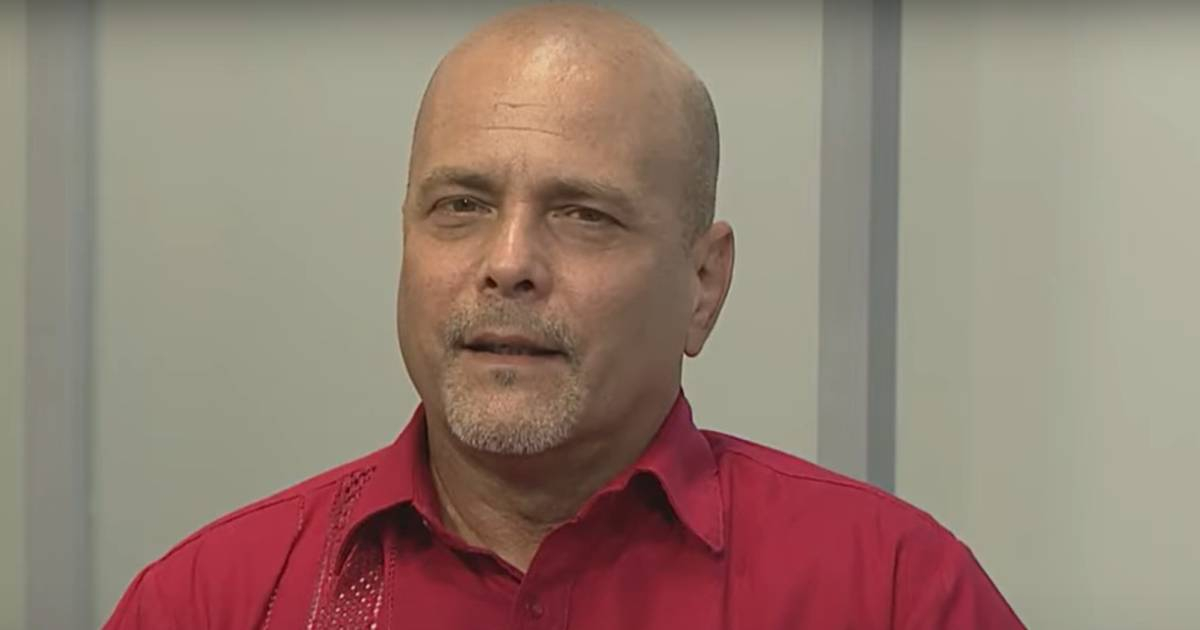
Gerardo Hernández Nordelo, a former spy and current national coordinator of Cuba's Committees for the Defense of the Revolution (CDR), recently took to Facebook to criticize the U.S. president, declaring that he has "no clue about what's truly happening in Cuba." As a prominent figure in the Cuban regime’s propaganda machine, Hernández's comments quickly gained attention.
According to Hernández, Trump is "astonished by the resilience of the Cuban people" and sarcastically blamed Marco Rubio for misleading the American leader on matters concerning the island.
The post unleashed a flood of critical responses that turned the tables on the official's claims. One of the most repeated questions came from user Evys Doce, who asked, "And do you know?"
Lety Martínez was more forthright: "The Cuban people aren't resisting; they're being oppressed. If we speak out, we get jailed."
Vigilio Garcia directed his critique at the regime itself: "What’s happening in Cuba is that you communists are killing us while you live in luxury."
Adrian Gonzalez Salgado painted another picture of everyday reality: "People are sleeping in darkness and hunger while luxury hotels are being built."
Numerous comments highlighted specific incidents of popular discontent that contradict the official narrative. Yuri Samper reminded Hernández, "Your neighbors in Luyanó are out in the streets banging pots and shouting down with the dictatorship." Igor Borges was even more explicit: "The Cuban people know what needs to be done, as shown in Morón."
The protests in Morón in March 2026, characterized by pot-banging and chants of "Freedom!" and "Down with the dictatorship!" culminated in an attack on the local Communist Party headquarters. Five people were detained, marking a recent symbol of discontent that the regime chooses to ignore.
Not everyone rejected Hernández's stance. Gregson Martinez voiced his skepticism from a different angle: "I have my doubts about this supposed ignorance. It all seems like a setup and a strategy by the Americans."
This statement is not an isolated incident. Just three days prior, Hernández faced similar backlash when commenting on Cubans who died in U.S. immigration custody, with responses questioning, "And what about the deaths in Cuban prisons?"
Hernández's remarks come amidst mounting pressure on the regime. Since January 2025, the Trump administration has imposed over 240 sanctions against Cuba, including a January 2026 executive order that applied secondary tariffs to countries supplying oil to the island, slashing Cuban energy imports by 80% to 90%.
While Hernández speaks of "resilience," The Economist Intelligence Unit forecasts a 7.2% economic contraction for Cuba in 2026, and the population endures power outages exceeding twenty hours and severe food shortages.
On April 25, during a rally in La Güinera, Hernández warned that the United States might invade Cuba but would face a "people's war." However, the response from Cubans on social media suggests that the populace has a markedly different view of their own reality.
Understanding Cuba's Current Struggles
What are the main criticisms against Gerardo Hernández's statements?
Critics argue that Hernández's claims of Cuban resilience are misleading, highlighting the oppression and hardships faced by the people under the current regime. Many emphasize that the populace suffers from severe shortages and repression.
How have U.S. sanctions impacted Cuba?
The U.S. has imposed over 240 sanctions since 2025, severely restricting Cuba's energy imports and contributing to economic contraction and widespread shortages, including food and electricity.
What is the significance of the Morón protests?
The Morón protests in 2026, which involved pot-banging and anti-dictatorship chants, symbolize the growing discontent among Cubans, challenging the regime's narrative and highlighting the demand for change.