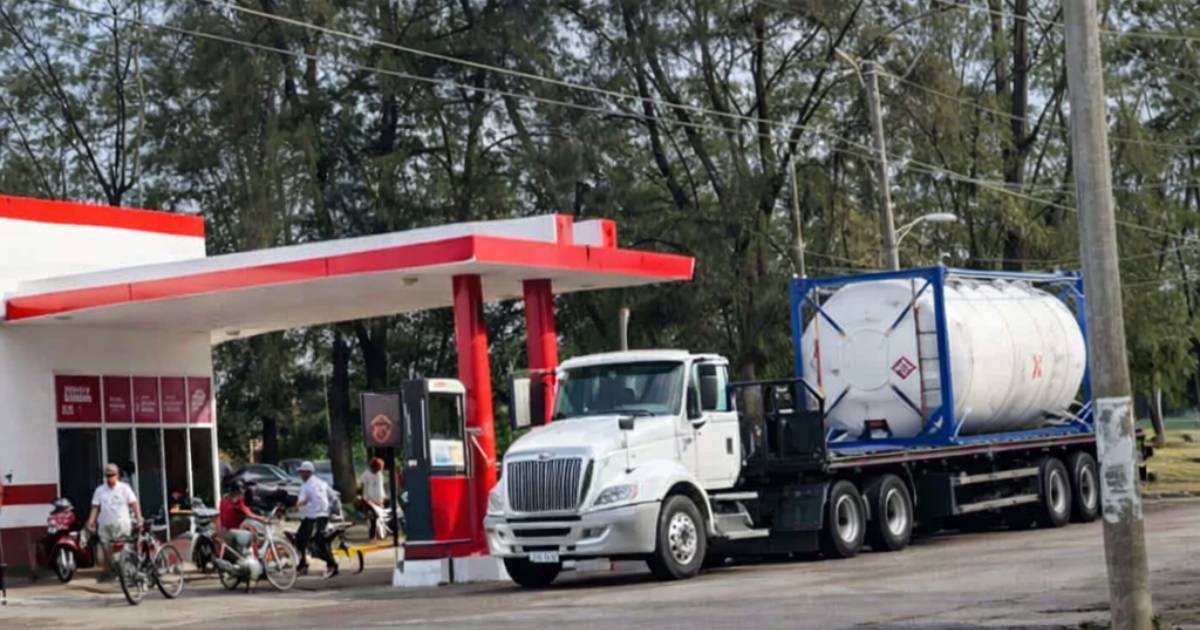
In the first three months of 2026, Cuba acquired fuel and oils from the United States amounting to a total of $11,624,773, as revealed by the U.S.-Cuba Economic and Trade Council. This significant amount underscores a rapid increase in these transactions amidst one of the most severe energy crises the island has faced in decades.
The bulk of these acquisitions occurred in March, totaling $8,788,501, which constituted 75.6% of the entire quarter, compared to just $88,746 in January and over $2.2 million in February.
These shipments primarily originate from three districts: Houston-Galveston in Texas, Miami in Florida, and New Orleans in Louisiana. They are intended solely for the Cuban private sector under a federal license that explicitly excludes the government, military forces, and state-run entities from the regime.
The highest value product for the quarter was the category of petroleum oils and bituminous mineral derivatives, with $3,847,669 solely from Houston-Galveston in March.
Following this were light fuel oils, which accumulated more than $5.3 million throughout the quarter, also primarily sourced from Houston-Galveston.
Unleaded gasoline from Miami accounted for $524,926 during this period, while leaded gasoline—mainly used by modern vehicles imported from the U.S.—reached $116,230.
By the end of March, Reuters documented the shipment of approximately 30,000 barrels (4.8 million liters) to Cuba's non-state sector. These were transported in about 200 ISO tank containers of 21,600 liters each, aboard 61 container ships heading mainly to the port of Mariel.
Among the private importers are bakers, wholesalers supplying small urban markets, and platforms like Supermarket23, linked to the descendants of Commander Guillermo García.
This trade flow occurs amidst an unprecedented energy collapse. Venezuela halted the delivery of subsidized crude—around 26,000 barrels per day—following the capture of Nicolás Maduro by U.S. forces on January 3, 2026. Mexico (Pemex) ceased its shipments on January 9 due to Washington's pressure.
Executive Order 14380, signed by Trump on January 29, 2026, imposed secondary tariffs on any country or entity exporting oil to Cuba, discouraging most international suppliers.
Cuba requires between 100,000 and 110,000 barrels daily to meet its total demand, covering about 40% with domestic production of heavy crude.
The deficit has led to power outages lasting up to 30 hours daily in vast regions of the country, halting public transport and impacting tourism.
The U.S. Department of Commerce's Bureau of Industry and Security released guidelines in February 2026 authorizing the export of American fuels to eligible private Cuban entities while expressly excluding the Cuban state and its military structures.
The regime, on its part, authorized MIPYMES to import fuel but mandated the use of QUIMIMPORT or MAPRINTER as intermediaries, along with a CUPET fee of $0.12 per liter, increasing the final cost to over $2.50 per liter.
Understanding Cuba's Fuel Imports from the U.S.
Why is Cuba importing fuel from the United States?
Cuba is importing fuel from the U.S. due to a significant energy crisis and the cessation of subsidized crude shipments from Venezuela and Mexico, prompted by diplomatic and political pressures.
How are these fuel imports regulated?
The fuel imports are regulated under a U.S. federal license, which allows only private Cuban entities to receive these shipments, explicitly excluding the government and military from involvement.
What impact has the energy crisis had on Cuba?
The energy crisis has resulted in extensive power outages, disrupted public transportation, and negatively affected the tourism industry, exacerbating the country's existing challenges.