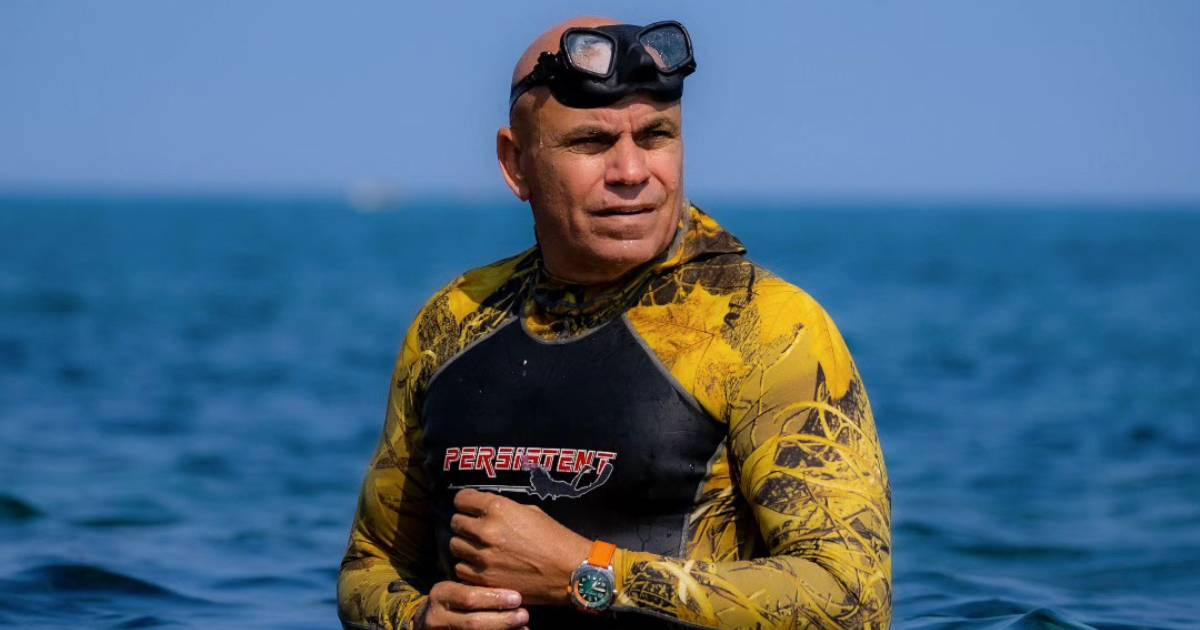
Cuban free diver Francisco "Pipín" Ferreras has once again found himself embroiled in international controversy after ultimately losing his lawsuit against Netflix concerning the film No Limit. The movie, which is inspired by the tragic death of his wife Audrey Mestre, allegedly portrays Ferreras as a killer.
The debate was reignited on Monday following the release of an in-depth report by The New York Times Magazine. This piece not only delves into the legal battle with the streaming giant but also revisits the suspicions, contradictions, and theories that have surrounded the renowned Cuban diver for over two decades.
Ferreras launched the lawsuit in 2023, contending that the French film, released by Netflix in 2022, insinuated he had intentionally sabotaged Mestre's air tank during a record-setting dive in the Dominican Republic in October 2002, which resulted in her death at the age of 28.
The film depicts a tumultuous relationship between characters Roxana and Pascal, marred by jealousy, manipulation, and a relentless pursuit of sporting records. The narrative concludes with Roxana's death when the ascent balloon fails due to an empty air tank. Despite the character name changes, the film ends with a dedication to Audrey Mestre, and several elements align closely with the couple's real-life story.
However, the U.S. justice system ultimately sided with Netflix.
In April of 2024, a California judge dismissed the case, ruling that the film's characters were sufficiently distinct from Ferreras and Mestre. This decision was upheld by an appeals court in August 2025, and in December of the same year, the California Supreme Court declined to review the case, cementing Netflix's victory.
The case has rekindled global interest as the New York Times report revisits the longstanding questions surrounding Mestre's death, deemed one of the most shocking tragedies in extreme free diving history.
According to the newspaper's reconstruction, Audrey Mestre descended to a depth of 171 meters during an attempt at a no-limits world record off the coast of Bayahibe, Dominican Republic. Upon attempting to ascend, she discovered that the air cylinder meant to inflate her ascent balloon was nearly empty. She lost consciousness underwater and died shortly thereafter.
While her death was officially ruled an accident, theories and accusations of severe negligence and even deliberate sabotage have circulated since then.
The report includes testimonies from former colleagues and divers present during the dive. Some claimed that Ferreras maintained strict control over the operation and reacted aggressively when others tried to inspect Mestre's air tank.
One of the most critical testimonies cited by the magazine came from former AIDA executive Bill Stromberg, who declared, "The tank was empty."
Nevertheless, no criminal charges were ever brought against Ferreras, and Audrey Mestre's own parents have publicly stated they do not believe the Cuban diver murdered their daughter.
Born in Matanzas in 1962, Francisco Ferreras rose to international fame in the 1980s and 90s with his world records in free diving. The Cuban regime at the time used his athletic achievements as propaganda, before Ferreras defected to the United States in 1993.
Globally recognized as "Pipín," Ferreras cultivated an almost mythical persona over the decades: the Cuban who could conquer extreme depths without oxygen. He secured lucrative contracts, featured in international documentaries, and even caught the attention of filmmaker James Cameron, who considered adapting his story into a movie for years.
Currently, Ferreras resides once again in Havana, where he manages an audiovisual production company and continues to publicly defend his version of events. The New York Times report notes he is even preparing for one last extreme dive planned for 2026 in Cabo San Lucas, Mexico, the very place where his relationship with Audrey Mestre began.
"Sooner or later, people will know my true story," Ferreras told the American newspaper.
Key Questions About the Pipín Ferreras Case
What was the basis of Pipín Ferreras's lawsuit against Netflix?
Pipín Ferreras sued Netflix, claiming the film No Limit implied he sabotaged his wife's air tank during a dive, leading to her death, thus portraying him as a murderer.
Why did the court side with Netflix in the lawsuit?
The court dismissed the lawsuit, concluding that the film's characters were sufficiently different from Ferreras and Mestre, and thus did not defame him.
What are the ongoing suspicions about Audrey Mestre's death?
Despite being ruled an accident, theories of severe negligence and possible deliberate sabotage have persisted, fueled by various testimonies and reports.