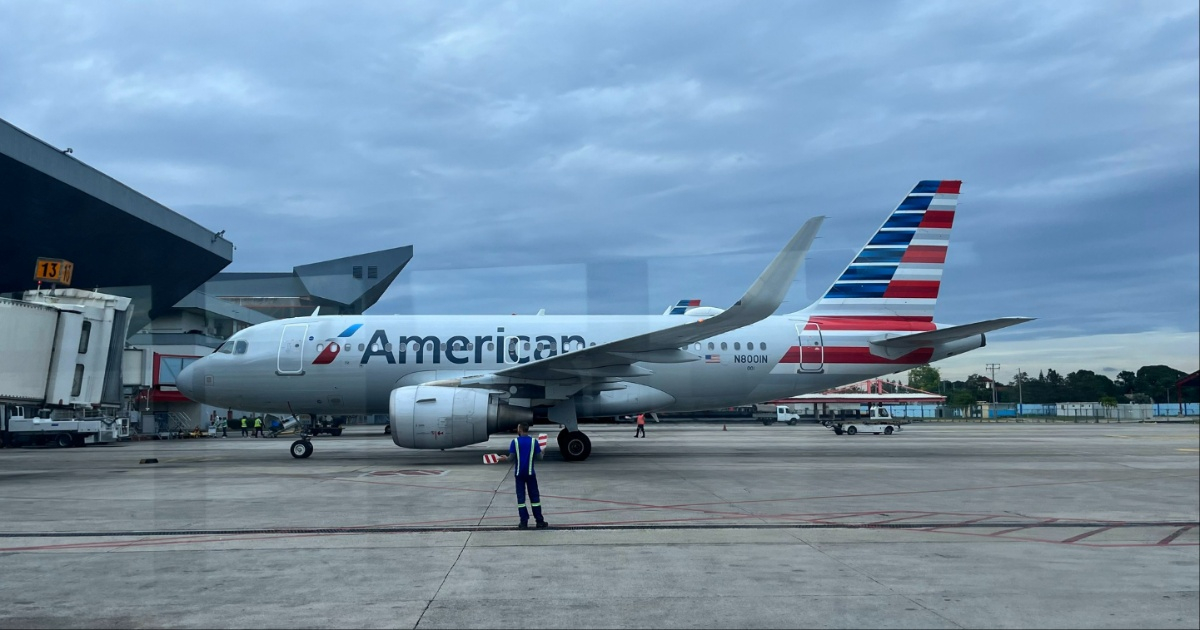
American Airlines and Iberostar have negotiated undisclosed settlements to resolve lawsuits filed against them under the Helms-Burton Act's Title III, concerning the use of properties seized in Cuba. This development was initially reported on Saturday by the U.S.-Cuba Economic and Trade Council.
The details of both settlements remained under wraps until now, even though they were finalized several months earlier.
On February 19, 2026, American Airlines reached an agreement with plaintiff José Ramón López Regueiro, son of Cuban businessman José López Vilaboy. In 1952, López Vilaboy purchased the land for Havana's José Martí International Airport from Pan American Airways for $1.5 million.
López Vilaboy invested in modernizing the runway and constructing the airport terminal, which was later confiscated without compensation following the Cuban Revolution in January 1959.
The lawsuit, initiated in 2019 by Miami-based law firm Rivero Mestre LLP, accused the airline of "trafficking" in the confiscated property by operating regular flights to the Havana airport.
Initially, the case was dismissed with prejudice on June 30, 2022. However, in August 2025, the 11th Circuit Court of Appeals directed the district court to continue the litigation, eventually leading to the settlement.
Resolving the Iberostar Case
Iberostar, on the other hand, concluded its settlement during a mediation on August 25, 2025. Judge Robert N. Scola Jr. from the Southern District of Florida issued the dismissal order on September 9 of that year.
The lawsuit against the Spanish hotel chain was filed on January 8, 2020, by the heirs of Dolores Martí Mercade and Fernando Canto Bory, the original owners of a hotel named El Imperial in Santiago de Cuba, now renamed Iberostar Heritage Imperial.
Iberostar operates in Cuba in partnership with Gaviota, a military-owned tourism company linked to the Cuban regime.
The Iberostar case also had significant international implications as the European Union intervened, marking the first instance where a U.S. court acknowledged the EU's interest in Title III Helms-Burton litigation.
Implications for Foreign Businesses in Cuba
The news of these settlements adds to the growing uncertainty for foreign businesses operating in Cuba, following the Trump administration's increased pressure on the regime, including threats of sanctions against foreign companies and banks doing business with it.
On May 7, Washington imposed sanctions on GAESA, the Cuban military conglomerate, and its president Ania Lastres Morera, prompting Canadian mining company Sherritt International to halt its operations on the island.
In a similar lawsuit, the same plaintiff, López Regueiro, filed a claim against Delta Air Lines in November 2025 for operating at the Havana airport. Delta sought dismissal, arguing its flights were authorized by the federal government since 2016.
Meanwhile, two related lawsuits—one against four cruise lines for using the Havana port and another involving Cimex and GAESA—are currently before the U.S. Supreme Court, which held oral arguments on February 23. A decision is anticipated soon.
Experts suggest that a favorable ruling for the plaintiffs could further discourage foreign investors from engaging in business with Cuba until claims are resolved through negotiations between the two governments.
FAQ on Legal Settlements and Business Impact in Cuba
What led to the lawsuits against American Airlines and Iberostar?
The lawsuits were initiated under Title III of the Helms-Burton Act, targeting the use of properties in Cuba that were confiscated without compensation after the Cuban Revolution.
What is the significance of the EU's involvement in the Iberostar case?
The EU's intervention marked the first time a U.S. court acknowledged the European Union's interest in Helms-Burton litigation, reflecting its international legal implications.
How might these legal outcomes affect foreign investment in Cuba?
A ruling in favor of the plaintiffs might deter foreign investors from engaging with Cuba until the property claims are settled between the U.S. and Cuban governments.