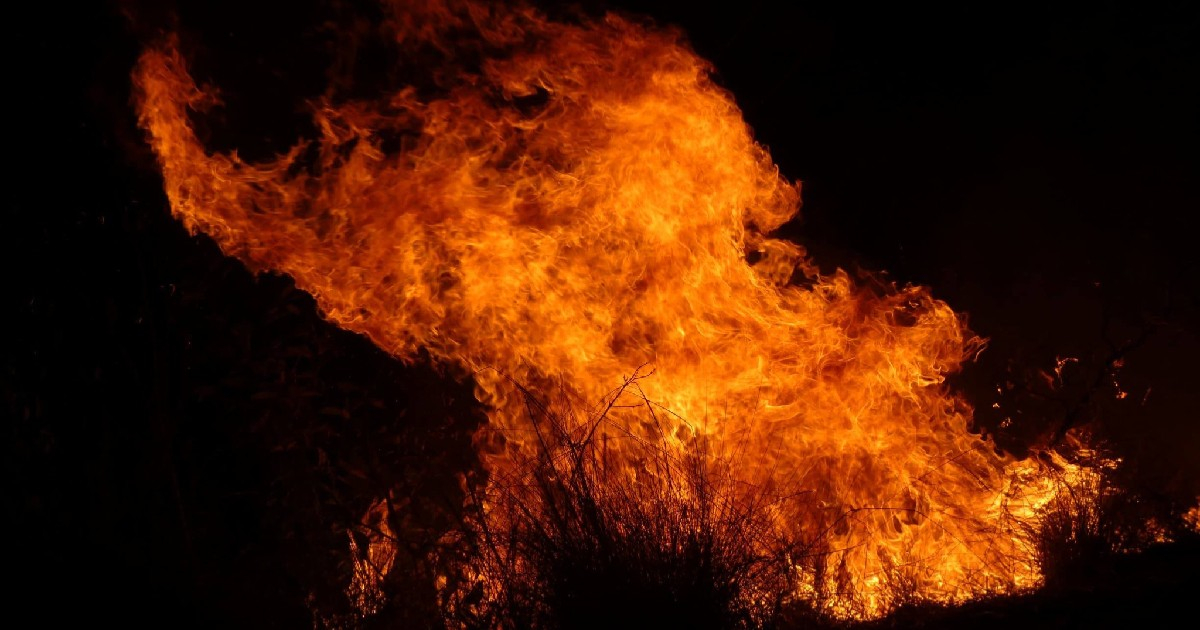
A mid-sized wildfire wreaked havoc across at least 30 hectares of forest within a single day in the mountainous region of La Palma, Pinar del Río, before being successfully contained on Monday, as reported by official sources.
The blaze ignited on Sunday afternoon in an area known as El Sitio, part of the Mil Cumbres Protected Area of Flora and Fauna, according to the Cuban News Agency (ACN).
On Monday, personnel from the Forest Ranger Corps (CGB) in Viñales and La Palma, alongside workers from the Flora and Fauna company, managed to bring the fire under control. The flames had endangered natural pine forests, home to the ecologically significant pinus caribaea and pinus tropicalis species, commonly referred to as "female pines," which thrive in the wild in this mountainous region.
Lieutenant Colonel Alexander Perera Burón, head of the provincial CGB, noted that of the 30 hectares of damaged forest, 15 were pine, with the remainder consisting of shrubland.
Once the fire was subdued, efforts to extinguish the remaining flames continued, including "ash watch" patrols. Light rainfall was also reported in the area on Monday, aiding these efforts.
A preliminary report from Tele Pinar revealed that forest ranger brigades and other involved workers had constructed firebreaks—trenches manually cut into the terrain—as a primary containment method, given the difficulty of deploying heavy machinery in the complex mountainous terrain.
Between January and April of 2026, Cuba experienced 111 forest fires, ravaging 3,174.55 hectares of both natural and planted forests, according to the Forest Ranger Corps.
Four primary regions bore the brunt of these incidents. Pinar del Río led with 46 fires, destroying 2,912.6 hectares—92% of the national total for the period—followed by Matanzas with 16 fires affecting 58 hectares; the Isle of Youth, also with 16 fires but damaging 34.21 hectares; and finally, Artemisa with 14 fires impacting 67.74 hectares.
This season marks one of the worst for wildfires in Pinar del Río. The most severe incident occurred in La Lanza, Minas de Matahambre, where approximately 1,700 hectares of pine were consumed before the fire was extinguished on April 21 after 12 days of combat by over 200 personnel.
During April, six simultaneous fires were recorded in Pinar del Río, one of which occurred in El Polvorín, also in La Palma, affecting 30 hectares.
The ecological impact of losing natural pinus tropicalis forests is especially concerning. This conifer is endemic to Cuba, with its natural range almost exclusively limited to Pinar del Río and the Isle of Youth.
According to the United Nations Food and Agriculture Organization, natural forests of this species in Pinar del Río shrank from 53,512 hectares in 1983 to a mere 6,595 hectares by 1996, making each fire in these ecosystems potentially irreversible in terms of loss.
Pinar del Río boasts the largest forested area in Cuba—411,000 hectares of woodland, covering 48% of its total land area—and is home to 30 protected areas, more than any other province, which also makes it the region most at risk for forest fires on the island.
The official forecast for the January-May 2026 season anticipated between 85 and 112 fires, endangering up to 4,000 hectares in the western province.
Frequently Asked Questions About Wildfires in Pinar del Río
What caused the wildfire in La Palma, Pinar del Río?
The specific cause of the wildfire in La Palma remains under investigation, but it began on a Sunday afternoon in a region known for its ecological significance.
How significant is the loss of pinus tropicalis forests?
The loss of pinus tropicalis forests is ecologically critical as this conifer is endemic to Cuba, with its natural habitat largely restricted to Pinar del Río and the Isle of Youth.
What measures were taken to control the wildfire?
Firebreaks were manually constructed as a primary method for containing the fire, due to the challenging terrain that made the use of heavy machinery impractical.