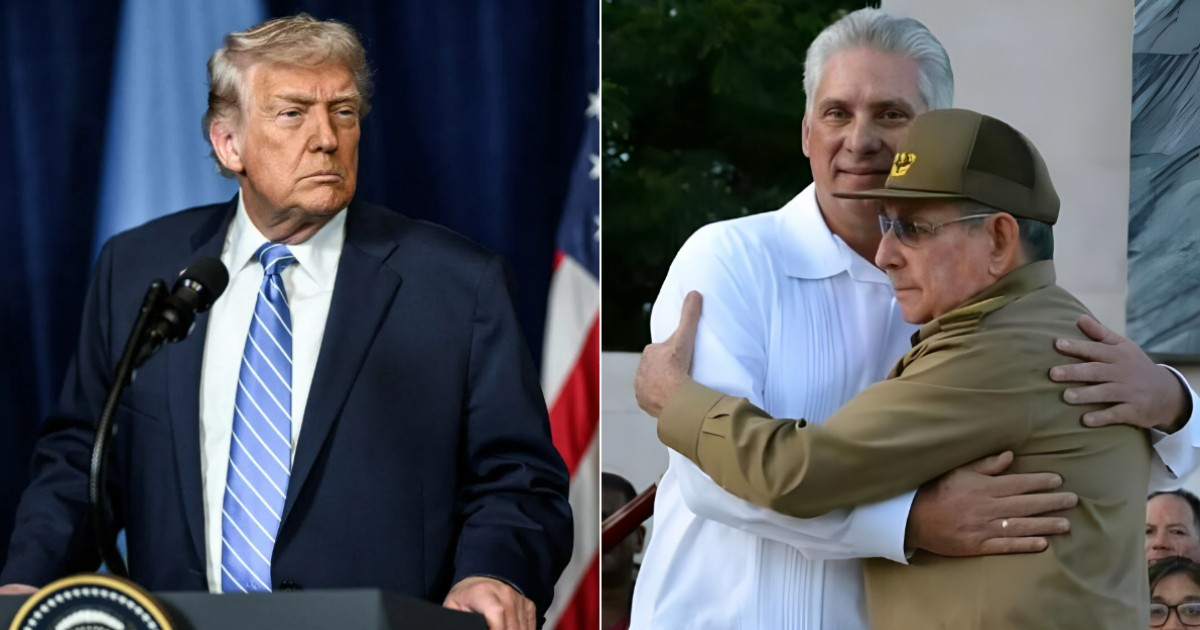
Former President Donald Trump has grown increasingly frustrated with the Cuban regime and is urging his advisors to explain why months of intense U.S. pressure have yet to cause its collapse.
This revelation was reported by NBC News on Monday, citing two current government officials, a former official, and three individuals familiar with the discussions.
Although White House officials believe the regime might fall before the close of 2026 without needing military intervention, Trump considers this timeline too lengthy and demands quicker results, according to the sources.
Due to the president's mounting frustration, the Pentagon has begun updating and expediting contingency plans for potential military action against Cuba. However, sources mentioned by the Associated Press last Thursday stated that no immediate military action is on the horizon.
Escalating Sanctions and Pressure
The Trump administration's strategy of maximum pressure has led to over 240 sanctions since January 2026, including an effective oil embargo that has slashed Cuban fuel imports by 80% to 90% and the interception of at least seven tankers in international waters.
Last Wednesday, Secretary of State Marco Rubio unveiled a new sanctions package targeting the economic core of the regime: the military-owned conglomerate GAESA, which controls 40% to 70% of Cuba's formal economy, its president Ania Guillermina Lastres Morera, and the state mining company Moa Nickel S.A., a joint venture with the Canadian company Sherritt International.
"These sanctions are part of the Trump administration's comprehensive campaign to address the urgent national security threats posed by the Cuban communist regime," Rubio stated while announcing the measures.
Rubio characterized GAESA as "the heart of Cuba's kleptocratic communist system," with illicit assets estimated between $18 billion and $20 billion held in offshore accounts.
International and Domestic Responses
Foreign companies have until June 5 to cease operations with GAESA under the threat of secondary sanctions. Sherritt International has already halted its operations in Cuba, repatriated its employees, and witnessed a 30% drop in its stock value.
Washington extended an offer to Havana of tens of millions in humanitarian aid, free access to Starlink for two years for all Cubans, and agricultural and infrastructure assistance in exchange for political and economic reforms. The regime declined the offer, as confirmed by the White House.
Cuban Foreign Minister Bruno Rodríguez Parrilla responded with a direct warning in an interview with ABC News: "It seems the U.S. government has chosen a dangerous path, one that could lead to unimaginable consequences, a humanitarian catastrophe, genocide, loss of Cuban lives and young Americans, and potentially a bloodbath in Cuba."
Rodríguez noted a lack of progress in talks between the two nations and stated issues related to Cuba's political system "are not on the table."
Cuba's Deepening Crisis
The regime is under pressure amid its worst crisis in three decades, experiencing blackouts lasting up to 25 hours daily in over 55% of the territory and a projected GDP contraction of 7.2% for 2026.
Trump summarized his stance on March 30: "Cuba is finished. They have bad leadership, very bad and corrupt... Cuba will be next. It's a disaster, a failed country. It will fail very soon and we'll be there to help."
Meanwhile, Cuban President Miguel Díaz-Canel has consistently responded to pressure with the same phrase: "Surrender is not part of our vocabulary."
Key Questions on U.S. Policy Toward Cuba
What is the main goal of Trump's policy on Cuba?
The primary objective of Trump's policy on Cuba is to exert maximum pressure on the regime to provoke its collapse, ideally before the end of 2026, without the need for military intervention.
How has the Trump administration increased pressure on Cuba?
The administration has imposed over 240 sanctions, enacted an oil embargo reducing Cuban fuel imports by up to 90%, and intercepted tankers in international waters as part of its maximum pressure strategy.