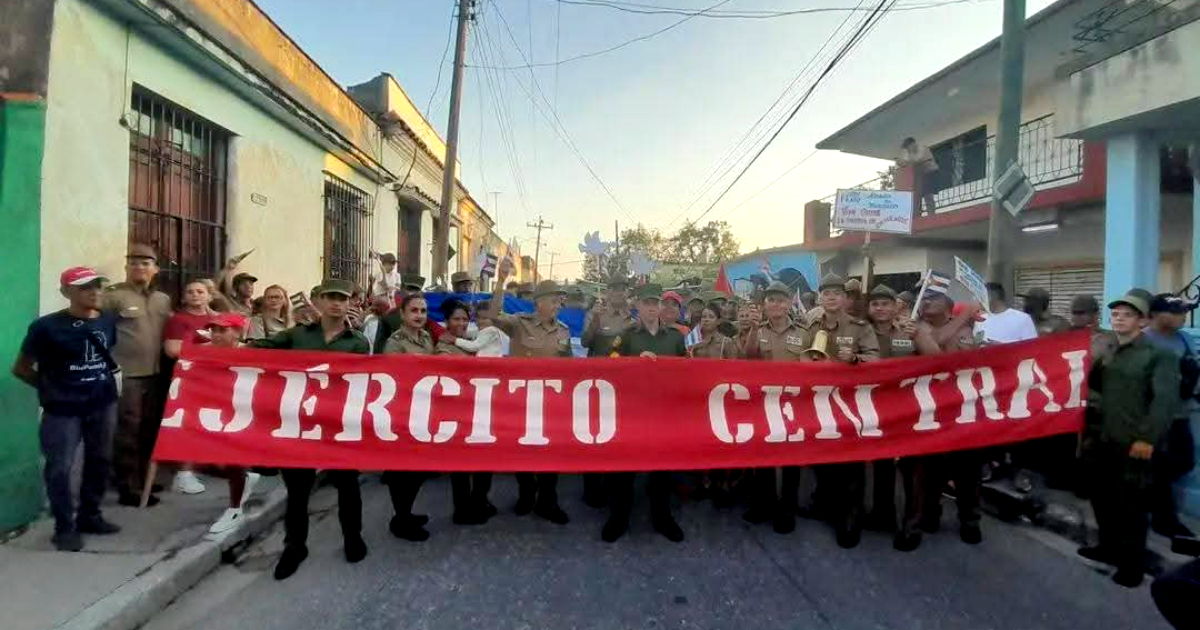
A special report by Cubalex highlights that Cuba is experiencing an increased militarization of its society, characterized by regular patrols, extended power outages, and the deployment of repressive forces with mechanisms of territorial control that directly impact the daily lives of its citizens.
The document, titled "Social Militarization and De Facto Exceptionalism in Cuba," examines events from March 2026 and concludes that the regime has shifted from a preventive stage to an operational phase of direct control over civilian spaces.
According to Cubalex, 31 significant security, defense, and repression-related events were documented that month, marking a rise of more than 240% compared to February. Of these incidents, approximately 61% involved direct repression or control over the populace.
The report argues that the energy crisis, with prolonged blackouts in several provinces, has been used as a backdrop to intensify surveillance, identity checks, and the presence of police, military, and special forces in streets, parks, and residential areas.
Among the noted incidents are protests and "cacerolazos" in areas such as Morón, Santiago de Cuba, Havana, Santa Clara, and Guantánamo, followed by the deployment of patrols, special brigades, and security units. Cubalex views these occurrences as part of a nationwide pattern rather than isolated actions.
The report also warns about the involvement of civilians, students, and workers in defense or surveillance structures. In certain cases, participation in activities like the "University Student Bastion" may have been influenced by academic or employment pressures.
This dynamic, according to the organization, blurs the line between civilian and military spheres, extending the state's coercive capacity beyond formal armed and police forces.
Cubalex identifies five main indicators in the observed process: preventive militarization, reactive militarization, the use of war rhetoric, control of strategic resources, and civilian participation in military or control structures.
The report further emphasizes that the regime employs warlike language to portray social dissent as an internal threat. Terms such as "enemies of the Revolution" or "unconventional warfare" are purportedly used to justify surveillance and repression measures against discontented citizens.
From a legal standpoint, Cubalex asserts that Cuba is experiencing a "de facto exceptionalism," implementing measures characteristic of a state of emergency without formal declaration or legal oversight.
The organization argues that there is no public emergency that justifies the activation of extraordinary powers and warns that the observed measures are incompatible with international human rights standards.
The report concludes that the level of risk is high for fundamental freedoms, the rule of law, and civic space in Cuba.
Understanding Cuba's Militarization and Blackouts
What is the main focus of the Cubalex report?
The Cubalex report focuses on the increasing militarization of Cuban society, highlighting the use of military control, blackouts, and surveillance as tools of repression.
How does the energy crisis relate to the increased military presence?
The energy crisis, marked by prolonged blackouts, has been used as a context to intensify surveillance and increase the presence of police and military forces in public areas.
What are the implications of the report for civil liberties in Cuba?
The report suggests a high level of risk to fundamental freedoms, the rule of law, and civic space, indicating that the measures taken are inconsistent with international human rights standards.