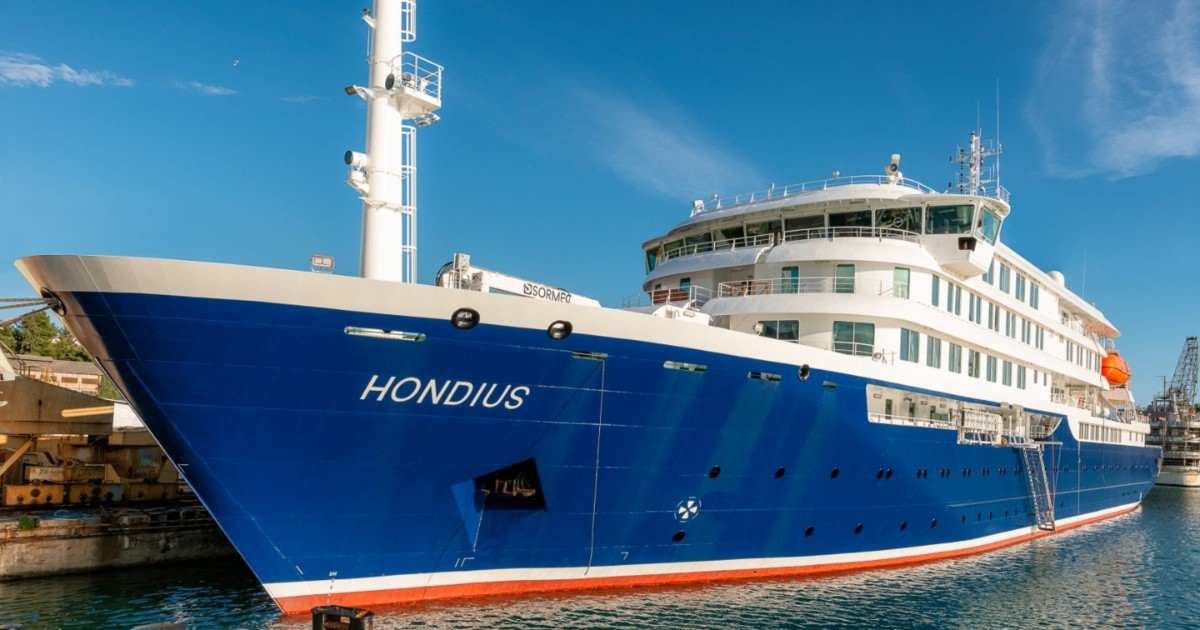
A U.S. citizen, among the 17 Americans evacuated from the MV Hondius cruise ship in the Canary Islands, has tested positive for the Andes virus—a type of hantavirus—through a PCR test, despite showing no symptoms, as confirmed by U.S. health officials on Monday.
The passenger traveled in a biocontainment unit on the government-chartered flight that repatriated the Americans from Tenerife to Offutt Air Force Base in Omaha, Nebraska. Meanwhile, another passenger on the same flight exhibited mild symptoms during the journey and was taken to another specialized facility for assessment.
In an effort to exercise extreme caution, both active cases were kept in separate biocontainment units on the plane, according to the U.S. Department of Health and Human Services. The asymptomatic passenger is now receiving care at the Nebraska Biocontainment Unit of Nebraska Medicine, the only federally funded quarantine facility in the nation, which features 20 individual rooms with negative air pressure.
Background of the Outbreak
The outbreak originated on the MV Hondius, a Dutch-flagged expedition cruise operated by Oceanwide Expeditions, which set sail from Ushuaia, Argentina, on April 1 with around 90 passengers and 60 crew members from 23 countries. The first death aboard occurred on April 11, with the Andes virus being officially identified as the cause of the outbreak on May 2.
By May 9, the World Health Organization reported six confirmed cases, two suspected, and two probable, with three total fatalities: a Dutch couple and a German woman. The WHO advised a 42-day quarantine for all cruise passengers.
Evacuation and Response Efforts
The cruise ship arrived in the Canary Islands over the weekend without docking; passengers were evacuated via boats. Out of the approximately 24 Americans on board, seven had disembarked at different ports earlier, while 17 remained until the coordinated evacuation with Spanish authorities.
The Centers for Disease Control and Prevention (CDC) activated its Emergency Operations Center in Atlanta at level three—the lowest level—and dispatched teams both to the Canary Islands and Offutt Air Force Base. They assessed the risk to the general public as "extremely low."
Criticism and International Response
Despite these efforts, the CDC's role in managing the outbreak faced criticism from experts. Lawrence Gostin, a public health expert at Georgetown University, remarked, "The CDC isn't even a player. I've never seen this before." The WHO led the international response, contrasting with the CDC's prominent role during the COVID-19 outbreak on the Diamond Princess in 2020.
Transmission and Risks of the Andes Virus
The Andes virus is endemic to Argentina and Chile, primarily spreading through inhalation of aerosols from the droppings of infected rodents. It's the only hantavirus strain with documented limited person-to-person transmission, distinguishing this outbreak from others caused by strains like the Sin Nombre virus, prevalent in the U.S.
Authorities believe that at least one passenger contracted the virus in Argentina or Chile before boarding and subsequently transmitted it to others on board, marking the first recorded Andes virus outbreak on such a vessel.
Hantavirus pulmonary syndrome has a fatality rate of up to 38% in cases with respiratory symptoms, and there is no specific treatment or approved vaccine. The incubation period for the Andes virus ranges from one to eight weeks, meaning some passengers may still develop symptoms in the coming weeks.
Understanding the Andes Virus Outbreak
What is the Andes virus?
The Andes virus is a type of hantavirus endemic to Argentina and Chile, known for its capacity for limited person-to-person transmission.
How is the Andes virus transmitted?
The virus primarily spreads through inhalation of aerosols from the droppings of infected rodents, but it can also transmit between people to a limited extent.
What measures are being taken to control the outbreak?
U.S. health officials have quarantined affected passengers and activated emergency response centers while the WHO has recommended a 42-day quarantine for all cruise passengers.