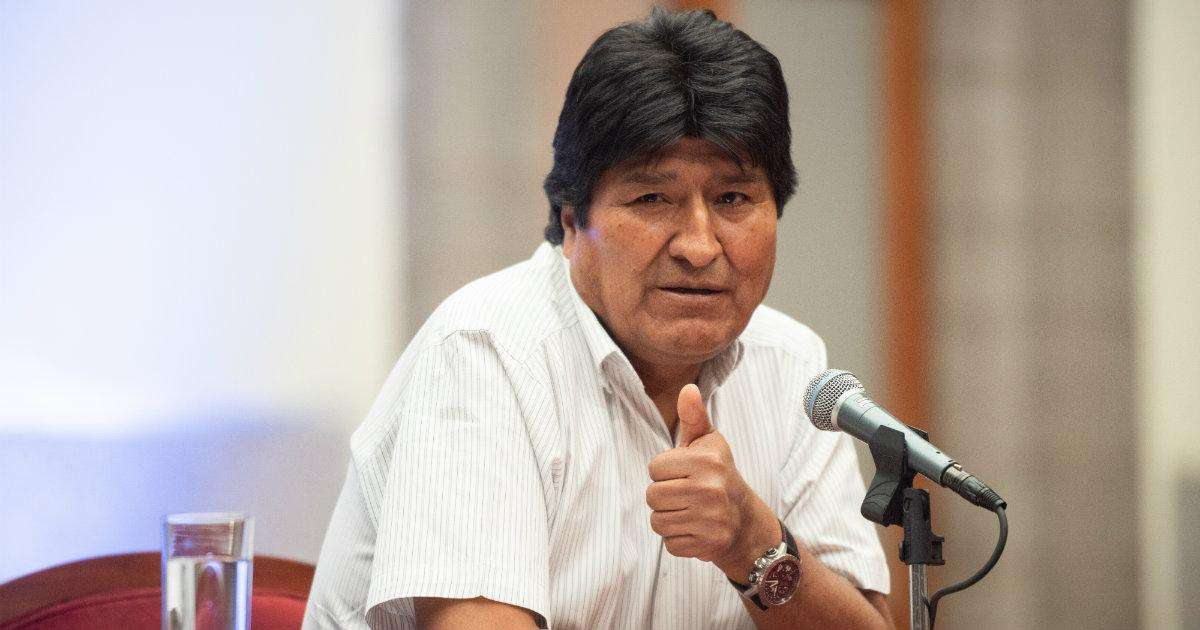
A Bolivian court has commenced the trial against former President Evo Morales on charges of aggravated human trafficking. Morales is accused of having had a relationship with a minor, with whom he allegedly fathered a child while in office. The trial is taking place in the southern city of Tarija, as reported by EFE.
The proceedings are held at the Criminal, Anti-Corruption, and Violence Against Women Tribunal, with the hearing scheduled for 8:20 local time (12:20 GMT). However, Morales did not appear in court.
His legal team stated that he would not attend due to not being properly notified as per personal notification procedures. "We cannot attend because we are unaware of the details. Brother Evo Morales has not been notified following the personal notification procedure," said attorney Wilfredo Chávez.
Luis Esteban Ortiz, President of the Tarija Departmental Court of Justice, confirmed that notifications were issued through press edicts and that all formalities were adhered to. "Communications have been made not only to the former president but also to a second individual under investigation in this case," he noted.
The arrest warrant for Morales, related to the alleged trafficking, was issued in October 2024. The accusation states that the minor, identified as Cindy S.V.P., was between 14 and 15 years old when her relationship with the then 57-year-old president began, through the "Youth Guard" or "Generation Evo," a youth group created by Morales. Their child was born on February 8, 2016, with the birth certificate listing Juan Evo Morales Ayma as the father.
The Tarija Prosecutor's Office has compiled over 170 pieces of evidence for the trial. Alongside Morales, a second female defendant is involved in the proceedings.
Morales' Political Stronghold and Legal Challenges
Since October 2024, Morales has been entrenched in the Cochabamba Tropics, his political and union stronghold, as his supporters blocked roads for 24 days to prevent the police from executing the arrest warrant. The order remains in effect.
In January 2025, a judge declared Morales in contempt for failing to appear at two hearings for precautionary measures, citing health issues. Consequently, restrictions such as travel bans, frozen bank accounts, and property registration were enforced.
His defense labeled the proceedings as "political persecution arising amid deplorable conditions in the country, especially economically, and street conflicts," arguing that it aims to divert attention from recent union protests.
Morales has publicly denied the allegations on social media, stating days before the trial, "Since they find nothing" to prosecute him on other charges, "they invent crimes." He further remarked, "I do not seek impunity. I want my accusers to prove—with legal and real evidence—the alleged crimes I committed. I call for an impartial, honest, objective justice independent of political power."
Political Turmoil in Bolivia
The case unfolds amid a backdrop of significant political division in Bolivia. The judiciary disqualified Morales from running in the August 2025 presidential elections, ruling he had already served two terms. In March, Morales' bust was removed from the Bolivian Parliament to avoid what legislators described as a "cult of personality."
Morales led Bolivia from 2006 until 2019, resigning amid a democratic crisis following electoral fraud accusations, fleeing to Mexico before returning to the country in 2020.
Key Questions About Evo Morales' Legal Case
What are the charges against Evo Morales?
Evo Morales is charged with aggravated human trafficking, accused of having a relationship with a minor and allegedly fathering a child with her during his presidency.
Where is the trial against Morales taking place?
The trial is being conducted in the city of Tarija, at the Criminal, Anti-Corruption, and Violence Against Women Tribunal.
Why was Evo Morales declared in contempt?
He was declared in contempt for failing to attend two hearings regarding precautionary measures, citing illness as the reason.