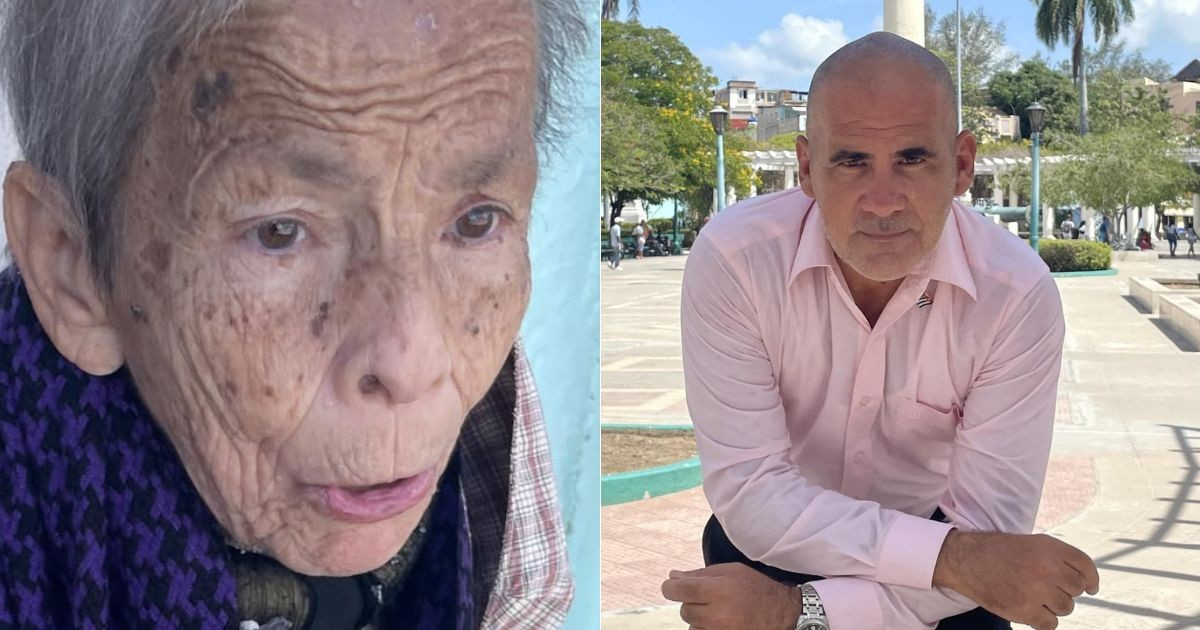
René Fidel González García, a Cuban jurist and former university professor, took to Facebook on Mother's Day to deliver a heartfelt and powerful plea from Santiago de Cuba. He called for the restoration of rights and freedoms to ensure that Cuban mothers no longer perish in misery and loneliness.
Written as a poetic litany, González García's message intertwines the names of anonymous women—Zoila, Bertha, Esther, María, Neris—with direct political demands. It concludes with a poignant image encapsulating his protest: a Cuban mother whose tears and silence, he declares, "are named Cuba."
"We must reclaim our rights and freedoms, achieve political fulfillment, so that our mothers will no longer die in solitude and sorrow, yearning for their imprisoned, absent, or persecuted children," the jurist wrote.
His message clearly identifies those accountable: "We have to rid ourselves of the scoundrels who have turned their disdain for simple happiness, their affront to dignity, and their immersion of lives in pettiness and contempt into the outcome of every so-called public decision, or those they dare not admit."
González García also highlighted the dire material conditions: "We must earn back respect so that our mothers do not die of hunger, without medicine, with soot-blackened nails, and souls wounded by lies."
The grim portrait he paints is based on well-documented realities. According to the Cuban Observatory of Human Rights, 89% of the Cuban population lives in extreme poverty, and 79% of those over 70 cannot afford to eat three meals a day. The average monthly salary equates to roughly $13 on the informal exchange rate.
A recent report from the Food Monitor Program and Cuido60 found that one in three Cubans goes to bed hungry at least once a month, and 80.2% of the elderly have trouble accessing medications.
Specific stories emerge from his denunciation of mothers who die unable to say goodbye to their imprisoned children. Zoila Esther Chávez Pérez, 84, mother of political prisoner José Gabriel Barrenechea, died in May 2025 without her son by her side. In August 2025, the regime prevented Panter Rodríguez Baró from attending the funeral of his mother, Esther Baró Carrillo, who died at 70.
This suffering affects thousands of families. As of March 2026, Cuba had 1,250 political prisoners, according to Prisoners Defenders, marking a historic high. Other independent organizations report more than 750 incarcerations. A study found that 40% of the families of July 11 prisoners suffer from depression.
González García, who holds a Doctorate in Legal Sciences and was a former full professor at the University of Oriente, was dismissed in November 2016 for publishing critical articles in independent media. Last April, he compared the crisis to Batista's dictatorship, and on May 1, he criticized the official parade, stating: "It’s not about the people who parade, but the people who cannot protest."
His Mother’s Day post concludes with an image summarizing it all: "Today, tomorrow, or later, when you see her condemned to poverty, fragile, walking our streets, sitting on the sidewalks of banks and ATMs, in emergency rooms and pharmacies, under the shade of an old tree, with a hoe still in her hands... do not think that each tear of hers, that her silence, is anonymous. It is called Cuba."
Understanding the Plight of Cuban Mothers
What is the main message of René Fidel González García's plea?
René Fidel González García's message emphasizes the need for restoring rights and freedoms in Cuba to ensure that mothers do not die in isolation and despair, longing for their imprisoned, missing, or persecuted children.
How does González García describe the current situation in Cuba?
González García describes Cuba's situation as one where the majority of the population lives in extreme poverty, with the elderly struggling to meet basic needs like food and medicine, under a regime that disregards simple human dignity.
What personal experiences are highlighted in the plea?
The plea highlights personal stories of mothers who died without being able to say goodbye to their imprisoned children, illustrating the personal and familial toll of the current political climate in Cuba.