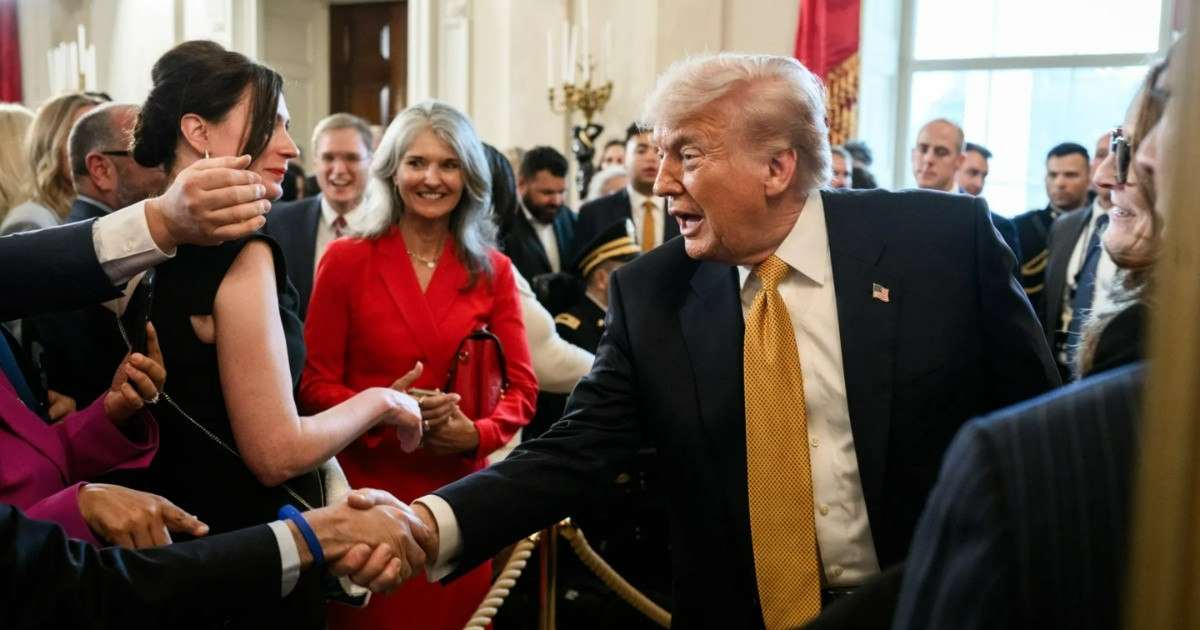
President Donald Trump on Sunday slammed Iran's reaction to the United States' peace initiative as "utterly unacceptable," jeopardizing the tenuous ceasefire that has been in place since April 8.
In a brief yet forceful statement on Truth Social, Trump declared, "Just reviewed the response from Iran's so-called 'representatives.' Disapproving, UTTERLY UNACCEPTABLE!"
The announcement came shortly after Pakistan, acting as a mediator in the talks, confirmed the receipt of Iran's document via Field Marshal Asim Munir, who informed Prime Minister Shehbaz Sharif.
Sharif disclosed the receipt in a speech to the military and political elite in Islamabad, without divulging details of the proposal.
According to Tasnim, an agency linked to Iran's Revolutionary Guard, Tehran's demands included the lifting of U.S. economic sanctions, ending the naval blockade on Iranian ports, and allowing Iran to manage the Strait of Hormuz under unspecified "commitments" from Washington.
The proposal also called for a ceasefire in Lebanon, a "red line" for Tehran, while deferring nuclear program discussions to later phases.
This particular aspect clashed with Washington's core demand: the complete dismantlement of Iran's nuclear program and a 20-year moratorium on uranium enrichment.
Even before the formal rejection, Trump had signaled his dissatisfaction in another Truth Social post, accusing Iran of "47 years of beating" the United States.
"For 47 years, Iranians have been 'beating' us, making us wait, killing our people with roadside bombs, suppressing protests, and recently, wiping out 42,000 innocent and unarmed demonstrators, all while mocking our now once-again great nation," the president wrote.
The day of the rejection, Iran launched a drone attack on a commercial vessel in Qatari waters near Mesaieed port, sparking a limited fire without casualties. The United Arab Emirates and Kuwait also reported drone assaults attributed to Iran on the same day.
In an interview aired on the show "Full Measure," recorded earlier in the week, Trump reiterated that Iran had been "defeated" but warned, "that doesn't mean they are finished," threatening to target more "objectives."
Trump's rejection of Iran's response threatens the ceasefire that has been active since April 8, which Washington hoped to sustain with tangible progress on Iran's nuclear dismantlement. The conflict initially erupted on February 28, 2026, with Operation Epic Fury, a joint U.S.-Israel air offensive that decimated Iran's key nuclear sites and eliminated Supreme Leader Ali Khamenei.
In retaliation, Iran shut down the Strait of Hormuz on March 4, causing Brent crude prices to soar from $67 to over $126 per barrel. The conflict has cost Washington around $25 billion by the end of April.
On May 6, the U.S. issued its own peace proposal after dismissing Iran's earlier 14-point plan. The day before, Putin reiterated his offer to store Iran's enriched uranium in Russia as a compromise.
Ebrahim Rezaei, spokesperson for the Iranian Parliament's National Security Commission, summed up Tehran's stance following Trump's rejection with a blunt statement: "Iran's moderation has ended."
Key Questions on Iran-U.S. Tensions
What was the main reason for Trump's rejection of Iran's proposal?
Trump found Iran's demands, particularly the continuation of its nuclear program and uranium enrichment, to be incompatible with U.S. interests.
How did Iran respond to the rejection of its proposal?
Iran responded by declaring an end to its moderation and launched drone attacks on commercial vessels, escalating tensions further.
What impact did the conflict have on oil prices?
The conflict led to the closure of the Strait of Hormuz, causing Brent crude oil prices to spike from $67 to over $126 per barrel.