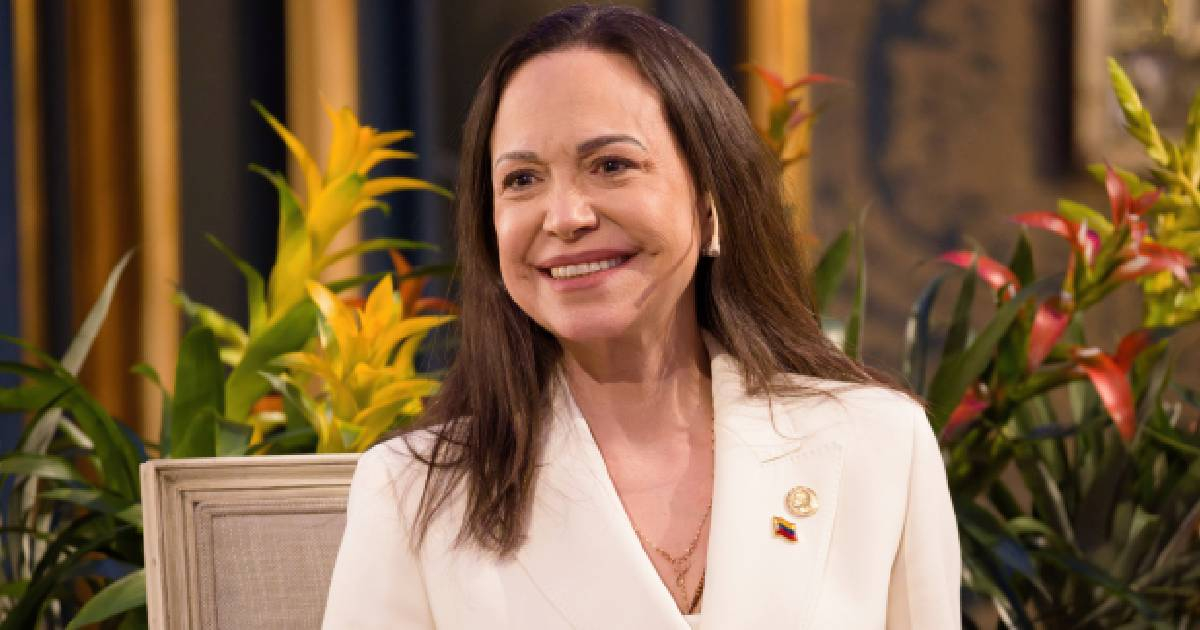
In a compelling interview conducted in Washington and published by El País, María Corina Machado, a lauded Nobel Peace Prize recipient and a prominent Venezuelan opposition leader, confidently asserted that Venezuela's authoritarian regime is nearing its end.
Machado, who operates from a modest office in the U.S. capital, has been strategically working there for over 100 days following a significant blow to the Chavista regime. Despite the interim presidency of Delcy Rodríguez after Nicolás Maduro's capture by U.S. forces on January 3, 2026, the regime remains in power.
When questioned about her anticipated return to Venezuela—a pledge she made months ago yet remains unscheduled—Machado directly told journalist Boris Muñoz, "The stance of the United States and other allies is undoubtedly influential. Coordination is key. My return will facilitate the process, making the timing crucial."
Pressed on whether any objective barriers prevent her return, she asserted there were "None." Asked if she could pack her bags and leave the next day, Machado responded, "No one wants that more than I do." Despite her announcement in March to return in weeks, as of May 2026, this promise remains unfulfilled.
A Regime Defined by Control
Without mincing words, Machado labeled the current system a dictatorship. "If the Executive controls the Judicial, Legislative, and Electoral Powers, what is that?" she rhetorically asked, providing her own answer: "Obviously" a dictatorship, thereby dismissing Chilean intellectual Fernando Mires' assertion that Venezuela is neither dictatorship nor democracy.
She painted a grim economic picture: annual inflation at 650% and 86% of the population living in poverty. "Venezuelans have learned through hardship that economic issues can't be solved without political change," she stated. Although more than 600 political prisoners have been released since January, she noted that "hundreds remain incarcerated."
The Path to Elections
Regarding elections, Machado ruled out the possibility of them taking place in 2026, noting that organizing them requires approximately 40 weeks after appointing a new National Electoral Council. "The important thing is to get started now," she emphasized. The State Department has already conveyed its expectation for Machado to return and participate freely in the electoral process.
Machado endorsed the three-phase plan proposed by Trump and Marco Rubio aimed at leading to free elections, calling it "correct and urgent." She was candid about her discussions with the U.S. President, asserting, "We have a significant opportunity for the Americas ahead, and we must seize it." She added, "I say in public what I say in private." Regarding negotiations with Delcy and Jorge Rodríguez, she warned, "We will not accept another charade."
Impact on Cuba
Machado's words resonate strongly in Cuba. Following Maduro's capture, the island lost its supply of 25,000 to 30,000 barrels of Venezuelan oil per day—two-thirds of its imports—leading to power outages exceeding 20 hours daily and sparking hundreds of protests since January 2026. The Cuban regime, which long supported the Chavista government in exchange for subsidized oil, now faces its greatest vulnerability in over thirty years.
Machado concluded the interview with a statement summarizing her determination, applicable to both Caracas and, implicitly, Havana: "A day sooner, a day later, this regime will come to an end. What truly matters is the emerging Venezuela and how we ensure the construction of institutions that endure for centuries."
Insights on Venezuela's Political Landscape
What did María Corina Machado say about the future of Venezuela's regime?
María Corina Machado confidently asserted that the Venezuelan dictatorship's days are numbered, emphasizing the need for political change to address economic issues.
Why is Machado's return to Venezuela significant?
Machado believes her return is crucial for facilitating the political process and ensuring that the timing aligns with the strategic goals of Venezuela's allies.
How has Maduro's capture affected Cuba?
Cuba faces significant challenges, including severe power outages and widespread protests, due to the loss of Venezuelan oil supplies, highlighting its reliance on subsidized energy.