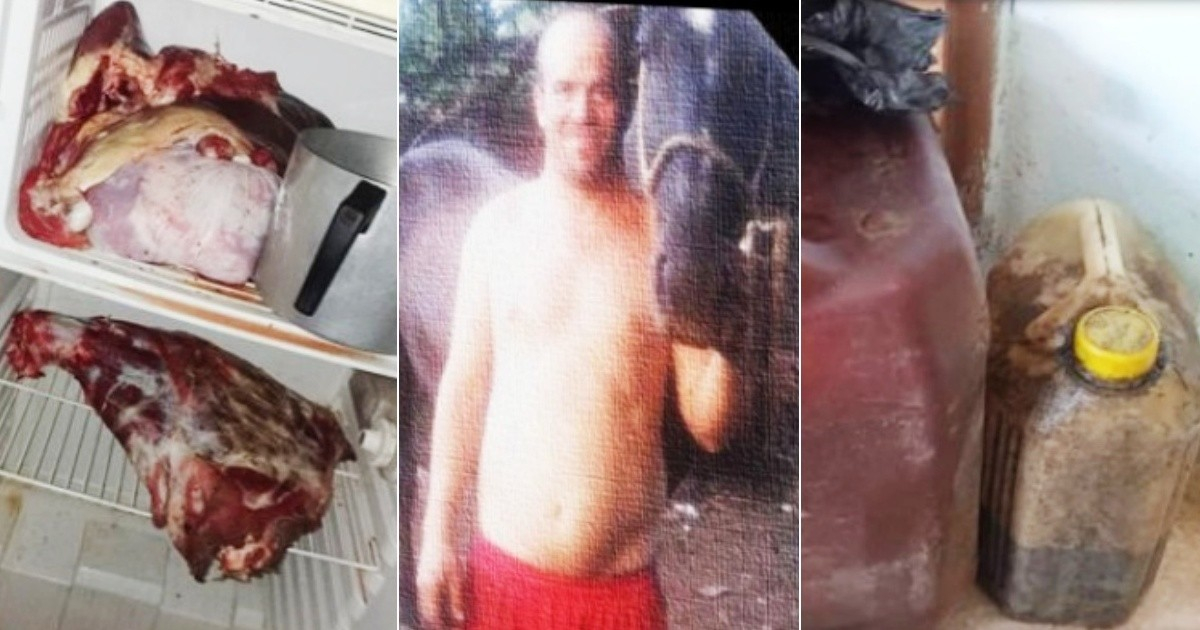
Osiel Pedro Díaz Cortegasa, a Cuban resident, was taken into custody after authorities discovered items in his home that matched those reported stolen in a recent burglary in Pedro Betancourt, located in Matanzas province.
The arrest occurred at Díaz Cortegasa's residence in Finca Flora, within the Güira de Macurijes community, as reported by the pro-government Facebook page "Con Todos La Victoria," which is associated with the National Revolutionary Police of Matanzas.
The Discovery That Unveiled a Larger Scheme
Upon arriving at Finca Flora, law enforcement officials uncovered three significant items: a homemade mill, 33 pounds of meat, and 35 liters of fuel. These discoveries piqued the interest of investigators.
According to the official report, "this breakthrough untangled a forceful theft that had occurred at the La Torre farm in the area, which had been under investigation for days. Among the stolen items, several matched those found."
The report concluded with a typically triumphant tone: "What initially seemed like an isolated discovery opened the door to a broader scheme of rural thefts involving meat, fuel, and mills as key players. Now, justice will speak louder."
Pedro Betancourt: A Struggling Agricultural Hub
Pedro Betancourt is an agricultural municipality in the central-southwest part of Matanzas, historically tied to sugarcane production. Today, it is one of the province's poorest areas following the closure of its sugar mills.
The Güira de Macurijes community is a part of this rural reality, where livestock theft and slaughter are rampant, driven by Cuba's ongoing economic and food crisis.
In Matanzas, another Cuban was arrested in Perico on April 29, accused of illegally slaughtering a calf. In March, seven masked men armed with weapons raided a cooperative in Colón, stealing nine cattle.
Meat and Fuel Theft: Indicators of a Deeper Crisis
Livestock theft has surged in Cuba in recent years, compounded by a 24% drop in the national cattle population, from 3.8 million in 2019 to 2.9 million by early 2025. Pork production has also plummeted by 93.2%, making the black market the primary source of protein for many families.
The 35 liters of fuel found at Osiel's home highlight another growing issue: the black market fuel price reached between 4,000 and 5,000 Cuban pesos per liter by March 2026.
The Ministry of the Interior recovered 350,000 liters of stolen fuel from January to August 2025 alone.
Harsh Penalties Fail to Halt the Problem
The Cuban Penal Code, effective since April 2022, prescribes sentences of three to eight years for illegal slaughter of large livestock and up to 15 or 20 years with aggravating circumstances.
In 2024, 1,615 individuals were convicted for illegal slaughter and meat trafficking, with 78% receiving sentences of up to 15 years in prison. However, the issue persists. A new tactic identified in January 2025 involves "kidnapping" animals, demanding ransoms up to 30,000 pesos for a pig.
Understanding Cuba's Rising Crime Issues
What were the key items found at Osiel Pedro Díaz Cortegasa's residence?
Authorities found a homemade mill, 33 pounds of meat, and 35 liters of fuel at his home, which were linked to a previous theft.
How has livestock theft affected Cuba's food supply?
Livestock theft has become rampant, exacerbating a decline in cattle numbers and pork production, pushing many to rely on the black market for protein.
What penalties does the Cuban Penal Code impose for illegal livestock slaughter?
The Cuban Penal Code prescribes sentences of three to eight years for illegal livestock slaughter, with potential sentences of up to 15 or 20 years for aggravated cases.