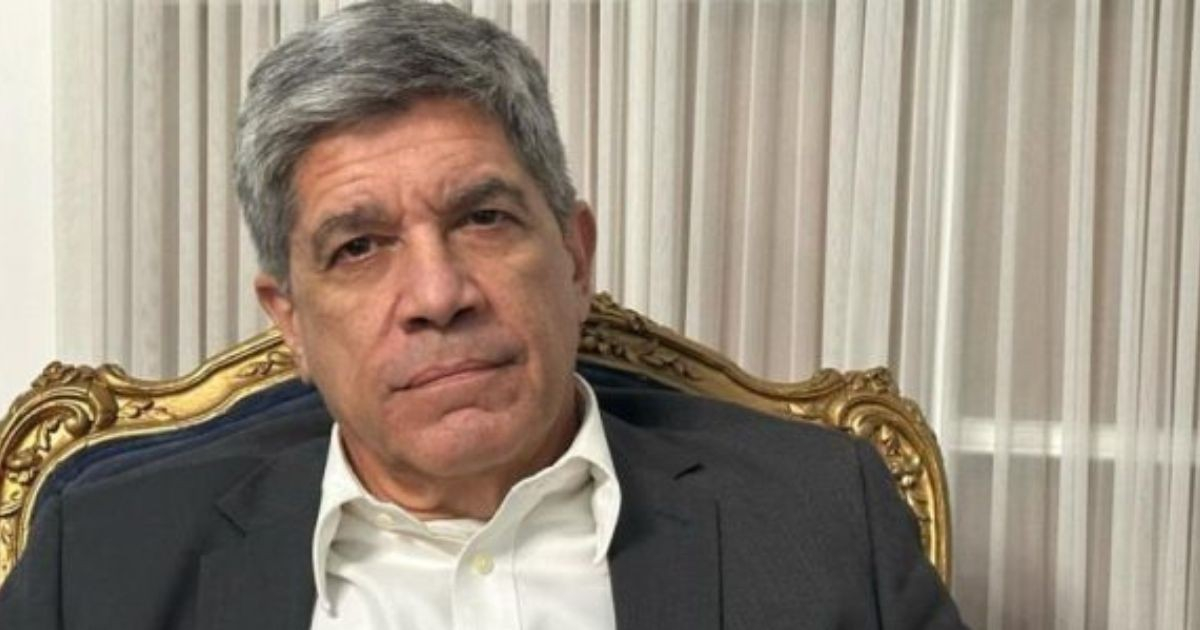
The Cuban Deputy Minister of Foreign Affairs, Carlos Fernández de Cossío, has issued a lengthy retort to U.S. Secretary of State Marco Rubio, accusing him of making baseless claims against the Cuban government, alleging it squanders resources.
This verbal exchange comes two days after Rubio, speaking from Rome, disclosed that the United States had offered $100 million in humanitarian aid to Cuba. The Cuban regime reportedly turned down the offer due to its refusal to allow distribution without state or military intermediaries.
Cossío dismissed the proposal as a "dirty political maneuver" and criticized Rubio for attempting to justify the ongoing collective punishment against the Cuban people and the potential for military aggression.
Investment Priorities in Cuba
In his statement, Cossío outlined areas where Cuba has focused its investments: the national electrical grid, renewable energy sources, telecommunications, support for vulnerable communities, food production, water infrastructure, rapid development of COVID-19 vaccines and medicines, tourism, electric vehicle assembly, and construction materials.
He argued that these efforts are taking place amidst what he described as an "intense economic war" imposed by the United States, which has intensified over the last decade. Cossío also defended Cuba's free healthcare and education services, portraying the country as "a peaceful nation where order and tranquility are enjoyed, a luxury for many other countries."
Counterattack on U.S. Policies
Cossío's response included a direct counterattack on Washington: "The country represented by the Secretary of State, the world's richest and most powerful, allocates its national resources to enrich the plutocratic elite that governs it and to ignite wars and conflicts on every continent."
He further claimed that 40 million Americans lack access to health services, that education is "unaffordable or notably inadequate for the majority," and that "school and public shootings with casualties have become normalized."
Ongoing Tensions with U.S. Administration
Earlier, Cuban Foreign Minister Bruno Rodríguez had labeled Rubio's aid offer as a "fable," publicly questioning, "Where is it, and what would it be used for?"
This exchange is part of a sustained escalation of tensions between Havana and the Trump-Rubio administration throughout 2026. In January, Cuba condemned the possibility of a naval blockade to cut off oil imports as an "act of war."
By March, Rubio was openly calling for a change in Cuba's regime, system, and economic model, asserting that "the success of the Cuban people lies outside their country." In April, the regime took its grievances to the United Nations over the "maritime siege" imposed by Washington.
Cossío has been the most active spokesperson for the Ministry of Foreign Affairs on social media during this period, utilizing Facebook and X to directly address Washington.
On March 28, he challenged the U.S. to "allow the Cuban government to collapse without external intervention" if deemed incompetent, acknowledging for the first time the existence of political prisoners in Cuba, which he termed a "non-negotiable internal issue."
Concluding his Sunday statement, Cossío reinforced the regime's official stance: "The corruption of the ruling elite cannot be concealed, even with the oligarchic media monopoly."
Frequently Asked Questions on Cuban-U.S. Relations
What was the U.S. aid offer to Cuba about?
The United States offered $100 million in humanitarian aid to Cuba, which the Cuban regime reportedly rejected due to conditions on distribution without state or military intermediaries.
How has Cuba prioritized its investments according to Cossío?
Cossío claims that Cuba has invested in sectors like the national electrical grid, renewable energy, telecommunications, vulnerable communities, food production, water infrastructure, COVID-19 vaccine development, tourism, electric vehicles, and construction materials.