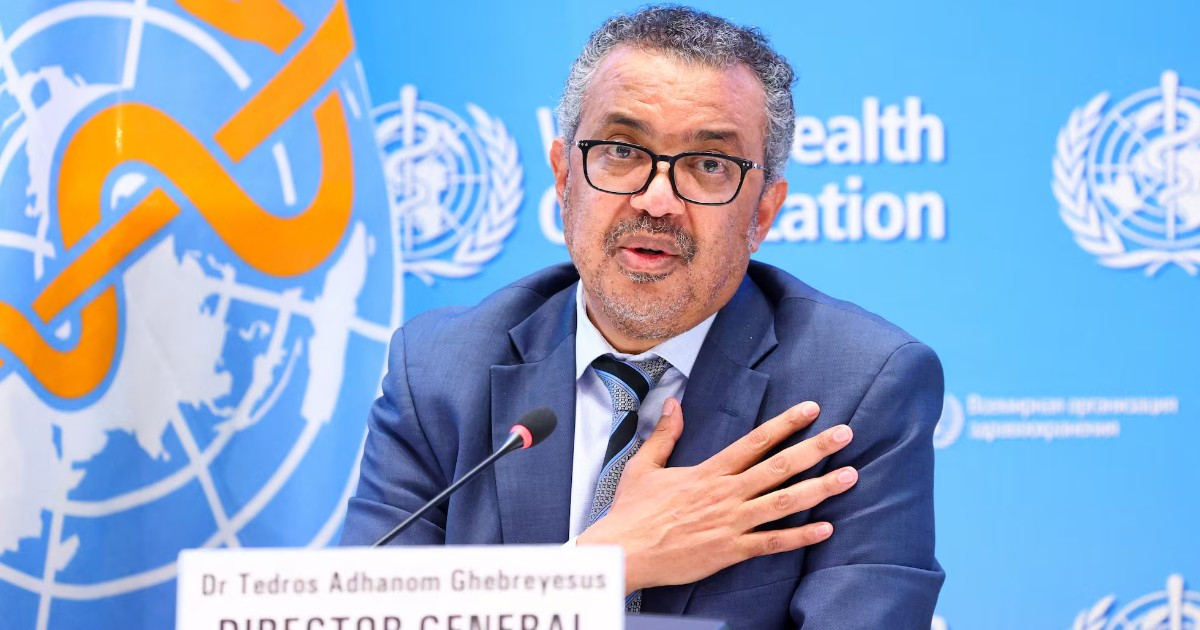
Tedros Adhanom Ghebreyesus, the Director-General of the World Health Organization (WHO), issued an open letter on Saturday aimed at addressing the concerns of Tenerife residents regarding the impending arrival of the expedition vessel MV Hondius, which is grappling with a hantavirus outbreak that has resulted in three passenger deaths.
In an unusual move for the global health leader, Tedros acknowledged the anxiety among the Canary Islands' inhabitants, linking it to the collective trauma of the COVID-19 pandemic. "I understand that hearing 'outbreak or epidemic' and seeing a ship approach your shores brings back memories none of us have fully overcome. The pain of 2020 is still palpable, and I do not minimize it for a moment," he stated.
Nevertheless, Tedros emphasized a crucial point: "This is not another COVID-19. The current public health risk from the hantavirus remains low."
The virus detected on board is the Andes strain of hantavirus, the only one among over twenty known strains with documented person-to-person transmission, although WHO stresses these occurrences are rare. The outbreak has claimed the lives of three passengers, with at least six confirmed cases among approximately 150 occupants from 23 different countries.
Unprecedented Hantavirus Outbreak on a Cruise Ship
This marks the first recorded hantavirus outbreak on a cruise ship, as confirmed by WHO. The vessel, operated by the Dutch company Oceanwide Expeditions, departed from Ushuaia, Argentina, on March 20 for a 46-day journey. After being denied docking rights by Cape Verde on May 5, Spain approved a disembarkation plan at the industrial port of Granadilla de Abona, located in southeastern Tenerife.
Tedros outlined the planned protocol: passengers will be brought to shore in small boats with a maximum of five individuals, transported in sealed vehicles, and escorted through a secured corridor to be repatriated to their home countries. The 14 Spanish nationals on board will be flown by military aircraft to Madrid for quarantine at Hospital Gómez-Ulla. "You and your families will not be in contact with them," assured the WHO Director-General.
Spanish Government's Role and Political Tensions
Publicly thanking Spanish Prime Minister Pedro Sánchez for accepting the ship, Tedros described the decision as an act of solidarity and a moral obligation, emphasizing that the request complied with the International Health Regulations, WHO's legally binding framework.
This decision, however, has sparked political tensions in Spain. The President of the Canary Islands, Fernando Clavijo, publicly opposed the ship's arrival, while the central government labeled his stance as "irresponsible." WHO had already addressed the outbreak, reiterating that the risk to the general public was low.
Tedros also announced his plans to personally travel to the island to oversee the operation. "I will be there in person, standing alongside health workers, port staff, and officials conducting this operation," he declared, highlighting the "exemplary collaboration" of the ship's captain, Jan Dobrogowski, and his crew.
The letter concluded with a familiar phrase Tedros has used in other health crises: "Viruses do not understand politics nor respect borders. Our greatest immunity is solidarity."
Understanding the MV Hondius Hantavirus Outbreak
What is the current risk level of the hantavirus outbreak on the MV Hondius?
The WHO has stated that the public health risk from the hantavirus outbreak on the MV Hondius remains low.
Which strain of hantavirus has been identified on the MV Hondius?
The Andes strain of hantavirus, which is the only strain with documented person-to-person transmission, has been identified on the MV Hondius.
How will the passengers of the MV Hondius be managed upon arrival in Tenerife?
Passengers will be transported to shore in small groups, then moved in sealed vehicles through a secured corridor to be repatriated to their home countries. Spanish nationals will be quarantined in Madrid.