This Thursday, the Cuban regime officially launched a new participatory movement called "My Neighborhood for the Homeland" during a working session held at Havana's National Capitol. The initiative is presented as a means to "consolidate the achievements of the revolution and strengthen Cuban socialist democracy."
Ana María Mari Machado, Vice President of the National Assembly of People's Power and the Council of State, led the event. She introduced the movement to parliament members, Communist Party Central Committee officials, heads of parliamentary commissions, and municipal assembly leaders, as shown in a report by the official Canal Caribe.
Mari Machado described the movement as "the living expression of People's Power," emphasizing its role in supporting activities within neighborhoods, communities, constituencies, and popular councils. She stated it would accompany a new stage of governance, focused on socialist democracy and governance in the streets.
The program is structured around three main areas: Productive Neighborhood, Safe Neighborhood, and Participatory Neighborhood, aiming to affect over 12,000 constituencies across the country.
The State Council had previously approved the general guidelines for the movement on March 19 during a session led by its president, Esteban Lazo Hernández, with the presence of the leader Miguel Díaz-Canel and Prime Minister Manuel Marrero Cruz.
During this session, Lazo emphasized the program's significance in "maintaining and strengthening the revolution's achievements" at the local level.
In a related event, a delegate from the Cerro municipality referenced Díaz-Canel's remarks during a parliamentary hearing on February 24. The leader highlighted the "need to revitalize popular participation and defend our sovereignty" as the catalyst for the movement's launch.
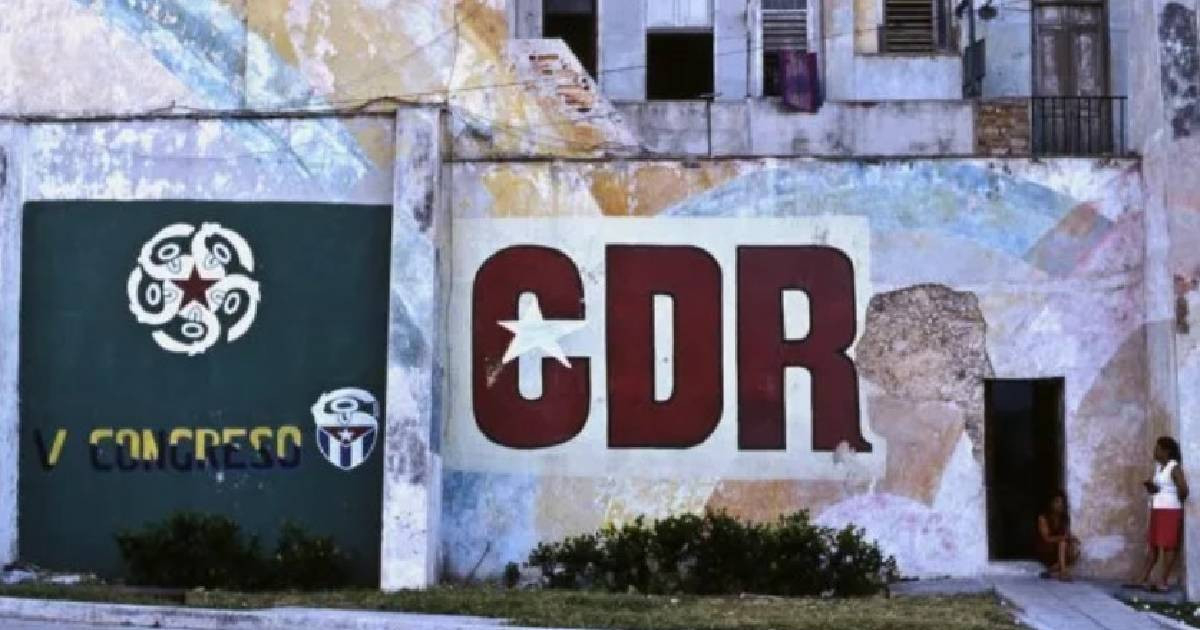
Critics and analysts argue that the program essentially reinvigorates the Committees for the Defense of the Revolution, serving to justify outdated political structures and enhance social control in communities burdened by blackouts and shortages.
Social Control and Defense Initiatives
The Safe Neighborhood front encourages involvement in National Defense Days and the establishment of surveillance systems in collaboration with the CDR and the Federation of Cuban Women. This is part of the regime's attempt to prepare neighborhoods for potential military threats.
This movement emerges amidst the regime's Year of Defense Preparation, declared in response to repeated statements by President Donald Trump regarding possible actions against Cuba.
Using the same framework, the regime has distributed a family guide in the eastern province of Granma, crafted by Civil Defense, to help citizens protect themselves from military aggression.
Gerardo Hernández Nordelo, the national coordinator of the CDR, has called for transforming each neighborhood structure into a "battalion of defense and combativeness." He dismissed the notion that fear drives the mobilization, asserting that Cubans are ready to defend the revolution.
The stark contrast between the official rhetoric of "revolutionary achievements" and the harsh reality—marked by a 23% GDP contraction since 2019, power outages lasting over 20 hours daily in some areas, and shortages of food and medicine—has sparked widespread sarcasm on social media.
A Cuban internet user succinctly captured the public's reaction with a straightforward question during an official event in Matanzas: "What achievements? The charcoal one?"
Frequently Asked Questions about "My Neighborhood for the Homeland"
What is the main goal of "My Neighborhood for the Homeland"?
The initiative aims to consolidate the achievements of the Cuban revolution and strengthen socialist democracy through community engagement and control.
Who is leading the "My Neighborhood for the Homeland" initiative?
Ana María Mari Machado, Vice President of the National Assembly of People's Power and the Council of State, is spearheading the initiative.
How does the program intend to reinforce community control?
The program encourages participation in defense activities and the establishment of surveillance systems, collaborating with organizations like the CDR and the Federation of Cuban Women.