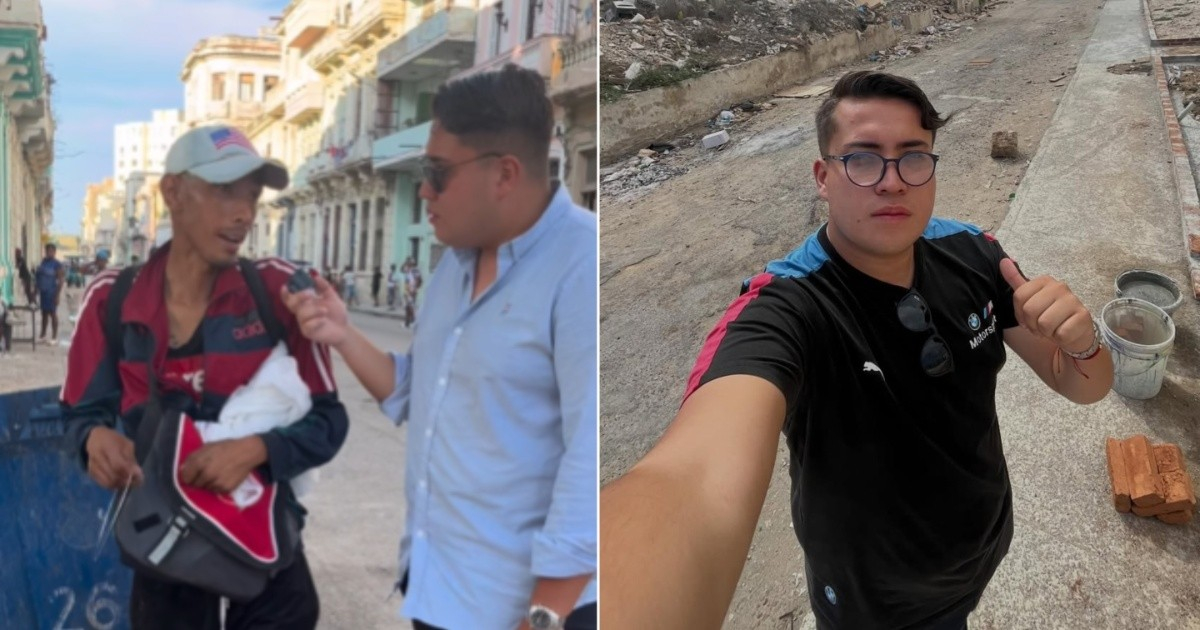
Colombian journalist and content creator Daniel Maldonado was detained for four hours in Cuba, where he was declared persona non grata and prohibited from returning. He shared his ordeal on Instagram, detailing the operation conducted by Cuban authorities.
The incident took place about a week before his post, on the day Maldonado was scheduled to fly back to Colombia.
At 7 a.m., two officers arrived at his apartment—situated opposite a police station—and confiscated both his and his companion's passports. His companion was filming the encounter.
They were both taken to the police station, where their phones were seized. Maldonado recounted the interrogation, which took place in a stark white room with six officers present: three in front of him and three behind, monitoring his every move.
Maldonado expressed his frustration, stating, "It's illegal and violates human rights to force someone to reveal their personal belongings," referring to demands to unlock his phone and display its contents.
When he denied posting content, an officer showed him his own phone, revealing posts Maldonado had made, including a critique of Colombian President Gustavo Petro for praising Cuba.
One officer was blunt: "It's a crime to film here. You could be jailed for speaking against the government."
Authorities demanded he delete photos from his phone, escorted him to his hotel to collect his belongings, and then to the airport, where he was held for an additional two hours, searched again, and officially declared persona non grata, nearly missing his flight.
The day prior, Maldonado had taken precautions by erasing his phone's content and uploading files to cloud storage in Colombia, allowing him to preserve his recorded material.
This incident is part of a documented pattern of harassment against foreign content creators in Cuba.
Just days earlier, American YouTuber Nick Shirley reported being tailed by Cuban intelligence agents from Havana's airport on April 30, facing equipment confiscation and harassment at his hotel.
The State Security's media arm, "Razones de Cuba," dismissed Shirley's account as "pure anti-communist script."
In June 2025, the Spanish channel Black Mango was questioned by State Security while filming a documentary on the island.
In September 2024, Peruvian couple Eva Cavero and Andrés Izarnótegui were deported after a 12-hour interrogation for recording content for their channel.
This occurs amid record levels of repression in Cuba: 69 arbitrary detentions of journalists in January 2026, a 430% increase from January 2025, with approximately 775 political prisoners on the island.
Maldonado concluded his account with a somber message: "I leave the country happy for the people I've met but deeply saddened, as they live under a regime where speaking about politics can land you in jail. They can't afford to eat because the minimum wage is insufficient. Sadly, if you're not part of the government, you live in utter poverty."
Key Details on Journalist Detentions in Cuba
What happened to Daniel Maldonado in Cuba?
Daniel Maldonado was detained for four hours, declared persona non grata, and banned from returning to Cuba after being interrogated and forced to delete content from his phone.
Why was Maldonado declared persona non grata in Cuba?
Cuban authorities declared Maldonado persona non grata due to his social media posts that included criticism of the Cuban government and the Colombian president's praise for Cuba.
How common is the harassment of foreign content creators in Cuba?
Harassment of foreign content creators in Cuba is a documented pattern, with several instances of detentions, interrogations, and deportations reported in recent years.
What are the current levels of repression in Cuba?
Cuba is experiencing record levels of repression, with a significant increase in arbitrary detentions of journalists and a large number of political prisoners.